High above an ordinary thunderstorm, something extraordinary can appear: a red flash like a glowing jellyfish, dangling luminous tendrils into the night. It may last only milliseconds. You can miss it even when you are staring directly at the sky.
These are not alien craft or digital special effects. They are real electrical phenomena called sprites, and NASA is inviting photographers around the world to help scientists study them. A November 1, 2026 Fox Weather report drew new attention to the effort—but there is an important timeline detail: NASA’s Spritacular citizen-science project launched back in 2022. The new coverage is a reminder of an ongoing scientific search, not an announcement that sprites have only just been discovered.
The red flashes that live above lightning
Sprites belong to a family of transient luminous events, or TLEs: very brief bursts of light that occur in the upper atmosphere above thunderstorms. Many red sprites appear roughly 50 miles (80 kilometers) above the ground, far higher than the lightning strikes people watch beneath storm clouds. A powerful lightning discharge below can trigger a sudden electrical response above the storm, producing diffuse red plumes and fine branching structures.
Their appearance is so improbable-looking that scientists adopted names from folklore. Alongside sprites, researchers investigate elves, blue jets, gigantic jets and other varieties. The colorful names do not mean the physics is fantasy. What remains difficult is observing enough events, with precise timing and geographic information, to explain the differences between them and how they interact with their surroundings.
NASA’s 2022 project announcement records an extraordinary origin story. Witnesses had reported odd flashes above storms for generations, but the first credible photographic confirmation came accidentally in 1989, when University of Minnesota researchers testing a low-light camera recorded luminous shapes above a thunderstorm. The phenomenon was there long before modern cameras. Reliable evidence had simply been hard to capture.
An astronaut photographed the real thing
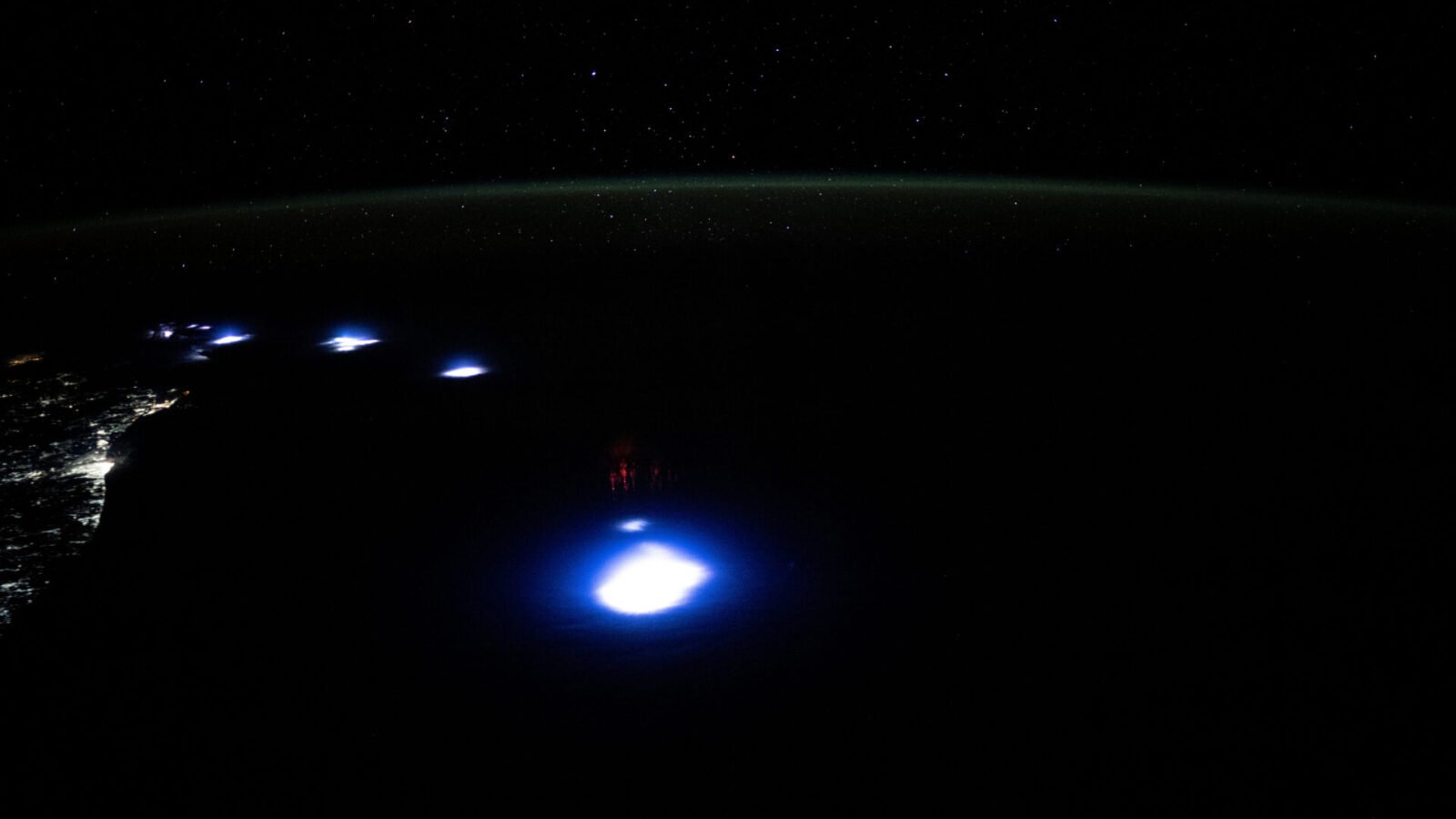
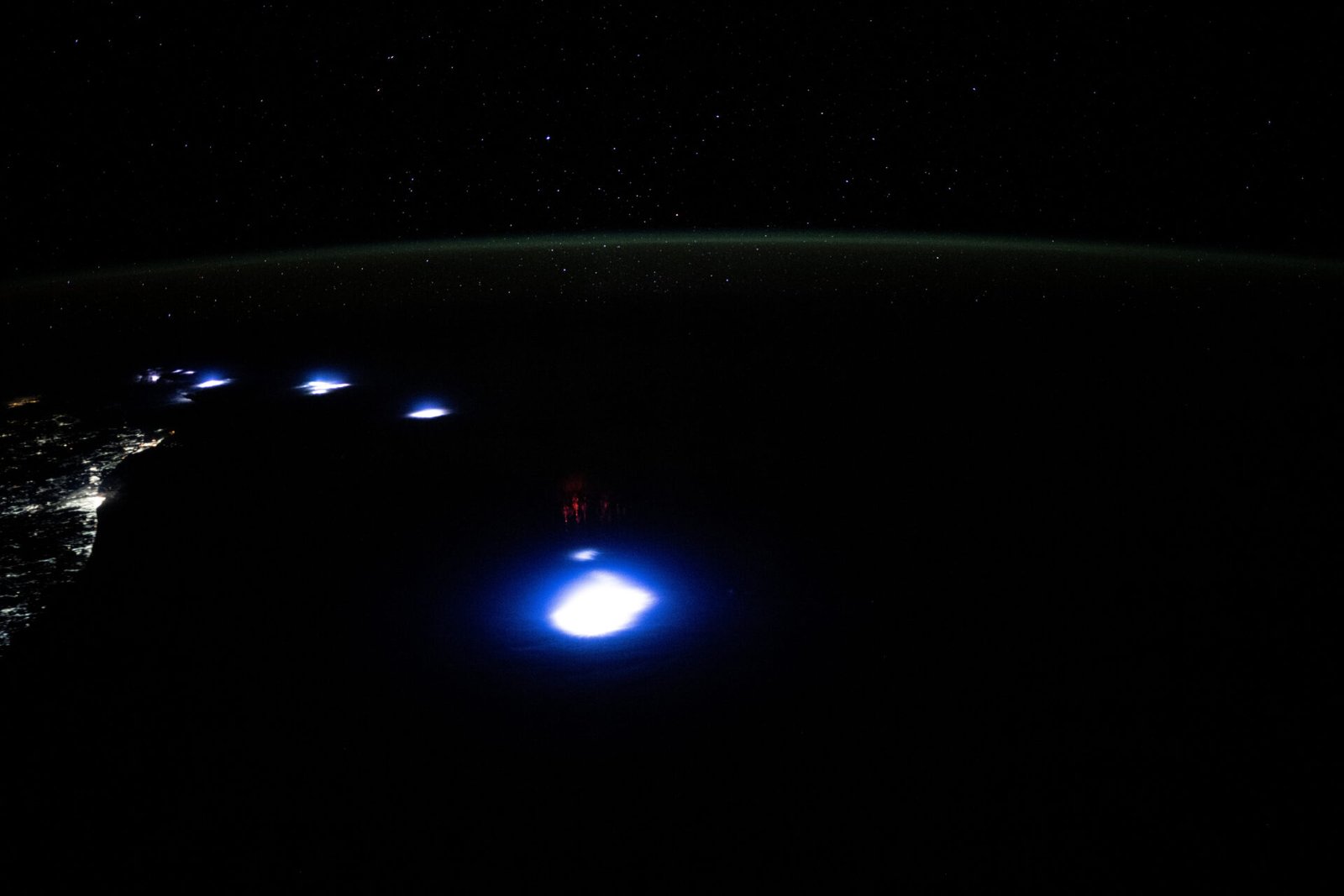
This isn’t a story that requires a computer-generated mock-up. On June 3, 2024, NASA astronaut Matthew Dominick photographed red sprites from the International Space Station above thunderstorms off the coast of South Africa. NASA published the genuine photograph and identified the glowing flashes in the upper atmosphere. The original image is cataloged as ISS071-E-170351, and NASA provides context and credit for the observation.
Why NASA needs people with cameras
Spritacular’s idea is straightforward: one research team cannot watch every thunderstorm on Earth, but a network of photographers can produce a much larger record of rare events. Scientists can then compare images, timestamps and locations with other observations to investigate which lightning conditions produce particular flashes, why their shapes vary and how these discharges affect the upper atmosphere.
NASA’s official participation instructions recommend observing from about 60 to 250 miles away from a storm, where the sky above the cloud tops is visible. They advise synchronizing the camera’s clock, using a tripod, and using a DSLR or mirrorless camera with a lens around 20–85 mm. The suggested observation can take hours; uploading a successful image takes minutes. Photographers can follow the steps through Spritacular.org.
Safety matters: the project is not an invitation to drive into severe weather, stand on exposed ridges or chase lightning. NASA specifically warns observers to keep a quick, viable route to safety. Look from a safe, distant location, not from within a storm.
NASA’s new video shows what researchers are looking for
NASA Goddard released a short explainer titled NASA’s Illuminate: Spooky Sprites and Other Eerie Lights in late October 2026. It introduces sprites and other TLEs and explains the citizen-science project. The video uses credited images contributed by photographers, along with narration and graphic elements; it should not be mistaken for live footage of one newly reported 2026 event.
Watch the official NASA video and view the credited source materials. NASA states that the complete video may be shared, while some underlying music and individual visuals carry separate permissions.
What scientists know—and what they still don’t
Sprites are not a new category of unidentified flying object. They are atmospheric electrical phenomena observed by cameras on the ground and in orbit. Their existence is established. Yet questions remain about the detailed processes that shape them, why some lightning discharges lead to sprites while others do not, and how different TLE types relate to each other.
They are also not the same as ball lightning, a separate and still-debated phenomenon we’ve previously examined. Unusual appearances can have different mechanisms. Getting the identification right is the beginning of investigation, not the end of curiosity.
There is a useful lesson in the NASA project: some strange lights in the sky can be understood only after observers start saving evidence instead of relying on memory. A timestamped photograph may not solve a mystery by itself, but thousands of properly documented sightings can help turn a fleeting anomaly into a testable scientific question.
So if you see a crimson flicker above a faraway thunderstorm, can you capture the few milliseconds scientists are still trying to explain?
Sources and further reading
- NASA Science — Spritacular citizen-science project and submission instructions
- NASA — 2022 Spritacular announcement and discovery background
- NASA — Matthew Dominick’s June 2024 red-sprite photograph
- NASA Goddard Scientific Visualization Studio — 2026 sprites explainer and credits
- FOX Weather — November 1, 2026 report