November 6, 2026 — A star died, but something in its ruined planetary system may still be arranging the wreckage. Astronomers have identified a white dwarf surrounded by two distinct rings of gas, separated by a gap. Their leading explanation is that surviving planetary bodies are influencing the debris—but the suspected objects themselves have not been photographed.
The peer-reviewed study was first published October 26 in Nature Astronomy and has drawn renewed attention in November science coverage. Its central object is WD J1328−1450, a dense stellar remnant whose spectral fingerprints do not resemble those of other known gas-disc white dwarfs.
Four peaks where scientists expected two
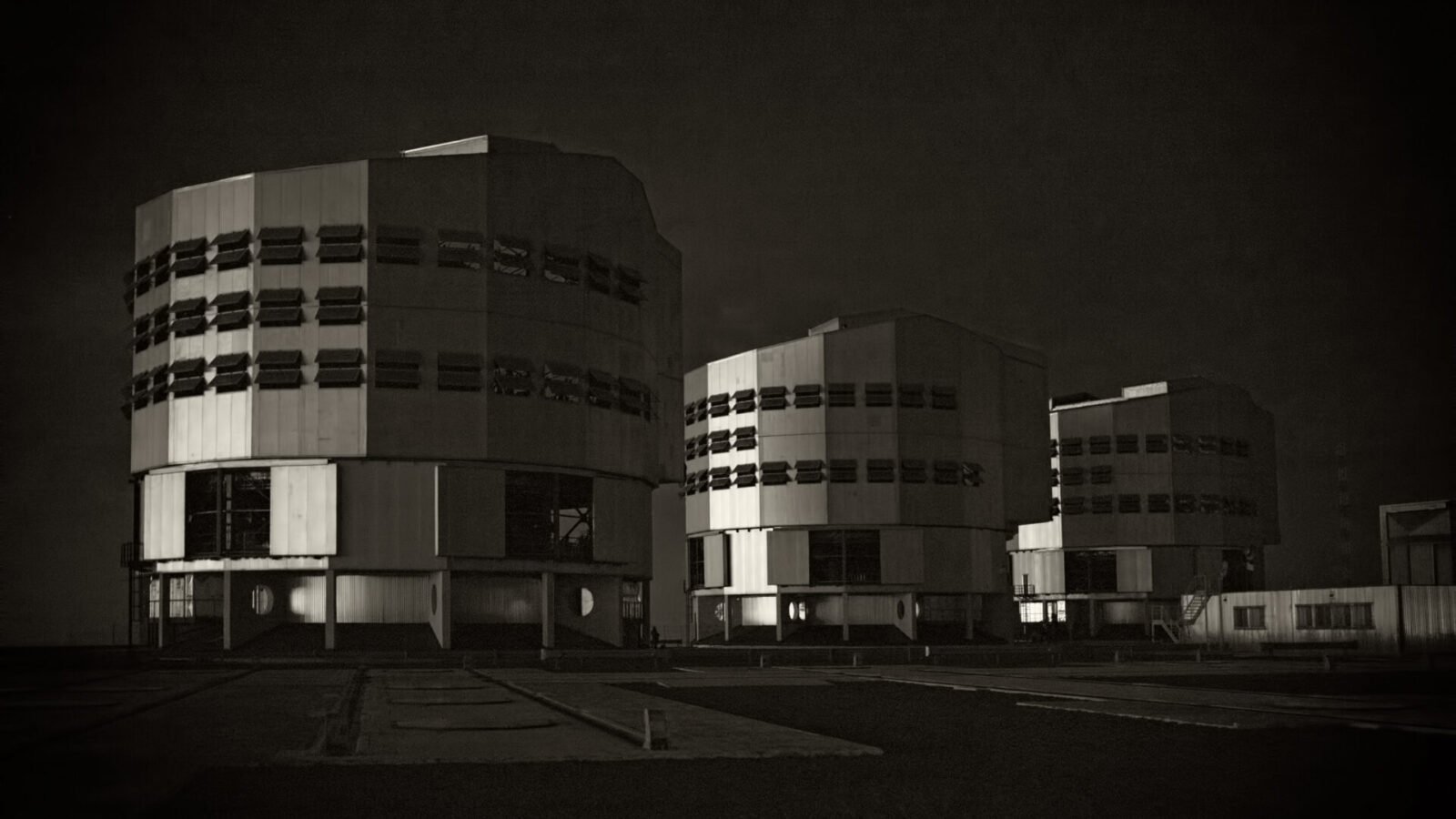
Using the X-shooter spectrograph on the European Southern Observatory’s Very Large Telescope in Chile, the team measured emission lines from material orbiting the star. A conventional rotating ring tends to produce two prominent peaks because gas on opposite sides moves toward and away from the observer. Here, researchers found four peaks in key lines—a pattern they interpret as the overlapping signals of two separate gaseous rings.
The researchers estimated that the rings occupy different ranges of distance from the white dwarf, leaving a significant gap. The signal is not a direct-color photograph of a glowing cosmic doughnut. It is a physical inference grounded in how gas motion changes the light reaching the telescope.
What might be holding the rings in place?
The authors propose that two planetary bodies, possibly ranging from asteroid-like objects to much larger survivors, help maintain the unusual architecture. Such objects could interact with dust and release gas while preventing the structure from blending into a single disc. Exactly what keeps the gas from spreading is a key modeling question.
There is another limit to the headline: the researchers have not directly detected two planets. Their model is a compelling explanation of the spectral data, not final proof of the size, identity or exact orbit of the unseen material.
Does this predict the fate of our Solar System?
White dwarfs are the remnants of stars broadly comparable to the Sun after they lose their outer layers. That makes the system useful for exploring what happens to planetary material after a star’s death. But an analogy is not a prediction that our own planets will form the same twin rings.
The strangest part may be that orderly structures can persist amid destruction. After the star is gone, what is still shaping the debris?
Related video: Watch ESO’s scientifically informed animation of the proposed debris discs. This is an illustration, not actual video footage of the star or its planets.
Sources and image credit
Original Nature Astronomy study, October 26 · ESO scientific announcement and research context · ESO animation, October 27.
Featured photograph: The real Very Large Telescope at Paranal, Chile, which collected relevant spectra; this is not a picture of WD J1328−1450’s rings. Stefan Seip / ESO, CC BY 4.0.