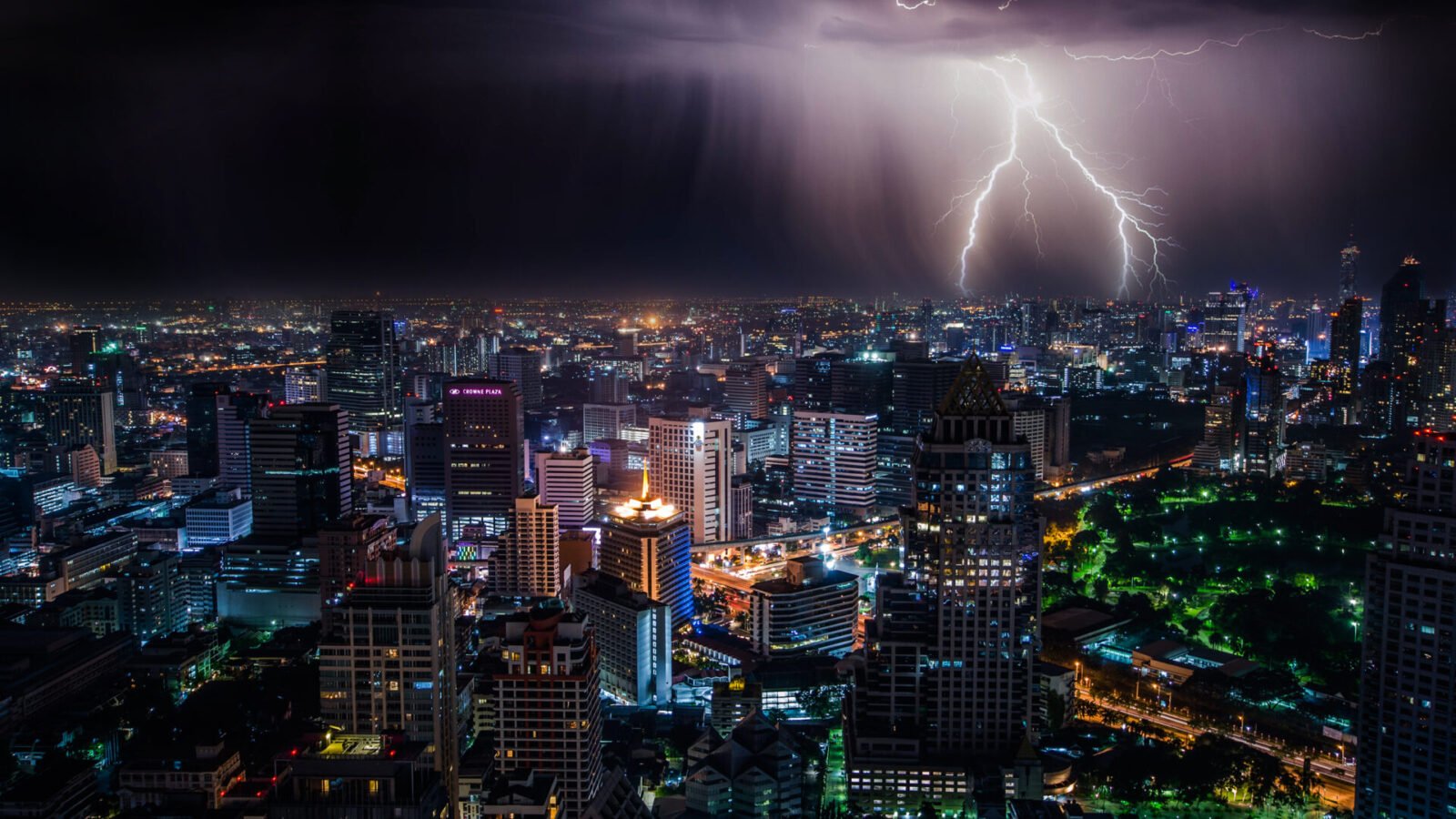
Imagine a storm outside your window. A flash splits the sky. Then, instead of vanishing, a glowing ball appears to drift through the darkness. That is the phenomenon witnesses have called ball lightning for generations. The surprising part is not how strange the stories sound. It is that scientific instruments have recorded something researchers believe may fit the description.
But the evidence is far more complicated than the viral videos make it look.

The observation that changed the conversation
In a study published in Physical Review Letters on January 17, 2014, researchers Jianyong Cen, Ping Yuan and Simin Xue reported that two spectrographs in China recorded a brief luminous event following a cloud-to-ground lightning strike. The instruments measured light from elements associated with soil throughout the event. The team interpreted the observation as ball lightning, a rare chance to study a supposed atmospheric oddity with something better than memory.
That was significant, not decisive. Spectral measurements narrow possibilities, but a single event does not establish one universal mechanism for all reported glowing spheres. Other researchers have explored electrically driven silicon particles and other explanations, and some ordinary electrical discharges can look deceptively exotic on video.
A newer video, and an inconvenient alternative
A paper published June 23, 2025 in the Quarterly Journal of the Royal Meteorological Society analyzed footage recorded during an August 2023 thunderstorm in Bozeman, Montana. The researchers found characteristics compatible with eyewitness descriptions of ball lightning. Crucially, they also said they could not eliminate burning material from a power-line arc as an explanation.

Why the mystery survives
Rare, short-lived events are difficult to measure. A phone camera may conceal scale, distance and exposure effects. A bright dot in a clip could be an electrical arc, a reflection or a genuine atmospheric phenomenon; without reliable location, timing and physical context, viewers may never know which.
The 2025 researchers specifically stressed the need for original footage and surrounding metadata. That is the unglamorous ingredient most internet mysteries lack. Experiments have produced glowing balls under controlled electrical conditions, but recreating a look-alike is not the same as proving every natural sighting follows that process.
So what is ball lightning? There is serious observational evidence worthy of investigation, and there are plausible physical mechanisms. There is not yet a single universally accepted explanation for every alleged encounter. The story is not “science confirms magic”; it is that nature can look fantastical before its mechanisms become clear.
If another bright sphere appears on camera tomorrow, will we preserve the original data—or just share the clip?
Sources and further reading
- 2014 observation in Physical Review Letters
- 2025 peer-reviewed video evaluation
- 2014 laboratory investigation of silicon-based luminous bodies
Editorial note: The sources distinguish documented evidence from hypotheses. Stock photographs are illustrative and are not presented as pictures of the reported phenomena or historical events.