Two space telescopes, 23 years apart, may have captured the same faint object moving through the darkness beyond Neptune. That sounds like the opening of a Planet Nine discovery story. The trouble: if the signal is genuine, it may be the wrong planet.
A November 6, 2026, Scientific American report by Phil Plait has brought fresh attention to a 2025 study of archival infrared data. Its candidate has not been verified, and a major objection goes beyond the usual question of whether the signal is real: its apparent trajectory is difficult to reconcile with the kind of orbit theorists require for the famous hypothetical Planet Nine. The strongest verdict is therefore not ‘ninth planet found.’ It is ‘interesting target, serious caveats, follow-up required.’
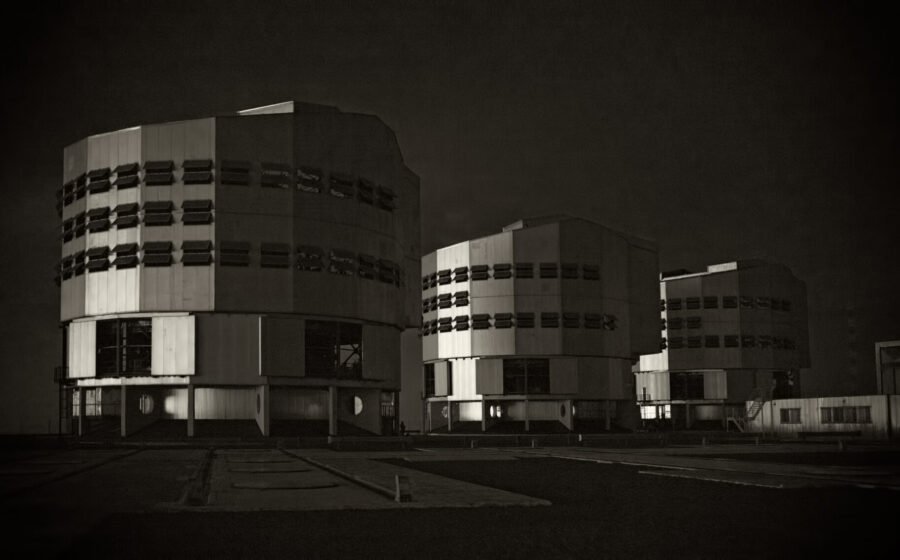
Image note: The featured image is genuine telescope imagery of 2026 ED138 from the NSF–DOE Vera C. Rubin Observatory, not an image of Planet Nine or the 1983–2006 infrared candidate. Credit: NSF–DOE Vera C. Rubin Observatory. The actual candidate infrared images can be examined in the research paper’s Figure 5.

What the infrared investigators actually found
In a peer-reviewed study published in 2025 in Publications of the Astronomical Society of Australia, Terry Long Phan and colleagues compared measurements from two retired infrared missions: NASA’s Infrared Astronomical Satellite (IRAS), which surveyed the sky in 1983, and Japan’s AKARI satellite, which surveyed in 2006–2007.
Why look for heat rather than reflected sunlight? At hundreds of times Earth’s distance from the Sun, an unseen planet would receive little sunlight and reflect still less back to us. Far-infrared instruments might nevertheless detect its own weak thermal emission. The team searched for sources whose positions changed across the 23-year gap by an amount consistent with a distant orbit, and whose measured infrared fluxes met their assumptions about a massive icy world.
That was a highly selective search, not a blind photograph of a planet. The investigators modeled a range of 7–17 Earth masses and 500–700 astronomical units from the Sun. An astronomical unit (AU) is approximately the mean Earth–Sun distance; Neptune orbits at about 30 AU. After positional and brightness filters, 13 candidate IRAS–AKARI pairings remained. Visual inspection left just one pair the investigators judged promising.
The observations were taken decades apart, in different instruments, with different sensitivities. The candidate appears at one position in the older data and another in the later survey. That is consistent with movement, but consistency is not identification. Neither observation has been shown to be the same confirmed planetary body.
The team’s university research summary reproduces the actual infrared comparison, while the journal paper provides the selection method and measurement limitations. These are processed scientific survey images, not a close-up portrait of an undiscovered planet.
The awkward orbit: could this be Planet ‘8.5’?
There are two separate questions: Is the infrared candidate a real moving solar-system object? And if it is, does it match Planet Nine? They are not the same test.
The Planet Nine hypothesis advanced by Caltech astronomers Konstantin Batygin and Mike Brown in 2016 proposes an unseen massive world that shapes some extraordinary orbits of distant trans-Neptunian objects (TNOs). A convincing discovery would need not only a real object, but an orbit compatible with the predicted gravitational influence. Their classic model anticipates an orbital tilt on the order of 15–20 degrees to the main planetary plane.
As Scientific American reports, Brown’s reading of the infrared pairing instead suggests an apparent inclination of roughly 120 degrees—a steeply tilted, retrograde trajectory. That is radically different from the proposed Planet Nine orbit. Brown had already challenged the candidate’s compatibility in May 2025, regardless of whether it proves to be a genuine object. Batygin has jokingly described a distinct hypothetical body of this sort as ‘Planet 8.5.’
That nickname is not a designation, discovery announcement or evidence of an additional confirmed planet. And the inferred track is itself conditional: if the two survey signals are unrelated sources or artifacts, there is no planetary orbit to explain at all.
Two points are not an orbit
A genuine solar-system discovery must survive repeat observations. One survey point in 1983 and another in 2006 cannot establish a dependable Keplerian orbit, disentangle all plausible source associations, or prove an object is gravitationally bound to the Sun. Background galaxies, variable sources, confusion in crowded sky fields, calibration noise and other survey artifacts all warrant scrutiny.
Phan and colleagues acknowledged this shortcoming in their own paper and proposed more sensitive follow-up with the Dark Energy Camera (DECam) on the Victor M. Blanco Telescope in Chile. In March 2026, their group also presented preliminary work seeking third detections in the infrared archives. A conference-poster description, however, is not a published confirmation that the original candidate is a planet.
A separate 2025 study using AKARI survey data flagged two additional possible candidates. Those are different candidates—not an independent confirmation of the IRAS–AKARI pair. More possible dots on a map do not, by themselves, add up to a new world.
What if the entire Planet Nine clue is weaker than advertised?
Planet Nine was proposed partly because some distant icy bodies seem to share unusually aligned orbits. Advocates argue that an unseen planet could organize those trajectories through gravity. Skeptics counter that telescopes do not search every direction equally, and small samples can manufacture impressive-looking patterns. Both questions matter: an object could be real without being the cause of the clustering, and a dynamical pattern could exist without the infrared candidate being its explanation.
In an April 2026 preprint, Amir Siraj, Christopher Chyba and Scott Tremaine introduced a method intended to account for uneven survey coverage. Applying it to 25 distant trans-Neptunian objects, they reported that the statistical significance of one kind of orbital alignment fell from 2.7 sigma to 1.9 sigma, with its preferred direction poorly constrained. That is a challenge to a particular statistical argument, not proof that no distant massive planet exists. This work was posted as a preprint, so its findings should be weighed with that status in mind.
Meanwhile, another study published in January 2026 searched roughly 98 square degrees using apparent nightly position shifts and found no credible Planet Nine candidate to its specified brightness limits. It constrained a surveyed part of the sky, not every possible hiding place.
Rubin has already found another world—and shows what confirmation looks like
On October 27, 2026, the NSF–DOE Vera C. Rubin Observatory announced a separate dwarf-planet candidate designated 2026 ED138. It is not Planet Nine and not the infrared candidate under debate. Rubin recorded it dozens of times in 2026; astronomers then identified earlier DECam observations extending its measured path back to 2016. Multiple positions across years allowed its orbit to be characterized much more securely.
That distinction is the story. Apep Bar previously reported on ED138’s discovery. Unlike the speculative Planet Nine identification, ED138 has been repeatedly observed as a moving distant object; whether it formally qualifies as a dwarf planet is a different classification question.
Contextual video: Watch Rubin Observatory’s official 50-second orbital animation of 2026 ED138 (October 27, 2026). This is a scientific visualization of ED138, not footage or proof of Planet Nine. Credit: NSF–DOE Vera C. Rubin Observatory/NOIRLab/SLAC/AURA/R. Proctor, with orbit data from the IAU Minor Planet Center.
The discovery that hasn’t happened—yet
The solar system has eight officially recognized planets. Pluto, discovered in 1930, is classified as a dwarf planet; Planet Nine remains a working hypothesis, not a numbered addition to the family. The current infrared claim is not fresh telescope footage captured in November 2026: it is a revived discussion of 1983 and 2006 archival measurements analyzed in a paper published in 2025.
Follow-up observations could reveal an exciting object on an unexpected path, disprove the apparent motion, or leave the question unresolved. Each is a legitimate scientific outcome. But the difference between candidate and discovery matters enormously when only a couple of distant blips separate a new planet from wishful pattern-matching.
In a sky full of possible worlds, are we finally seeing the shadow of an unseen planet—or learning how convincingly old data can impersonate one?
Sources and further reading
- Phan et al. (2025), IRAS–AKARI candidate study — primary paper, open access under CC BY 4.0
- Phil Plait, Scientific American, November 6, 2026 — discussion of candidate and orbital objection
- Astronomy.com, May 2025 — independent reporting and Brown’s response
- Siraj, Chyba & Tremaine (2026), Measuring Apsidal Clustering — preprint
- Socas-Navarro & Trujillo (2026) — targeted search with nondetection
- Rubin Observatory (October 27, 2026) — official ED138 discovery announcement
- NASA: Planet Nine / Planet X explained — scientific status of hypothesis