The number on the bathroom scale may barely move—yet the waistband gets tighter. That seeming contradiction is one of midlife’s less charming surprises. Arms and legs may grow smaller as muscle is lost, even as more fat collects around the abdomen. It is not necessarily a failure of willpower, nor is it always just a matter of eating more.
Traditional Chinese medicine (TCM) has a very different vocabulary for this pattern: an imbalance sometimes described as phlegm-dampness and a weakening of the traditional “spleen” system. An recent health article highlighted foods, movement and acupressure within that tradition. But what happens when these ideas are placed beside modern research on aging, visceral fat and clinical trials?
The answer is more interesting than either a miracle cure or a blanket dismissal. Some everyday recommendations overlap with well-supported preventive medicine. Other TCM explanations are traditional interpretations, not established biological mechanisms. And a few complementary treatments show preliminary benefits that still need much better testing.

First mystery: why the waist can grow when the scale barely changes
Muscle, fat and bone do not change at identical rates over a lifetime. The U.S. National Institute of Diabetes and Digestive and Kidney Diseases notes that older people tend to lose muscle and bone while gaining body fat. That means a stable body mass index can hide a meaningful shift in body composition.
At menopause, another process becomes particularly important: fat distribution. The International Menopause Society’s midlife health recommendations distinguish the effects of aging on overall weight from the effect of declining estrogen on where fat accumulates. In other words, menopause does not single-handedly explain weight gain, but it helps explain a shift toward the abdomen. Men also experience aging-related changes in muscle mass, activity and fat distribution, though the hormonal mechanisms differ.
Sleep, medication effects, eating patterns, physical limitations and chronic illness can add complications. No single hormone or TCM diagnosis explains every expanding waist.
The hidden distinction: fat beneath the skin versus fat around the organs
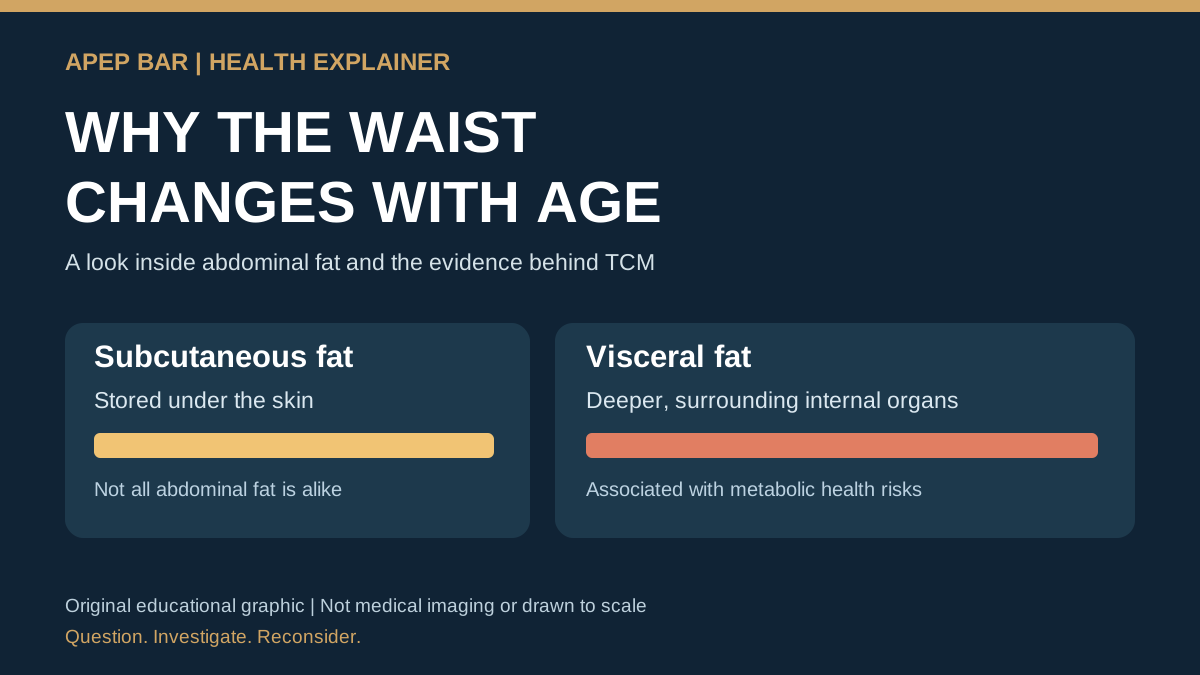
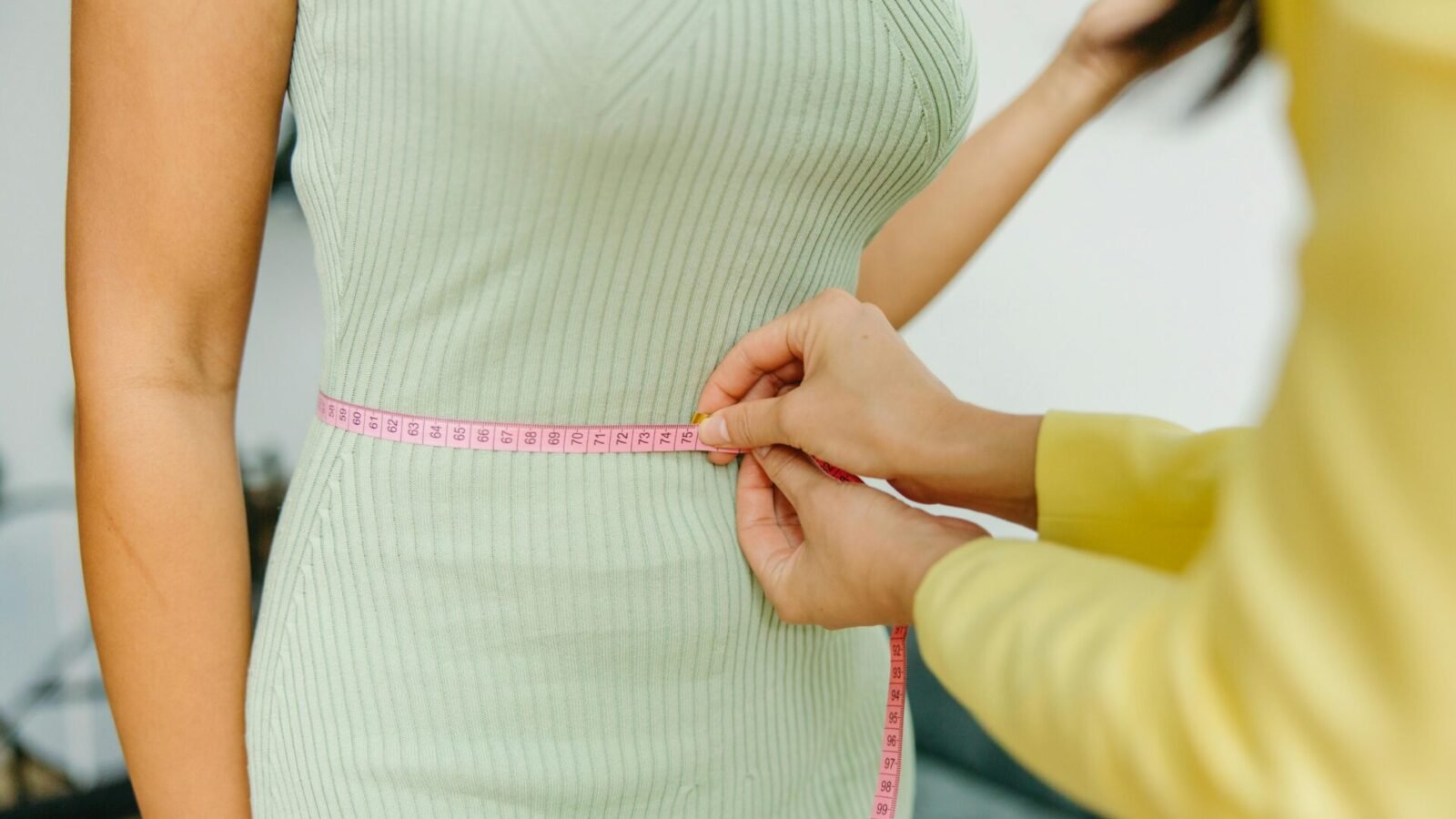
Subcutaneous fat sits just beneath the skin. Visceral fat is stored deeper in the abdominal cavity, around internal organs. Both are part of human anatomy; excessive visceral fat is more closely linked to insulin resistance and cardiometabolic risk. A tape measure cannot tell you exactly how much visceral fat you carry, but waist circumference is a useful, inexpensive clue.
NIDDK identifies waist sizes of approximately 35 inches for women and 40 inches for men as risk flags in many U.S. adult screening contexts. These are screening guides, not a personal diagnosis or universal cutoffs: risk can emerge at smaller waists for some populations, and clinicians should interpret measurements with individual medical history. See the NIDDK assessment guide and the 2026 obesity standards of care.
The takeaway is not that everyone needs a flat stomach. The useful question is whether fat distribution, blood pressure, blood sugar and other clinical measures suggest growing risk.
What TCM means by “spleen weakness” and “dampness”
In classical TCM, the “spleen” does not simply mean the anatomical organ that filters blood. It is part of a traditional conceptual system used to describe digestion, transforming food and moving fluids. “Phlegm-dampness” similarly refers to a traditional pattern of symptoms such as heaviness, sluggishness and fluid-related complaints. These terms may guide a TCM practitioner’s assessment, but they are not interchangeable with a biomedical diagnosis of obesity, fluid retention or metabolic disease.
That distinction matters. A large or soft abdomen does not prove “dampness”; nor does weight loss prove that an invisible TCM substance was removed. It is reasonable to study whether particular practices help people, while asking researchers to measure outcomes with validated methods rather than relying entirely on traditional labels.
The NIH National Center for Complementary and Integrative Health describes mixed evidence across different TCM approaches, with specific benefits for some pain conditions and important safety concerns for some herbal products.
Food, fruit at night and the traditional “four gods” soup
The late-fruit claim needs a reality check
One common TCM-inspired recommendation is to move fruit earlier in the day and avoid large portions at night. There is a plausible but limited piece of science underneath discussions of meal timing: a 2022 randomized crossover experiment found that later meals, under tightly controlled laboratory conditions, increased hunger and reduced some measures of energy expenditure. That experiment did not show that a normal serving of whole fruit after dinner uniquely causes belly fat.
Whole fruit contains fiber, water and valuable nutrients. Replacing it with juice can make it easier to consume more sugar and fewer intact plant fibers, but demonizing all evening fruit is not evidence-based. A person’s overall dietary pattern, portions, sleep schedule, medications and blood-glucose needs matter more than a blanket rule about the clock.
Sishen soup: a traditional meal, not a proven glucose treatment
Sishen, sometimes called “four gods” soup, is traditionally prepared with ingredients such as Chinese yam, lotus seeds, fox nuts (euryale seeds), poria and sometimes coix seed. It can be discussed as part of a food tradition, but claims that the soup reverses diabetes or melts visceral fat are not established by robust human clinical trials. Laboratory and animal findings about individual ingredients cannot establish the clinical effect of a complete cooked dish.
For someone with diabetes, suddenly replacing familiar carbohydrates with an unfamiliar herbal preparation can complicate treatment and glucose management. A nutritious eating pattern is individualized; prescribed glucose-lowering medicines should not be stopped on the strength of a testimonial. The NIH warns that some marketed Chinese herbal products have contained contaminants, hidden drugs or incorrectly identified herbs.
Acupressure and acupuncture: where evidence starts—and stops
TCM practitioners may use gentle pressure around the abdomen or at points on the legs for digestive complaints. Some people find massage comforting. But feeling temporarily less bloated is not the same as reducing visceral fat, and there is not high-quality evidence that pressing a named acupoint selectively eliminates abdominal fat. Do not apply forceful pressure to an unexplained swelling, hernia, painful abdomen or recent surgical area.
Acupuncture has a larger research literature. A 2025 systematic review of 64 randomized trials reported pooled differences favoring acupuncture in body weight (about 2.7 kilograms) and waist circumference (about 3.6 centimeters) compared with various control groups. The headline numbers sound promising, but the authors judged the studies generally low quality with uncertain bias and inadequate safety reporting. A separate review published in January 2026 found more modest average weight differences against sham treatment (about 1.6 kilograms) and rated the certainty of evidence low to moderate.
Neither result proves that acupuncture preferentially removes visceral fat or prevents diabetes, heart attacks or long-term weight regain. It is better understood, at present, as an optional complement, not the primary treatment for obesity. Needle procedures also carry risks if performed improperly; consult a qualified licensed professional who uses sterile, single-use needles. See NCCIH’s acupuncture safety review.
Where an ancient movement practice meets modern public-health advice
Tai chi and qigong, both associated with Chinese movement traditions, offer an intriguing overlap with modern care. They encourage regular movement, attention, coordination and balance. They are not proven shortcuts to losing belly fat, but they can be accessible ways to stay active, including for some older adults and people who need modified movements.

For adults 65 and older, the CDC recommends a mix of aerobic movement, muscle-strengthening at least twice a week, and balance activities. The general aerobic target is at least 150 minutes a week at moderate intensity, adjusted to ability and medical circumstances. Resistance exercise matters because protecting muscle is a central part of healthy aging, not merely a strategy for burning calories.
Video: 15-minute workout for older adults — National Institute on Aging
Official instructional demonstration, not footage from an abdominal-fat study. The National Institute on Aging’s 2016 routine includes warm-up, strength, flexibility and balance movements.
Video: Intro to tai chi for veterans — Veterans Health Administration
Official 2020 instructional class, not evidence of weight-loss efficacy. The VA demonstrates a gentle tai chi/qigong class with seated and standing adaptations, focused on mindfulness, movement and balance.
A more useful plan than chasing an instant flat stomach
If a slowly expanding waist raises concerns, start with a practical medical and lifestyle check. Ask whether waist size, blood pressure, A1c or glucose, lipids, activity and medication changes warrant review. For most adults, the best-supported foundations include:
- Protect muscle. Incorporate resistance movements suited to your ability—chair stands, bands or weights—on at least two days each week, with professional guidance if needed.
- Make walking or equivalent aerobic movement routine. Short sessions count; progress gradually toward public-health targets if appropriate.
- Build sustainable meals. Favor vegetables, whole fruit, adequate protein, legumes or other fiber sources, and sensible portions rather than unproven “fat-melting” teas.
- Use tai chi for movement and balance if it suits you. Enjoy it as a practice rather than a promise of spot reduction.
- Measure outcomes that matter. Track changes consistently over time, including how you feel and function, not just how your stomach looks.
Unexplained or rapid abdominal enlargement is a different matter from ordinary aging. Persistent bloating, a new lump, severe pain, vomiting, bleeding, shortness of breath or unintended weight loss deserve medical assessment; abdominal distension can have causes besides fat, including gastrointestinal, gynecologic or fluid-related conditions. Older adults who are frail or losing weight unintentionally may need muscle-preserving nutrition rather than weight-loss advice.
The verdict: tradition can ask questions; evidence must answer them
TCM’s language of dampness may give some people a way to describe heaviness and digestive discomfort. Its movement traditions may also help people stay active. But a traditional explanation is not a demonstrated mechanism, a case report is not a trial, and a small change in waist circumference is not proof that harmful visceral fat has vanished.
The real opportunity is to separate accessible practices from exaggerated claims: enjoy nourishing food, move regularly, protect muscle, and use complementary methods with realistic expectations and appropriate safety checks.
Apep Bar’s question: When an ancient tradition recommends a habit that modern research also favors, do we need to believe the traditional explanation—or is the most interesting discovery the measurable benefit itself?
Primary research and further reading
- The Epoch Times: Why the Belly Gets Bigger With Age—TCM Approaches That May Help (source article prompting this examination; reporting and advice independently assessed here).
- NIH/NIDDK: Am I at a Healthy Weight? — age, body composition and waist-size screening.
- International Menopause Society: Recommendations on Women’s Midlife Health and Menopause (2025).
- American Diabetes Association: Screening and Staging of Obesity in Adults (2026).
- Vujović et al., Cell Metabolism (2022): randomized crossover study on late eating.
- Li et al., Complementary Therapies in Medicine (2025): meta-analysis of acupuncture trials.
- Ding & Xiao, Journal of Integrative and Complementary Medicine (2026): systematic review of acupuncture for obesity.
- NCCIH: Traditional Chinese Medicine—What You Need to Know — evidence and safety.
- CDC: Physical Activity for Older Adults — exercise recommendations.
Editorial/medical note: This article is an evidence review, not individual medical advice. Images are labeled contextual; the site featured graphic is an original illustrative infographic, not a clinical scan. Videos are official general-exercise demonstrations, not footage or proof of the acupuncture trials. Image reuse/credit details appear with each photograph.