APEP BAR | NEWS ANALYSIS — November 5, 2026
From California and Florida ballot bans to the defeat of Texas Gov. Greg Abbott, the November 3 election turned the data-center boom into a test of who controls land, water and electricity. But the numbers require care: local measures are not a national referendum on AI.
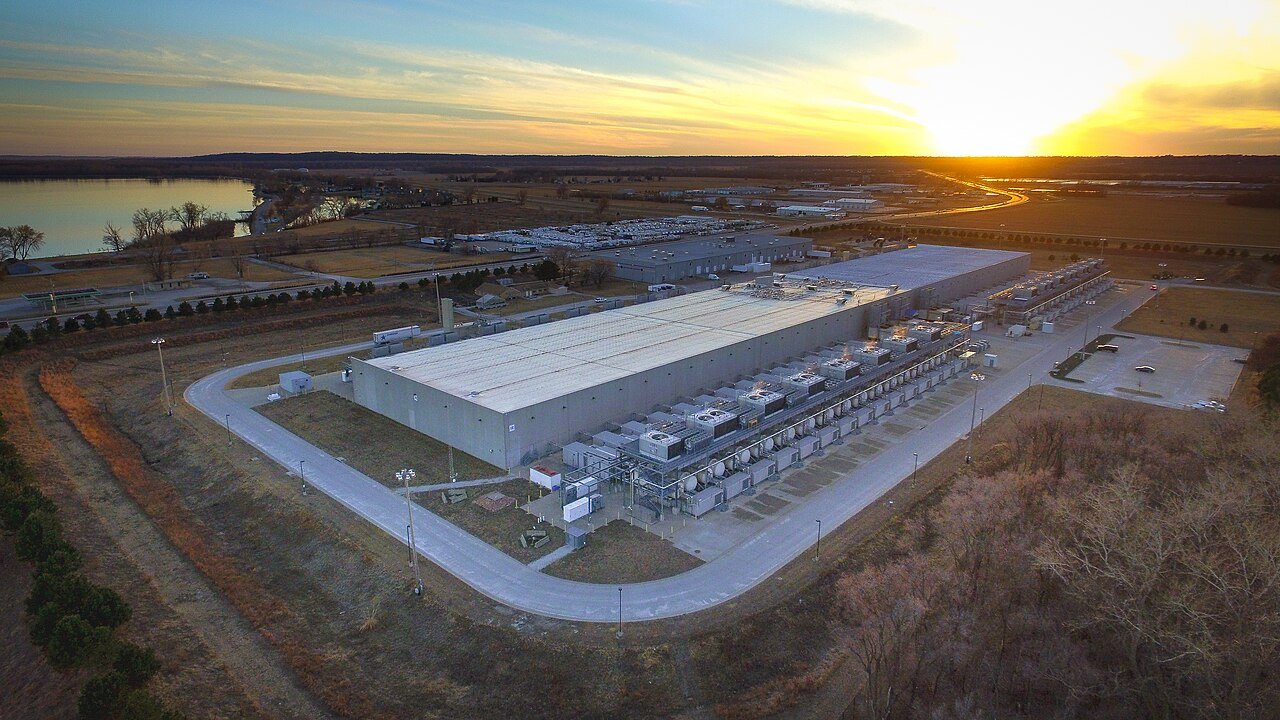
At first glance, the most consequential casualty of Tuesday’s midterms was not a politician. It was a building permit — or, more precisely, the assumption that large-scale AI infrastructure could win local approval by promising economic development and moving quickly.
According to Ballotpedia’s November 4 tally, voters had decided 47 data-center-related local measures in 2026, and 46 outcomes favored tighter limits — through approving restrictions or defeating proposals meant to ease development. One went the other way, in Harwood, North Dakota, where voters rejected additional industrial review requirements. Those are striking results. They are also more specific than the claim that every American opposes every data center.
The figures circulating in the November 4 report from 404 Media came from an earlier election-night snapshot. Ballotpedia identifies 41 measures on November 3 in 10 states; its wider 13-state total covers at least 50 measures across all of 2026, including six decided earlier and three scheduled for December. Mixing those time frames makes an already dramatic result harder to understand.
California and Florida voted for bans. Illinois sent a warning.
In Alhambra, California, voters backed Measure DB, which prohibits data centers within the city, by 12,496 votes to 2,772 — roughly 82% in favor. Its value to supporters is not simply banning the buildings now but preventing a future city council from quietly reversing the decision.
In Edgewater, Florida, roughly 77% supported a charter amendment barring approval, construction and expansion of new data centers. In Bloomington, Illinois, around 78% supported a moratorium on large-scale facilities. The distinction matters: Bloomington’s measure was advisory, not a binding construction ban. In other towns, voters set limits around 25 megawatts, adopted temporary moratoria or rejected development-friendly zoning arrangements. They did not all vote on the same question.
Even the comparison to AI needs qualification. Ballotpedia’s definition includes computing and storage facilities that support cloud services as well as AI. Some local referendums covered data centers generally, not exclusively AI facilities.
Texas: a governor loses, but no single issue explains 10 million votes
In Texas, Republican Gov. Greg Abbott — one of the most visible champions of the state’s AI and data-center buildout — lost his bid for a fourth term to Democrat Gina Hinojosa. The Texas secretary of state’s November 4 results showed 5,230,789 votes for Hinojosa and 4,524,527 for Abbott, a margin of 706,262 votes, with all polling locations reporting. Those numbers were still unofficial pending canvassing.
Hinojosa challenged Abbott’s embrace of AI construction and its potential effects on Texans. Texas Tribune reporting examined about $9 million in contributions linked directly or indirectly to data-center interests going to his campaign. Abbott later announced permitting and grid-connection pauses, but 404 Media reported that some projects continued advancing through regulatory channels. Whether a nominal pause actually pauses projects is the kind of detail elections tend to expose.
Still, it would be misleading to attribute Abbott’s entire defeat to data centers. Voters were also weighing costs of living, education, immigration and national politics. A candidate can lose while one of their positions becomes less popular, without that position being proved the decisive cause.
Apep Bar examined this pre-election shift in The Data Center U-Turn: Candidates Promise Guardrails While AI Money Flows. The election now gives that earlier reporting a crucial second chapter.
In a Kentucky town, the write-in candidate beat the name on the ballot
In Burgin, Kentucky — not “Berlin,” as one circulating video transcript renders the name — George Hensley supported advancing a controversial hyperscale proposal involving annexation. He was the only printed mayoral candidate. His opponent, Joe Monroe, ran as a write-in against the project and won.
The Kentucky election returns show 273 write-in votes against Hensley’s 91. Kentucky Lantern’s reporting identifies Monroe as the winning candidate and describes the local fight over a proposed data-center project. It is a sharper case study than extrapolating from a statewide race: residents had a clearly identifiable controversy, candidates took different positions, and the local result was decisive.
What does the backlash cost — and what do developers offer?
The argument against vast data centers is not just aesthetic. Residents ask who pays for transmission lines, substations, new generation and water infrastructure, and whether existing customers can be protected from the bills. A June 2026 MIT working paper, revised in October, tracked data-center entry and utility outcomes from 2010 through 2024. Its estimates linked entry to a 2.1% rise in residential retail electricity rates on average in the studied settings, with differing impacts across utility ownership and market structures. That is evidence of a potential cost, not proof that every new facility inevitably raises every household’s bill by 2.1%.
Developers argue that new computing capacity supports business services and AI research, can add construction work and tax receipts, and may be paired with dedicated generation or upgraded grid infrastructure. Those benefits vary widely by location and contract. Local voters are entitled to ask for an accounting: How many long-term jobs? How much water under the proposed cooling design? Who pays for peak electricity capacity? Who absorbs the cost if promised facilities are scaled back?
These questions also reach public land. Apep Bar recently examined an Idaho data-center proposal involving roughly 3,700 acres of federal land, and a San Diego federal-property proposal that complicates local moratoriums. Neither proposal is made unlawful simply because other communities voted against data centers.
And then Elon Musk looked toward space
Elon Musk, who spent hundreds of millions supporting Republican candidates, responded to the election fallout on X by suggesting that data centers in space were looking more appealing. WIRED reported his early-Wednesday posts and the poor showing of many candidates backed by his political operation. The remark is best read as a political response and a speculative technological idea, not a confirmed space-data-center project or evidence that terrestrial data centers have been outlawed.
Video: Watch the 404 Media short explainer about the midterm results (reported commentary; not footage of vote counting or a comprehensive official election record).
The election did not ban the cloud. It demonstrated something harder for developers to route around: a growing number of communities want a vote before someone else rewires their grid and remakes their landscape. If the AI boom promises a public benefit, why should the public have to fight to see the bill?
Documents and further reading
- Ballotpedia: 2026 data-center ballot-measure tracker and November 4 scorecard
- Texas secretary of state: November 3 election returns
- Kentucky: Mercer County unofficial returns
- 404 Media: American Voters Overwhelmingly Reject AI Data Centers (Matthew Gault, November 4)
- MIT CEEPR: Who Pays for Growth? Evidence from Data Centers and the Grid