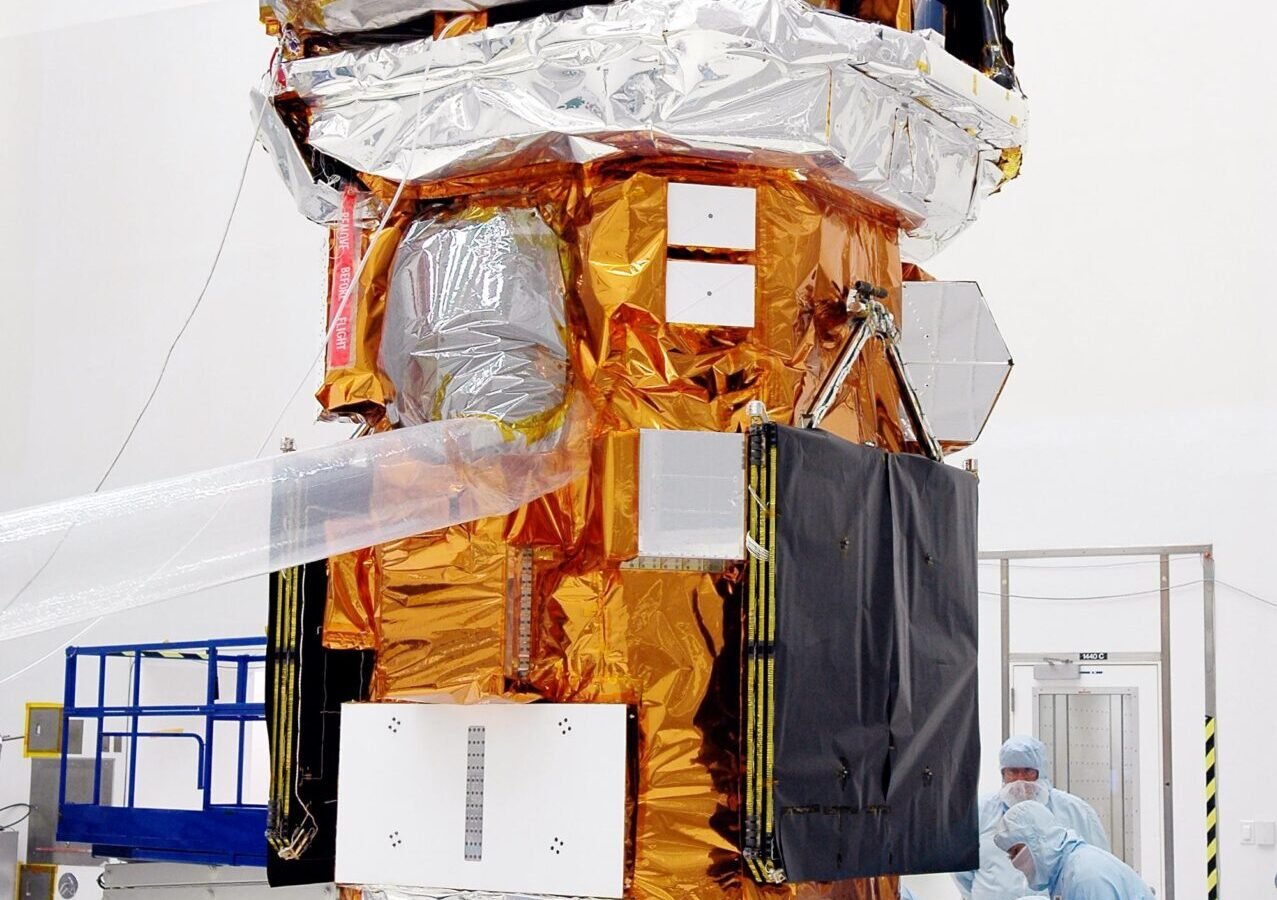
November 6, 2026 — For nearly 22 years, an orbiting observatory chased some of the universe’s most violent flashes. Now NASA’s Neil Gehrels Swift Observatory has made its final descent into Earth’s atmosphere—and the agency has published a November 6 farewell to the mission that outlasted its original design by roughly two decades.
The U.S. Space Force confirmed Swift reentered at 7:39 a.m. Eastern time on November 4 over the North Sumatra region of Indonesia, NASA reported. The agency expected most of the spacecraft to burn up; some denser components may have survived. That wording matters: it is not confirmation that debris landed somewhere specific or caused injuries.
How a two-year mission became a 22-year one
Launched in 2004 with a two-year prime mission, Swift was designed to detect gamma-ray bursts—enormously energetic flashes often associated with catastrophic stellar events—and rapidly turn other instruments toward the same location. Its gamma-ray, X-ray and ultraviolet/optical capabilities made it a fast-moving coordinator for follow-up observations from the ground and other telescopes.
Along the way, the observatory investigated phenomena far beyond its initial mission: supernovae, active galaxies, stellar flares, comets and asteroids. Its scientific legacy does not vanish with the spacecraft; archived measurements can continue to inform research.
The orbit that could not be saved
NASA explained in its November 6 Astronomy Picture of the Day that elevated solar activity accelerated atmospheric drag and the loss of altitude. An innovative attempt to rescue the telescope by boosting its orbit did not succeed. Once reentry became inevitable, the question shifted from continued observations to the spacecraft’s final trajectory.
Swift’s end is also a reminder that satellites operate in a changing environment. Even a mission that performs beyond expectations cannot ignore the long-term effects of atmospheric drag in low Earth orbit.
What remains unanswered
There is no basis in NASA’s confirmation to describe a spectacular filmed crash, an exact recovered impact site, or damage on the ground. The verified story is poignant enough: a remarkable mission concluded over Indonesia, leaving behind a deep archive of cosmic explosions.
When the hardware burns away, can its discoveries give a new generation of observatories an even longer view into the violent universe?
Sources and image credit
NASA reentry confirmation, updated November 4 · NASA Astronomy Picture of the Day farewell, November 6 · NASA mission history.
Featured photograph: The actual Swift spacecraft under prelaunch preparation in 2004—not footage of reentry. NASA/Kennedy Space Center, public domain, original archive.