APEP BAR INVESTIGATION | Election Day, November 3, 2026
From Michigan to Florida, politicians are discovering that welcoming enormous AI facilities is politically easier than explaining who pays for their power, water and tax breaks. Some now promise protections. Their financial disclosures, donors and legislative records make those promises worth testing.

In November 2025, Texas Gov. Greg Abbott stood beside Google executives to celebrate a $40 billion AI-and-cloud infrastructure investment. He called Texas the epicenter of AI development. By August 2026, his office was blocking new grid connections for proposed data centers until an audit could be completed. By September, it had also ordered a pause on environmental permits.
What changed? Public opposition, for one. Meanwhile, a Texas Tribune review of donations found roughly $9 million from people and organizations linked directly or indirectly to the data-center industry flowing to Abbott’s campaign since July 2025.
Abbott is not alone. Michigan Senate nominee Mike Rogers, Nevada Gov. Joe Lombardo and Florida gubernatorial nominee Byron Donalds have each confronted a version of the same political dilemma: embrace the AI building boom, or reassure communities worried about electricity bills, water supplies, environmental reviews and decisions made behind closed doors.
Campaign money makes the story sharper. It does not, by itself, establish a corrupt bargain. The question is not simply who took money; it is whether the promised guardrails survive the election.
Michigan: Mike Rogers backed faster AI permitting, then called for a pause
In March 2026, Republican Senate nominee Mike Rogers endorsed a national AI policy framework favoring a faster federal approval process for infrastructure. In August, as Michigan communities pushed back against proposed data centers, he took a strikingly different public stance. Rogers called for a one-year moratorium on new data centers in Michigan while stronger protections are developed.
The precise verb matters: Rogers proposed a moratorium; he did not impose one. He was running for the U.S. Senate, while the proposed statewide pause would require action from Michigan policymakers. Rogers said he did not support a nationwide ban and wanted to protect community control, water and utility customers. That is narrower than declaring he has turned against all AI infrastructure.
There is also a personal financial question. An investigation published by The Lever and carried by Michigan Advance reviewed his financial disclosure and estimated that Rogers and his wife held between $1.7 million and $2.6 million in companies positioned to benefit from AI-friendly policy. The reported portfolio included exposure to Blackstone’s real-estate trust, which invests heavily in data centers.
That is a report about investments the household owns, not proof that AI companies donated $2.6 million to his campaign, and not proof of an unlawful conflict. It is nevertheless relevant to voters weighing a policy promise from someone whose investments could prosper if the industry expands.
Rogers’ Democratic opponent, Abdul El-Sayed, has also called for stronger data-center protections, though reporting at the time found he had not embraced the same broad statewide moratorium. The comparison is useful: competing candidates can both recognize local costs while choosing different regulatory tools.
Texas: Greg Abbott’s $40 billion welcome meets a $9 million money trail
On November 14, 2025, Abbott enthusiastically announced Google’s plan to invest $40 billion in Texas AI and cloud infrastructure through 2027, including new data-center campuses. Google’s own announcement described new energy resources, workforce training and facilities in Armstrong and Haskell counties.
Then came resistance. On August 3, 2026, Abbott directed the state’s power commission and grid operator ERCOT to audit proposed facilities in the grid interconnection queue before those projects advanced. On September 21, he extended the pause to state environmental permitting while regulators collected information about electricity, water and community effects.
These are actual government actions, not just campaign slogans. But they are audit-dependent pauses, not a permanent statewide prohibition on new facilities. Questions also remain about whether the restrictions were implemented consistently. The Texas Tribune reported on October 20 that Public Citizen questioned permitting activity after Abbott’s order, while the Texas environmental agency said it was complying.
Now follow the money. The Tribune’s October 19 investigation identified about $9 million in contributions to Abbott since July 2025 from donors with data-center-related financial interests—roughly 13% of his donations over that period. About $4.9 million came from donors who develop, own or operate data centers. The remaining approximately $4.1 million came from donors with more indirect relationships to the sector.
That distinction is essential: the $9 million is not a list of checks written by AI companies alone. Some donors have sprawling business portfolios and multiple reasons for supporting the governor. But the overlap between a booming industry, its political spending and public policy is significant enough to demand scrutiny.
Democratic challenger Gina Hinojosa has attacked Abbott’s industry-friendly record. Voters, meanwhile, face a more practical question: will data centers pay their full grid costs and disclose their water demands after the campaign spotlight moves on?
Nevada: Joe Lombardo’s donor-supported boom gets new guardrails
Republican Gov. Joe Lombardo has been an enthusiastic promoter of data-center investment as a way to diversify Nevada’s economy. In a June op-ed, he described the sector as an economic opportunity, while also acknowledging potential pressure on water and power. In August, he described it as a possible new gold rush if protections were in place, according to The Lever.
The same investigation traced $2 million to Better Nevada PAC, a committee supporting Lombardo: $500,000 each from venture capitalist Ben Horowitz and his wife, Felicia, and $1 million from Jessica Roy, whose husband founded data-center company Switch. These are donations to a supporting political committee, not $2 million proven to have been deposited directly into Lombardo’s campaign account.
In September, Lombardo signed a real executive order requiring data-center developers seeking certain state tax abatements to make commitments on school taxes, water protection, grid reliability and not transferring project costs to ordinary ratepayers. The administration argues that development and community safeguards can go together. Its Democratic opponent, Attorney General Aaron Ford, has pushed for stronger checks on subsidies and the use of public land.
The viral criticism also points to Lombardo’s cooperation with federal permitting officials. But an important claim needs correction. The federal-state FAST-41 agreement was announced August 31, before Lombardo’s September 18 order—not the day before. It coordinates permitting timelines for potentially eligible critical infrastructure. The agreement does not, by its own terms, erase all local or environmental review. Whether faster processes reduce meaningful public participation on particular projects is a legitimate question, but a claim of automatic exemption goes beyond the document.
Nevada has a genuine test case. Associated Press reporting describes intense public-land conflict over proposed data centers near Boulder City and a court setback for one project over environmental review. Residents have reason to ask which protections are binding, and at what stage they are enforced.
Florida: Byron Donalds, a $5 million outside-spending pledge and two very different bills
Republican gubernatorial nominee Byron Donalds earlier welcomed data-center investment and emphasized Florida’s appeal to developers. As concern grew, he increasingly stressed local authority, protection for electricity customers and transparency. In an October 30 interview with FOX 13, Donalds said local governments could reject proposals and promised to prevent costs from falling on ordinary customers.
The campaign-finance trail is substantial, but wording matters. Axios reported that the pro-AI political network Leading the Future, backed by prominent technology investors and OpenAI president Greg Brockman, planned $5 million in support of Donalds. That was a pledge for independent political spending, not a $5 million direct campaign contribution from OpenAI. The Miami Herald later documented at least $500,000 in television advertising purchased by American Mission, an associated pro-AI political committee, to promote Donalds. Independent political committees are legally prohibited from coordinating those expenditures with campaigns.
Then there is state Sen. Brian Avila, Donalds’ running mate. The original video points to his bill providing a public-records exemption for information about planned data centers. That bill exists: SB 1118. But it died on the Senate calendar on March 13, 2026. It did not become law.
Another Avila-sponsored measure, SB 484, did become law in May. According to the Florida Senate’s official summary, it preserves local land-use authority, imposes new conditions to keep certain large electricity users from shifting costs to other ratepayers, creates water-permitting safeguards and limits an existing economic-development records exemption for data-center projects by removing the possible additional 12-month extension. The law does not solve every transparency question; it also complicates a simple narrative that Avila tried only to hide information from the public.
Donalds’ Democratic opponent David Jolly has called for a wider pause on data-center development. The real disagreement is increasingly about the scope and speed of development—not whether every server facility should disappear.
Why these buildings suddenly became an election issue
Most voters did not spend previous election cycles debating power-interconnection queues. Now the machines behind AI are becoming visible in neighborhoods, zoning hearings and utility forecasts. A data center can bring construction work and investment while also creating unusually large electricity demand, potential water stress and concentrated land-use impacts. The size and severity vary by design, location and local infrastructure; they cannot be judged by a single national average.
The stakes are measurable. A June 2026 Lawrence Berkeley National Laboratory report estimated that data centers could account for approximately 11.8% of U.S. electricity use by 2030 in its reference case, with a range of 9.5% to 15.3% across scenarios. These are forecasts, not energy already consumed, and include data centers beyond those dedicated to AI.
Industry advocates point to jobs, investment, new generating capacity and efficiency improvements. Opponents warn about utility-rate exposure, tax abatements and communities receiving the burden without a meaningful veto. Both sets of claims should be tested project by project.
Four tests for every anti-data-center campaign promise
First: what is the actual policy? A candidate calling for a one-year pause is not the same as an executive imposing a grid-connection audit, or a governor signing a rule tied to tax incentives. Each acts at a different level of government and has different legal effect.
Second: who exactly provided the money? Direct campaign contributions, gifts to supporting PACs, independent super-PAC spending and personal investments are four separate disclosures. Combining them into one giant sum makes a punchy video—but a weaker investigation.
Third: who bears the costs? Look for enforceable requirements that large customers pay for new power lines, substations, water infrastructure and emergency capacity. Then ask regulators whether those requirements are actually being enforced.
Fourth: can residents see the documents? Public land-use hearings, released water and power estimates, clear tax-break terms and accessible campaign-finance records reveal more than a slogan ever will.
The question after the votes are counted
These four politicians have not all taken identical positions. Some have acted to restrict permitting; others have proposed pauses or defended existing safeguards. Their financial ties also come in different forms, and the records cited here do not establish bribery, unlawful coordination or a proven quid pro quo.
What the records do establish is a political collision: lucrative infrastructure projects, major industry-linked spending, strained local resources and candidates racing to convince voters that their loyalties lie with constituents.
The industry wants speed. Residents want answers. On November 3, politicians want votes.
After Election Day, which of those three demands will still have the governor’s ear?
Watch: The video that prompted this investigation
This supplied YouTube Short raises allegations about campaign money and policy changes. The article above checks key claims against independent reporting and official documents and corrects several overstatements. Its narration should not be mistaken for a court finding or proof of misconduct.
Watch the original YouTube Short if the embedded player does not load.
Further Apep Bar reading: The environmental cost of Google’s planned data center in Finland; Inside the AI industry’s idle-compute problem; and The new criminal economy around data-center hardware shipments.
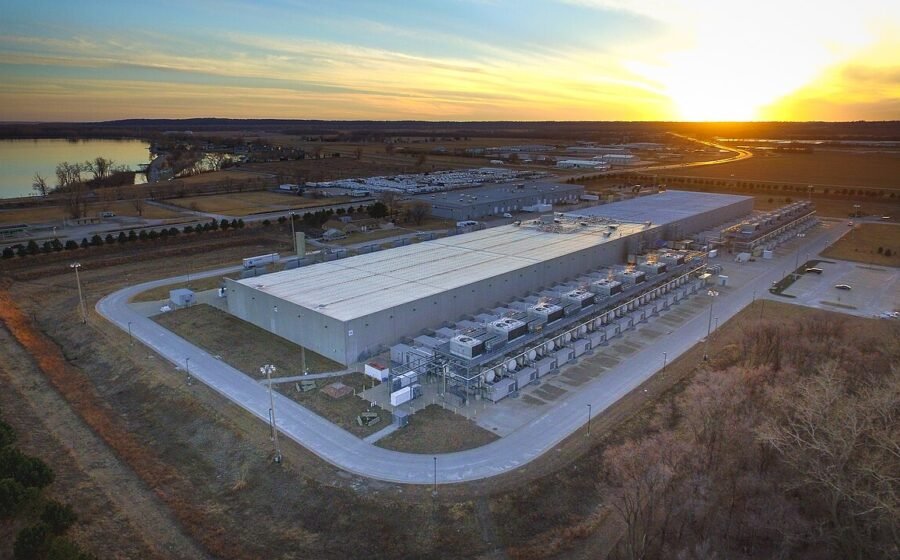
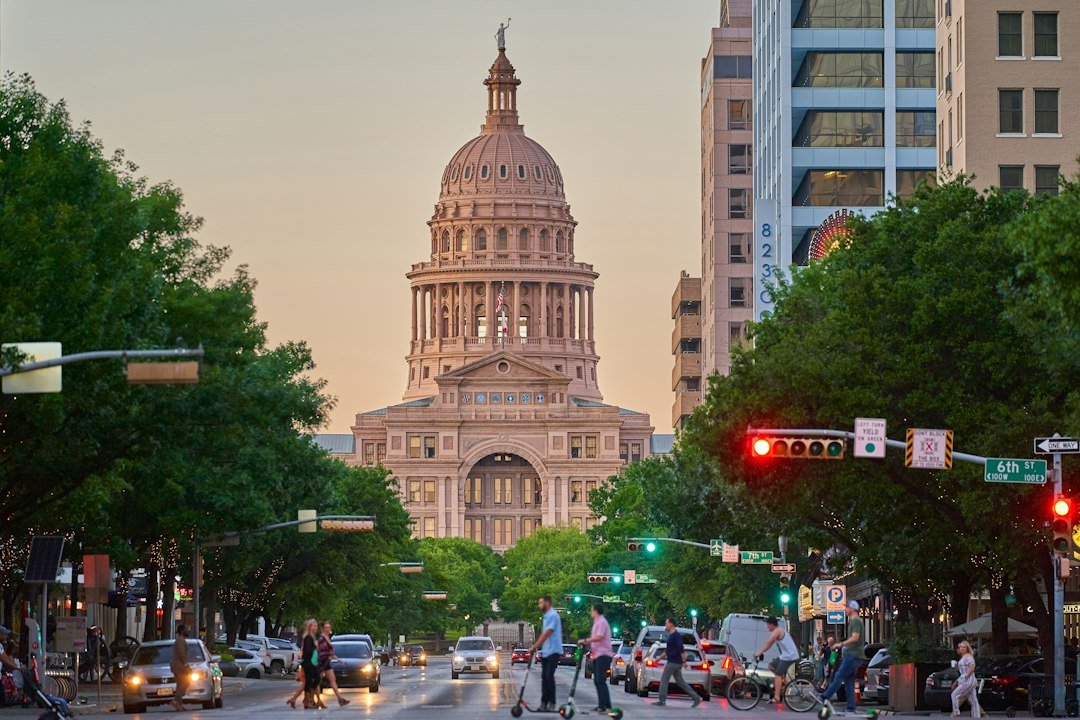
Reporting note: Campaign-finance figures and positions here reflect the cited public reporting and records available by November 3, 2026. Donor ties and timing can raise legitimate questions without establishing that a contribution changed an official’s decision. Featured image: a real photograph of the Texas State Capitol in Austin, one of the states examined in this investigation. Photo: Justin Wallace / Unsplash, used under the Unsplash License. The Capitol photograph is contextual and does not show a data-center site or any person implicated by the article. The separate documentary photograph of Google’s Council Bluffs data center within the article is credited above.