Two airline pilots reported a glossy white, wingless-looking object passing close beneath their aircraft. Controllers warned other traffic about a possible drone. Britain’s aviation-safety investigators could not establish what it was.
The encounter lasted less than two seconds. On July 18, 2026, an Airbus A321 climbing out of London Gatwick was passing about 9,000 feet near Staplehurst, Kent, when its captain reported seeing a small white object beneath the aircraft. The first officer saw it too.
According to the UK Airprox Board’s October 2026 review, the crew described a glossy white object with no visible wings or propeller, approximately one to two meters long and shaped like a Tic Tac. The board did not identify it as a drone, another aircraft, or anything more exotic.
It did, however, issue a significant aviation-safety finding: Category B — safety not assured. The mystery is real. So are the limits of the available evidence.
The Two-Second Encounter Over England
The A321 was climbing on an easterly heading at approximately 300 knots and 2,000 feet per minute. Its captain reported seeing a small, glossy white object in the aircraft’s vicinity. The first officer then acquired it visually.
The crew estimated that the object was less than 50 feet below the plane, with reported horizontal separation of around 100 meters. Their narrative also describes it as passing beneath the starboard (right) engine, although the exact distance was difficult to judge in such a fleeting sighting. These are eyewitness estimates, not independently measured distances.
The crew saw no obvious wings, propeller, cockpit or other identifying features. The first officer noticed what might have been specks of red on the object’s surface, perhaps reflections from the setting sun. The pilots could not even firmly establish the direction of travel: they thought the object might be heading west on an opposite track, but acknowledged it could have been moving slowly eastward.
They reported the encounter to air traffic control. The official narrative records controllers describing it as a possible white drone with red parts, and relaying the pilots’ estimate that the aircraft had passed dangerously close. Controllers informed supervisors, added a warning to Gatwick departure information and kept some subsequent inbound traffic higher than usual as a precaution. No further sighting of the object was reported.
The individual Airprox report, case 2026171, records the event at approximately 19:30 UTC.
Air Traffic Control Called It a Drone. Investigators Couldn’t Confirm That.
The label drone appears repeatedly in the communications record. That was a practical working description for a potential threat to flight safety. It was not the board’s verified identification.
Safety investigators reviewed radar data but found no associated primary or secondary radar contacts at the approximate time of the sighting. An absent radar return does not demonstrate extraordinary stealth or physics. Small objects, brief encounters and sensor limitations can prevent a target from appearing as a usable radar track.
The board’s conclusion was narrower and more careful: the reported altitude and description did not allow it to determine the nature of the unknown object. The encounter was rated Category B. Under the board’s official definitions, that means the aircraft’s safety may have been compromised.
That is a consequential finding about aviation safety. It is not a determination that the object came from beyond Earth.
Why the “Tic Tac” Description Gets Attention
UFO followers will recognize the term from the famous 2004 U.S. Navy encounter off Southern California, in which aviators described a white oblong object. The verbal resemblance is intriguing, but similarity in appearance does not prove common identity, origin or performance.
The British report establishes no extraordinary acceleration, abrupt change of direction, impossible speed or advanced propulsion. In fact, the pilots could not confidently determine which way the object was traveling. A two-second glimpse, while the observer’s aircraft is moving rapidly, leaves enormous uncertainty in any estimate of the other object’s movement.
Apep Bar previously examined the same distinction in its coverage of the authentic Navy UFO videos and the evidence they still lack. A legitimate observation can remain unidentified without demonstrating a particular explanation.
Thirteen Reports. Six Serious Safety Findings.
At its October 14, 2026, meeting, the UK Airprox Board assessed 13 reports involving drones, balloons, model aircraft or unknown objects. Three received Category A ratings, indicating a serious collision risk. Three received Category B ratings, meaning safety was not assured. Six were rated Category C and one Category D.
Those numbers refer to aviation-safety assessments, not a count of extraterrestrial craft. They are a separate group from the meeting’s aircraft-versus-aircraft cases.
In case 2026162, an A321 approaching Heathrow on July 11 reported an apparent drone passing about 20 feet below and 40 feet laterally from its position. Heathrow briefly suspended operations on the affected runway and changed arrivals. The board assigned that encounter Category A.
In case 2026174, an ATR72 crew descending toward Leeds on July 21 described an object that initially looked like a dark bird but appeared triangular with a red light toward its rear. It reportedly passed close to the left wing near 9,000 feet. The board also rated that incident Category A, while leaving the object’s nature undetermined.
These reports deserve serious consideration whether the objects ultimately prove to be drones, unfamiliar human-made devices, misperceptions or something investigators cannot yet classify. A collision hazard does not need an extraterrestrial origin to be dangerous.
What Could Science Actually Prove?
Resolving an unidentified sighting requires more than a striking description. Investigators ideally need synchronized sensor measurements, reliable distances, timestamps and camera or radar geometry. Without a distance estimate, apparent movement across a field of view cannot be reliably converted into an object’s true speed.
The Galileo Project’s October 2026 triangulation preprint offers an example of the more rigorous approach: separated infrared-camera stations reconstruct three-dimensional trajectories from observations made at multiple sites. In an early week of data, the researchers found aircraft and small clouds, with no separately identified anomalous population in that sample. The research is useful not because it proves that UAP do or do not exist, but because it shows how claims about extraordinary motion could eventually be tested.
The British A321 report offers no publicly established three-dimensional trajectory for its object. Without that information, a convincing answer remains out of reach.
The Questions the Official Report Leaves Behind
What passed near the aircraft? Could independent ground cameras or additional flight-deck data corroborate the pilots’ view? Was the estimated separation accurate? Did the apparent shape depend on lighting, angle or a momentary view of an ordinary object? And how could the aviation system prevent another close encounter?
The official record supports a particular account: two pilots reported an unusual object, controllers responded to a potential drone threat, investigators found no associated radar contact, and the UK Airprox Board could not identify the object while assigning a Category B safety rating.
It does not establish alien technology. Nor does uncertainty about the object’s identity erase the safety concern.
What crossed the Airbus’s flight path at 9,000 feet — and what evidence would finally allow investigators to say?
Question. Investigate. Reconsider.
Sources and Further Reading
- UK Airprox Board — Case 2026171, official report (PDF)
- UK Airprox Board — October 2026 review and consolidated unknown-object reports
- UK Airprox Board — Risk-rating definitions
- Galileo Project — Infrared-camera triangulation research preprint (October 2026)
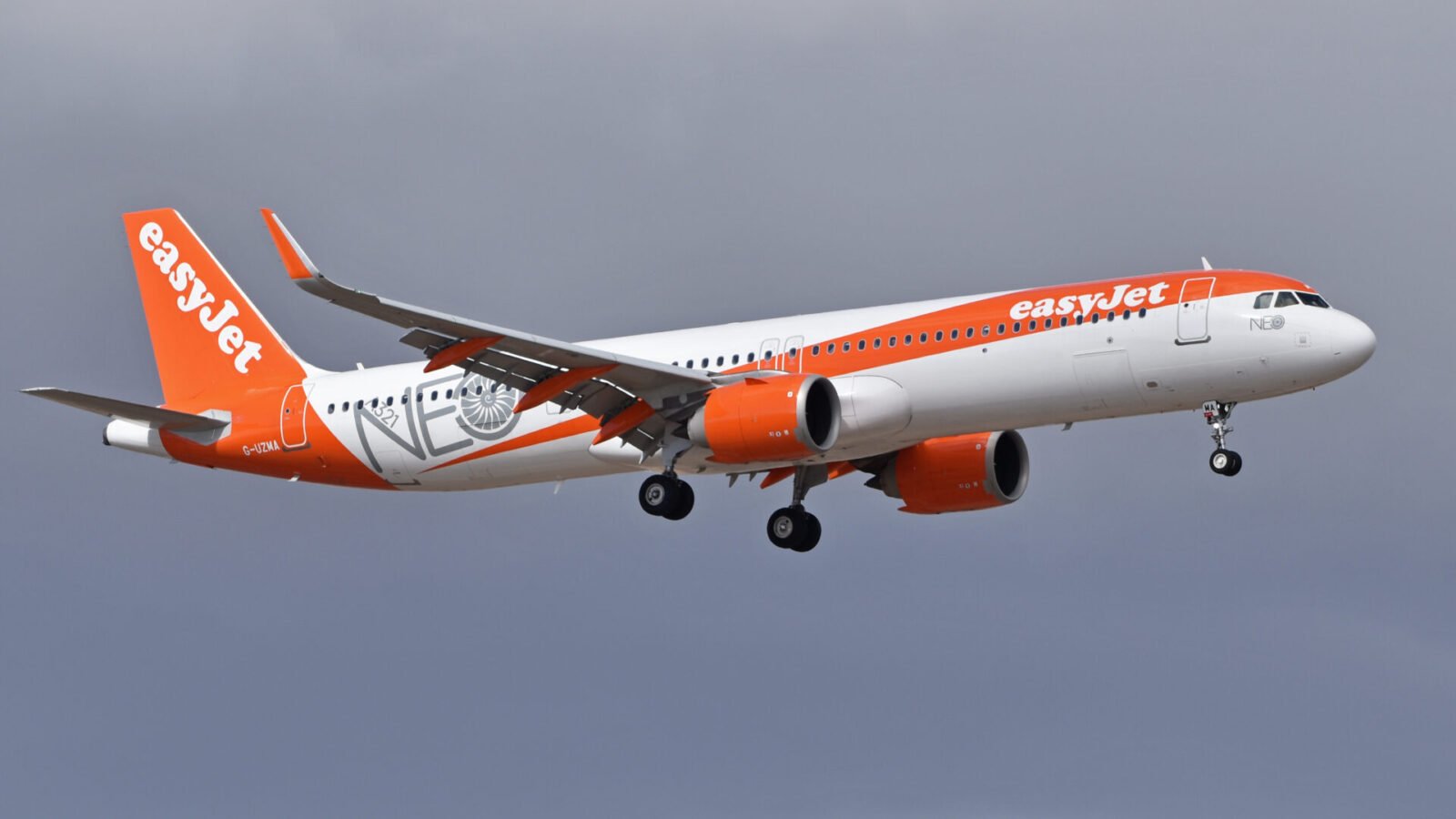
Featured-image credit: Airbus A321-251NX easyJet UK photographed by Alan Wilson, licensed CC BY-SA 2.0. This is a documentary reference photograph of the aircraft type, not the aircraft or the unidentified object in case 2026171. No authenticated video of this specific encounter was identified.