INVESTIGATION | NOVEMBER 14, 2026 | APEP BAR
Were PCR tests manipulated to inflate COVID case counts? Did government payments push dangerous hospital treatments? What about ventilators, remdesivir, sedation, vaccine campaigns and public fear? Three viral videos raise accusations far beyond the established record. The money trails and medical documents reveal failures worth investigating—but not proof of an organized patient-killing scheme.
The woman asking for water
An elderly hospital patient is described as physically restrained, frightened and asking for water. Her husband, she is told, is on a ventilator and may not survive. Filmmaker Mikki Willis says her daughter recorded the encounter. He describes the story in a Jimmy Dore interview promoting Bad Medicine, a documentary alleging that pandemic protocols became lethal.
It is a powerful account, but the recording and underlying medical file have not been independently authenticated for this article. The distinction between a family’s testimony and a documented conclusion is not an excuse to ignore the family. It is how an investigation establishes whether the restraint, medication, hydration and communication decisions were justified or abusive.
The video claims a much larger conspiracy: mass PCR testing manufactured COVID-19 infections, hospitals pursued payments by putting patients on ventilators, remdesivir caused deaths attributed to the virus, and public fear helped pressure people into vaccination. Those allegations deserve a line-by-line examination of the evidence. A financial incentive is not the same as proof of murder; a poorly explained test is not proof of a fictitious pandemic.
Our companion investigation, What Congress Heard About COVID, examines relevant sworn and written testimony from 2020 through 2026, including speakers who disagree with the video’s conclusions.
1. Kary Mullis: the inventor’s warning and the misuse of his legacy
Kary Mullis won the 1993 Nobel Prize in Chemistry for the polymerase chain reaction, or PCR, which amplifies tiny amounts of genetic material. In archived recordings, Mullis criticized Anthony Fauci, questioned scientific authorities and warned that finding a fragment of genetic material does not by itself establish an illness. The supplied video on PCR interpretation captures that warning: molecular detection and clinical significance are different questions.
But Mullis was discussing controversies surrounding HIV-era testing, not SARS-CoV-2. He died in August 2019, before the new coronavirus was publicly identified. He did not test, reject or scientifically validate the SARS-CoV-2 assays developed in 2020. His broad opposition to mainstream conclusions about HIV/AIDS also did not overturn the robust evidence that HIV causes AIDS.
PCR tests do not inherently identify any random molecule after enough cycles. Validated assays employ target-specific primers, probes, controls and decision thresholds. Reverse-transcription PCR converts viral RNA into DNA for amplification. Such testing can be clinically useful without proving how sick or contagious a positive person is.
Nor does the supplied clip of Mullis criticizing Fauci establish the latter’s incompetence or criminality. The speakers’ suggestion that Mullis died mysteriously is unsupported: his death was reported as involving pneumonia. Suspicion arising from timing is not evidence of assassination.
2. Cycle thresholds: the real problem behind the 45-cycle claim
A PCR cycle threshold, or Ct, is the amplification point at which a detectable target signal crosses the assay’s threshold. Lower Ct generally implies more target material; higher Ct means less. But numbers cannot be transferred blindly from one machine and specimen to another. A weak positive can reflect early infection, residual RNA after illness, sampling differences or an analytical error.
The documentary argues that 40 or 45 cycles could turn practically anyone into a COVID patient. That is false as a general rule. Extra cycles do not automatically create a positive signal in a clean negative sample. Yet near a detection limit, contamination, borderline signals and assay-specific thresholds can matter. Just as importantly, someone may still test RNA-positive after no longer being infectious.
The World Health Organization cautioned in January 2021 that weak positives should be interpreted carefully, with clinical history, disease prevalence and the manufacturer’s instructions. It advised retesting when results did not match a patient’s clinical picture. A CDC study likewise found that Ct values were not a consistent proxy for infectiousness across different variants.
A positive PCR result should never have been confused with a diagnosis of severe pneumonia or an automatic indication for hospital ventilation. The meaningful inquiry is which test was used, its validated thresholds, how doubtful results were handled, and what clinical evidence supported subsequent decisions.
WHO diagnostic notice, January 2021 | CDC study on Ct and culturable virus
3. Did high testing numbers manufacture a pandemic?
Officials often discussed positive tests, diagnosed cases, hospitalizations involving COVID and deaths attributable to COVID as if they were interchangeable. They are not. A broken-bone patient with an incidental positive test is a different case from a patient admitted because of severe viral pneumonia. Death certification likewise requires medical judgment about which conditions caused or contributed to a death.
This is a genuine weakness in oversimplified public dashboards. It is not proof that the entire health emergency was invented. Deaths above expected baseline levels provide an independent check: the WHO estimated approximately 14.9 million excess deaths worldwide in 2020–2021, counting direct and indirect pandemic consequences. Overwhelmed care systems and interrupted treatment can contribute, so excess mortality cannot be assigned entirely to SARS-CoV-2; but a PCR machine cannot create additional actual deaths on a mortality register.
The right questions are how governments defined cases, how hospitals classified admissions, whether weak positives were interpreted responsibly, and how deaths were certified. Those are audit questions, not conclusions supplied by a montage of isolated anecdotes.
WHO excess-mortality analysis | CDC mortality and reporting information
4. Mass hysteria, frightening images and the public-relations machine
The film alleges that some hospitals staged crowded entrances, parked ambulances for photographs and sent staff into lines to simulate demand. Its interview provides descriptions but no independently verified site-specific records proving a coordinated scheme. Those stories require dates, facilities, original images, full recordings, witnesses and administrative evidence.
However, public communication during COVID deserves an inquiry of its own. Officials had incentives to motivate precautions while communicating uncertain projections. News outlets favored dramatic images. Critics of policy were sometimes treated as enemies, while some alternative commentators presented speculation as certainty. Policies affecting schooling, work and family contact could inflict real harm even when motivated by infection control.
Risk messaging can oversimplify. Changes in official guidance can weaken trust when the evidence and uncertainties are not explained. But demonstrating a government-wide psychological operation would require proof of coordinated deliberate deception, not merely fear, messaging errors or political conflict.
5. Was PCR used to force vaccines on the public?
The vaccine rollout involved procurement contracts, promotion, legal mandates and deeply disputed questions of autonomy. None of that changes how the clinical trials were conducted. In Pfizer-BioNTech’s initial randomized trial, 8 participants in the vaccine group developed qualifying symptomatic COVID-19 compared with 162 in the placebo group. That supported high relative efficacy against symptomatic illness in the original trial period, not permanent prevention of all infection, transmission or death.
Later variants, waning immunity and prior infection altered the risk-benefit context. Policy slogans sometimes erased those qualifications. Vaccine requirements also raised legal and ethical issues distinct from measured clinical effectiveness.
Vaccine harms were not imaginary: myocarditis and pericarditis are recognized rare adverse effects, particularly among some younger males. A report of illness after vaccination still requires investigation before assigning causation, as does any death or stroke. The relevant comparison is expected risk in similar populations and the best available medical evidence, not a time sequence alone.
It is fair to scrutinize informed consent, mandates, manufacturers, safety monitoring and messaging. The statement that PCR tests invented the pandemic solely to sell vaccines is not supported by randomized trials, independent mortality records or the reviewed oversight materials.
Initial Pfizer vaccine trial | CDC vaccine safety guidance | Prior Apep Bar investigation of vaccine safety claims
6. Hospitals really did receive extra COVID-related payments
Here is a documented financial incentive, rather than a rumor. Section 3710 of the CARES Act increased the Medicare diagnosis-related group weighting factor by 20% for qualifying inpatient COVID discharges. For admissions beginning September 1, 2020, CMS generally required a documented positive viral test to qualify for the enhancement. CMS also established temporary new-treatment add-on payments for eligible COVID interventions.
That mechanism creates a legitimate question: Did financial incentives change diagnosis coding or treatment choices? The fact of payment does not establish why a particular clinician admitted, sedated or intubated a patient. Nor was it a universal bonus paid for every death.
HHS’s Inspector General audited sampled 2020 Medicare inpatient claims because it recognized potential billing incentives. Of 149 independently reviewed claims, 146 met federal requirements; three did not, accounting for $18,911 in identified improper payments, chiefly clerical mistakes. This limited sample does not rule out fraud elsewhere. It does constrain sweeping claims that all COVID reimbursements were fraudulent.
CMS payment guidance | CMS new-treatment payment rules | HHS OIG inpatient audit
7. A second money trail: improper uninsured-program payments
A different OIG investigation found significant payment problems. Its analysis estimated almost $784 million in improper payments during an audited period of the COVID Uninsured Program because claims were submitted for insured individuals or for services that did not meet program requirements. That is a real oversight failure involving a different funding mechanism and audit population.
It would be misleading to merge that number with the Medicare hospital audit and infer that $784 million was paid for killing patients. Investigators should instead seek the actual claims, fraud referrals, controls, recoveries and corrective actions.
HHS OIG uninsured-program audit
8. Hospital finances, executive power and supposed hush money
During the emergency, many hospitals cancelled profitable scheduled procedures while spending heavily on staffing, protective equipment and additional critical-care capacity. These are plausible financial stressors. Willis argues that executives pressured clinicians to follow revenue-producing protocols and that travel nurses received extraordinary pay to keep quiet.
Travel-nursing rates did rise sharply in some markets, but a high wage is not evidence of a contract for silence. That claim requires payroll records and communications showing payment was conditioned on concealing abuse. A sound investigation would compare revenue, reimbursements, protocols and outcomes across hospitals—and distinguish a mistaken but sincerely adopted standard from negligence, fraud or purposeful injury.
9. The 88% ventilator number and its missing denominator
In April 2020, a study of 5,700 COVID patients in New York became associated with an alarming ventilator death rate. But a subsequent published correction clarified the status of 1,151 patients who had required mechanical ventilation: 38 had been discharged alive, 282 had died and 831 were still in hospital when the study cut off. Those unresolved patients make the purported 88% eventual death rate from the whole group invalid.
Mechanical ventilation carries risks: pressure-related injury, infection, sedation and other complications. Some early intubation approaches changed as doctors learned more about high-flow oxygen and noninvasive support. But ventilated patients were also generally extremely ill. High death rates among them do not establish that a ventilator caused the deaths. A causal claim requires comparable patients, illness severity and treatment timing.
JAMA study correction | Original hospital study
10. Remdesivir’s Ebola trial: deaths on the drug versus deaths caused by it
The interview cites 93 deaths among 175 participants assigned remdesivir in an Ebola trial, approximately 53%. That figure is real, but the trial involved patients with an often-fatal disease and compared competing experimental therapies. Researchers found that two antibody-based treatments performed better; the study’s monitoring board stopped assignment to inferior arms.
The study was published, not buried. It did not conclude that remdesivir caused those deaths. Mortality while receiving a drug is not automatically drug-caused mortality.
Original randomized Ebola trial
11. Did remdesivir help hospitalized COVID patients?
Results were mixed, not binary. The ACTT-1 randomized trial found median recovery time of 10 days for remdesivir recipients versus 15 with placebo; the mortality difference was uncertain. The larger WHO Solidarity trial did not find a clear overall survival benefit across all hospitalized patients. The benefit may depend on treatment timing and severity.
The video alleges that remdesivir generally destroyed kidneys and that the resulting injury was misattributed to COVID. Severe COVID, sepsis, altered blood pressure and other drugs can themselves affect kidney function. The FDA’s 2026 Veklury label provides warnings and monitoring instructions and does not require routine dose adjustment for renal impairment. A particular patient’s renal injury still warrants clinical review.
Claims of deliberate injury need patient-specific drug timing, laboratory values, competing causes and a valid control group—not merely evidence that the person became sicker after treatment.
ACTT-1 trial | WHO Solidarity final analyses | FDA prescribing information
12. The overlooked protocol that actually reduced mortality
The RECOVERY randomized trial established that dexamethasone reduced deaths among selected hospitalized patients who needed respiratory support. Among invasively ventilated patients, 28-day mortality was 29.3% with dexamethasone versus 41.4% with usual care in the reported trial. The treatment was not appropriate for everyone.
This is what it looks like when evidence improves care under emergency conditions. It undercuts an indiscriminate portrayal of every hospital protocol as engineered for harm while preserving the need to examine earlier errors.
13. Sedation, restraints and the right to humane care
The most harrowing allegations involve patients restrained while asking for water or family contact. ICU sedation and short-term restraints can be medically indicated to prevent the removal of life-sustaining tubes, but both pose risks and must be justified and reassessed. Critical-care guidance generally favors lighter sedation where feasible.
The video alone does not establish why a particular patient could or could not safely swallow water, what fluids were being administered or whether staff followed applicable consent and monitoring rules. It does raise specific audit questions: Who ordered the restraint? What was recorded about delirium, hydration, pain and patient capacity? Could a family member advocate? Were complaints documented?
An unauthenticated excerpt should prompt review—not an immediate verdict for or against the clinicians.
Society of Critical Care Medicine ICU guidelines
14. Family isolation: real suffering and barriers to advocacy
Visitor restrictions were meant to limit infection in healthcare facilities, yet they also separated families from dying relatives, damaged communication and complicated end-of-life decisions. Research described distress and disrupted decision-making under restrictive rules. That is a documented human cost.
It does not prove authorities excluded relatives to hide organized killings. It does support the need for patient advocates, meaningful exceptions, transparent rules and an independent method to challenge restrictions during future emergencies.
Study of family-presence restrictions | Additional ICU visitation research
15. Mistake, negligence, profit pressure or intentional killing?
The video repeatedly moves from examples of dangerous care and financial incentives to the conclusion that hospitals purposely killed people. Four different explanations must be separated: good-faith treatment under uncertain evidence, negligent continuation of harmful care, financially influenced medical decisions, and deliberate injury. Those require different kinds of proof.
Payment codes and high ICU mortality are insufficient to establish homicide. A credible case would require medical records, decision-makers’ knowledge, causation and evidence that a payment motivated a harmful action. Legal immunity rules, including parts of the PREP Act, require careful jurisdictional analysis; they are not blanket authorizations for murder.
16. Tanzania’s papaya story and the suggestion of assassinations
Tanzanian President John Magufuli publicly questioned testing in May 2020, claiming that nonhuman samples such as a pawpaw had produced positive results. Full chain-of-custody records and laboratory controls were not independently established to show what the experiment meant. Even a bad result at one lab would not invalidate all SARS-CoV-2 PCR tests.
Magufuli died in March 2021, roughly ten months after the testing dispute, not within weeks. The country’s official announcement cited heart complications. The hosts’ references to historic CIA covert weapons do not provide evidence linking an intelligence operation to his death—or to Mullis’s death. The Church Committee’s historic investigations deserve accurate reporting, but possibility is not proof.
U.S. Senate Church Committee historical record
17. Fauci, AZT and the danger of false historical parallels
The discussion compares remdesivir with early zidovudine (AZT) treatment for HIV/AIDS. Early AZT regimens caused substantial adverse effects, and decisions about dosage and duration were heavily debated. But clinical trials also demonstrated benefits in certain patients. The blanket claim that AZT simply killed hundreds of thousands is unsupported.
The hosts’ suggestion that Fauci confessed ventilators broadly caused more harm than benefit should be traced to an exact, contextualized primary statement before being repeated as fact. Criticizing early intubation decisions is not the same as proving that admission. Similarly, an unsourced allegation of intentional concealment is not established merely by his place in the government’s response.
Early AZT clinical-trial evidence
18. Pharmaceutical influence and what should be disclosed
Drug manufacturers had commercial interests in treatments and vaccines. Regulators relied on submitted safety data and independent analysis. These arrangements deserve scrutiny: trial protocols, unfavorable outcomes, financial relationships, purchasing contracts, advisory votes and changes to labeling should be made accessible.
Yet routine submissions and meetings between companies and regulators do not demonstrate a secret plan to disguise deaths. The same standard of independence applies to critics selling documentaries, courses, supplements or other commercial products.
19. Was Plandemic ‘proved right about everything’?
The interview asserts that every claim in Willis’s earlier film has been vindicated. That requires claim-by-claim verification, not applause or retrospective declarations. An interview promoting a forthcoming documentary is not the complete documentary, and the filmmakers’ descriptions of recordings, survivors and institutional testimony have not been independently verified here.
Both official and alternative narratives must answer to documents and comparison evidence.
20. What an independent hospital investigation must collect
- Lab test names, cycle thresholds, quality controls and clinical follow-up.
- Admission diagnoses, oxygen measures and actual severity before intubation.
- Sedation, restraint, fluids, nursing notes, informed consent and family communications.
- Medicare claims, add-on payments, institutional budgets and staff contracts.
- Authenticated interviews, recordings, whistleblower accounts and hospital responses.
- Patient-level outcomes compared among similarly ill people across hospitals and time.
- Regulatory correspondence on drug safety, treatment changes and adverse events.
Our congressional evidence companion names the major House and Senate hearings, witnesses and competing findings. Congress heard serious complaints about vaccine safety oversight, early treatments, research transparency and nursing-home policies. A hearing is not a medical trial, and an allegation in testimony is not a judgment of guilt.
The accountability question that matters
PCR testing could be misread. COVID-related payments created incentives worth auditing. Some emergency practices changed because early evidence was incomplete. Family-visitor bans were profoundly damaging. Some patients may have endured negligent or abusive care and deserve access to records and meaningful remedies.
At the same time, the available evidence does not demonstrate that molecular testing fabricated the pandemic, that remdesivir caused more deaths than the virus, or that U.S. hospitals collectively killed patients to harvest government payments. Documented excess mortality, trials and audits make those assertions too large for the proof offered.
The right response is neither unquestioning faith in institutions nor unquestioning faith in their critics. It is auditable medical decisions, candid public messaging and evidence that can survive adversarial examination.
Question. Investigate. Reconsider.
Videos examined and editorial disclosure
- Bad Medicine filmmaker interview and trailer: Hospitals Paid to Kill COVID Patients? — allegations, promotional excerpts and family stories; not independently authenticated medical records.
- Kary Mullis on Anthony Fauci — historical commentary, not an evaluation of SARS-CoV-2 testing.
- Kary Mullis discussing PCR interpretation — historical HIV-era remarks, not evidence that all COVID testing was invalid.
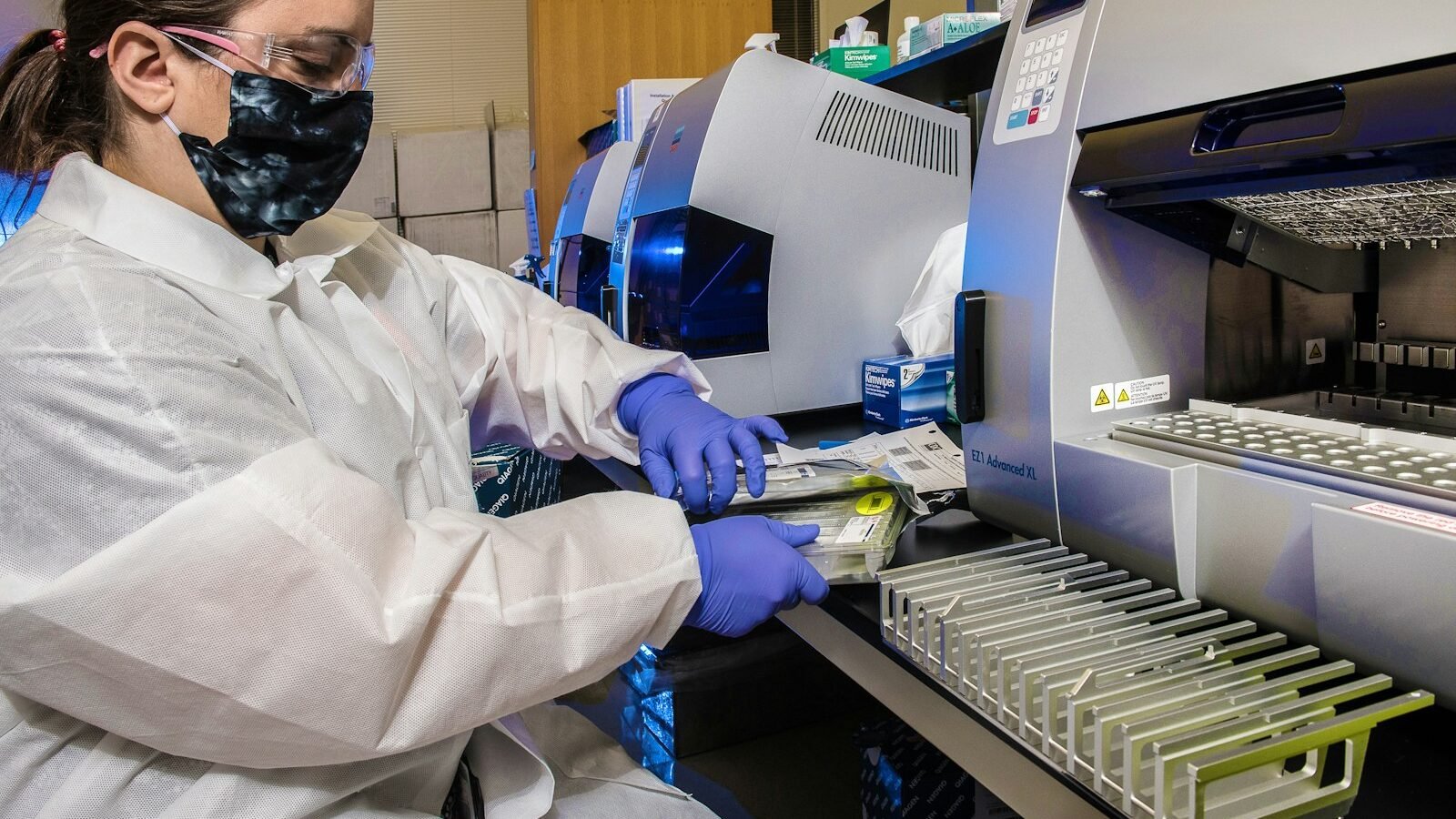
This article draws on the supplied video transcript, cited studies, public federal guidance and government oversight records. It does not claim original interviews with the doctors, patients, filmmakers or officials. The featured photograph shows a CDC scientist unpacking SARS-CoV-2 RT-PCR test kits in 2021, not the alleged events discussed in the documentary. Photo: Centers for Disease Control and Prevention / Unsplash, Unsplash License. Original photograph.