What if you spent six weeks treating depression with a special video game and electrodes on your head—and people given an imitation of both improved just as much?
That is the uncomfortable result of a multicountry clinical trial published October 19, 2026, in JAMA Network Open. Participants using active transcranial direct current stimulation (tDCS) while playing a cognitive-training game reported reduced depression symptoms. So did people whose electrical stimulation was essentially switched off after a brief start-up and whose game lacked the intended cognitive-training challenges.
The researchers did not show that a sham treatment cures depression. They showed that, in this 109-person randomized trial, the active combination did not deliver an additional measurable benefit over the matched control. Yet the trial succeeded at a different, important test: showing that most patients could follow a structured, remotely supervised home protocol.
Primary evidence: Dechantsreiter and colleagues, JAMA Network Open (October 19, 2026); trial registration NCT04953208.
Thirty minutes a day, two very different treatments
The DiSCoVeR trial recruited adults ages 18 to 65 with major depressive disorder at university-affiliated sites in Germany, Israel and Latvia. Of 111 people enrolled, 109 were included in the main efficacy analysis: 55 in the active arm and 54 in the sham-control arm. Their mean age was 33.1 years.
Following one to five introductory clinic sessions, participants were asked to complete 30 sessions over six weeks—usually a half hour every weekday—at home. Software helped them position scalp electrodes, and sessions were remotely supervised. The active arm received a weak, 2-milliamp direct current through a cap while playing a game designed to challenge cognitive control: the attention, inhibition and mental flexibility that can become difficult during depression.
The other arm received a clever double imitation. The device briefly ramped up electrical current before stopping, mimicking the feeling of stimulation; the control game looked and felt like a counterpart but removed the demanding training elements. Both groups encountered a regular routine, the equipment, the screen time and clinical follow-up. Participants and symptom raters were kept unaware of which arm had been assigned.
This matters because a proper control is not merely a technicality. If the stimulation and game are to be called a treatment, they must improve outcomes beyond what participants gain from monitoring, expectations, existing care and the simple act of repeatedly engaging with a study.
The scores that overturned the hopeful premise
Depression severity was measured with the Montgomery–Åsberg Depression Rating Scale (MADRS), on which lower scores indicate fewer symptoms. At six weeks, scores had fallen an average 7.3 points in the active group and 8.19 points in the control group. The difference in change was only 0.89 points, with a 95% confidence interval spanning −1.37 to 3.15 points and a P value of .44. That is not statistically persuasive evidence that the combined active treatment performed better.
The conclusion was much the same at the week-10 follow-up. By contrast, the prespecified feasibility goal was met: 86 of 109 participants (78.9%) completed at least 20 of the 30 sessions. That suggests a remotely supervised home setup can be practical, not that this particular package is clinically effective.
There is an important interpretive trap here. Symptom improvements within each group do not establish what produced them. Many participants were already receiving care: the baseline characteristics table reports antidepressant use in roughly four-fifths of participants, and psychotherapy was permitted. Depression symptoms also fluctuate over time. Without a no-intervention arm, the study cannot measure how much of either group’s improvement came from the protocol itself.
Did the placebo effect do it? We don’t know
It is tempting to declare that belief alone healed the sham group. The data are more complicated. Researchers asked participants whether they believed they were receiving the active or control condition. Those who thought they were in the control arm tended to improve less, regardless of their actual assignment. But the investigators explicitly cautioned that the direction of causality is unknown: lower expectations may have limited improvement, or people who were not improving may simply have guessed that they were receiving the sham.
The comparison also left a question hiding in plain sight: the sham group did something. They put on a cap, played an easier game and participated in a structured six-week protocol. That experience could affect attention, routine, self-observation or mood without delivering the specialized cognitive training or sustained brain stimulation. The trial was not designed to distinguish those possibilities.
The authors suggested that future research separate the components rather than pairing them every time: test stimulation alone, cognitive training alone, the combination and a credible control. Only then could researchers tell whether one element helps, the two work together—or the combination somehow gets in its own way.
One negative combination trial does not settle brain stimulation
The wider literature is mixed, which makes this result worth examining rather than treating it as the final word. A separate randomized study of 174 adults, published online in Nature Medicine in October 2024, found an advantage for ten weeks of remotely supervised home tDCS alone over sham: scores on a different depression scale improved by an average of 9.41 points with active treatment versus 7.14 points with sham. Those are results from a different protocol, duration and outcome measure, not numbers to combine directly with DiSCoVeR.
Source: Woodham and colleagues, Nature Medicine, 2024 online publication.
A later systematic review of home-based tDCS trials reported a small average benefit over sham across six randomized controlled trials, but the estimate was fragile: removing a large positive trial made the pooled benefit statistically uncertain. Its authors concluded that current evidence was not strong enough to support routine clinical adoption. And tDCS should not be confused with transcranial magnetic stimulation (TMS), a different technique with a more established evidence base in depression care.
Feasible is not risk-free—and not ready for the shopping cart
The DiSCoVeR investigators reported similar overall adverse-event rates in both arms. Two participants in the active arm were hospitalized, one with acute suicidal thoughts and another with worsening depression. Investigators assessed both serious events as unlikely to have been caused by treatment, an assessment that deserves reporting without either exaggerating or dismissing it. The study was too small and too short to detect all rare or long-term harms.
The research also did not involve people simply buying a gadget online and experimenting without supervision. It included clinical screening, participant training, electrode-positioning software and remote oversight. The findings therefore do not validate do-it-yourself electrical stimulation as a substitute for medical care.
One disclosure also deserves visibility: study authors reported financial relationships involving brain-stimulation companies, and one coauthor was named as an inventor on a patent application concerning the game. These disclosures do not invalidate the results, but readers should know that commercial interests may exist around emerging interventions. The journal’s full conflict-of-interest disclosures are public.
The unanswered question: what actually helped?
There are two stories here. The reassuring one is that most participants could successfully complete a technology-assisted, home-based depression study. The more troubling one, for anyone hoping the particular game-and-electrode combination would be a new treatment, is that its extra machinery showed no extra clinical benefit against a convincing imitation.
That does not make the observed improvements fake. It makes their cause uncertain.
Depression is heterogeneous, and average results may conceal people who respond differently. The next useful experiment will not simply add more flashing interfaces and electrode settings. It will isolate the active ingredients, measure expectations carefully, and test whether any benefit lasts.
What if the hardest part of building a new depression treatment is proving which part of it actually works?
Sources and further reading
- DiSCoVeR randomized clinical trial, JAMA Network Open, October 19, 2026.
- ClinicalTrials.gov registration NCT04953208.
- 2024 home tDCS phase 2 trial, Nature Medicine.
- Systematic review and meta-analysis of remotely supervised home tDCS.
- Earth.com reporting and interview with Mor Nahum, November 14, 2026.
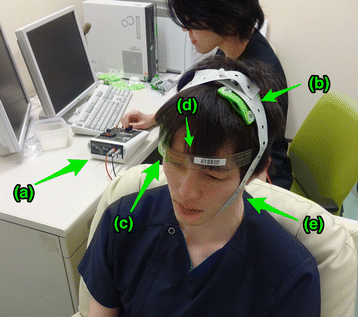
Featured photograph: Yokoi and Sumiyoshi (2015), tDCS administered in a separate research setting, via Wikimedia Commons, CC BY 4.0. Documentary context only; not footage or imagery from the DiSCoVeR trial.