Something appeared to be keeping pace with a commercial jet near Brussels. At least, that is how it looked from the cockpit. British airline captain Steve Frazer says he has encountered similar flashing lights six or seven times since 2022. His most recent sighting, he told reporters, was in October 2026. The account is intriguing. Its central mystery, however, is not yet something a video alone can solve: how far away were those lights?
Frazer, 48, from Sandbach in Cheshire, describes 27 years of commercial flying experience. In an interview distributed by SWNS and published by the Liverpool Echo on November 7, he said his first encounter involved lights that resembled an aircraft orbiting over land near Brussels. He initially wondered whether he was seeing military refueling activity. The apparent movement did not fit his expectations.
What the pilot actually reported
“We were going towards them for seemingly ages and never got to them,” Frazer said, according to the November 8 UNILAD report. He also described the lights as returning on flights with a northwesterly heading toward the United Kingdom, when Brussels was coming into view.
Frazer says he recorded time-lapse footage showing small points of light that appear to brighten, move and disappear. He also recalls a colleague seeing something similar on a flight returning from Lithuania. In his telling, another pilot asked by radio whether military activity was underway in the area. Those supporting observations are reported through Frazer; the other pilots have not been independently interviewed in the reporting reviewed here.
Crucially, “near Brussels” describes the observer’s general flight area, not a verified position for the lights themselves. A bright point apparently beyond the aircraft could be much farther away. Without the flight track, precise observation time, viewing angle and an original, unaltered recording, no reliable distance or velocity can be calculated from the published descriptions.
Why a jet may never seem to close the distance
Approaching a light is not the same as approaching a known nearby object. At great distances, a source can remain in much the same part of the windscreen even while the plane travels many miles. The effect can be especially deceptive when a point of light provides no clear size reference and the observer does not know its range. A time-lapse recording can further exaggerate apparent movement by compressing events into fewer seconds.
That is not a verdict on Frazer’s testimony. It is a reason to resist interpreting “we never got closer” as evidence that an object deliberately matched the airliner’s speed.
A serious alternative: satellite flares
Frazer says he knows what Starlink satellites usually look like and does not believe these lights match. His experience matters, but an unfamiliar satellite appearance is worth testing rather than dismissing. In a December 2024 technical paper, the Pentagon’s All-domain Anomaly Resolution Office described how sunlight reflected from satellite surfaces can generate bright, short-lived flares. Multiple satellites in different orbits can produce a cluster of lights that seem to appear, vanish or move in opposing directions within a small area of sky.
AARO’s paper also sets out a method specifically for airborne observers: compare the aircraft’s position, altitude, bearing, date and time with the Sun’s position and the expected viewing geometry of the satellites. That is a practical hypothesis test for Frazer’s account—not proof that Starlink caused it. Ordinary aircraft, distant lights, atmospheric effects, camera artifacts and military activity remain possibilities needing their own evidence.
NASA’s UAP guidance makes a broader point: a witness may be sincere and observant, yet sparse data can prevent scientists from confirming what was seen. An unexplained sighting does not, by itself, establish extraordinary technology or extraterrestrial origin.
What would settle it?
The strongest next step would be to obtain the untouched original video and metadata, exact dates and UTC times of each sighting, flight numbers or tracks, aircraft positions and headings, and the pilots’ original notes. Independent analysts could then compare the observations against air traffic, military activity where publicly documented, astronomical positions and predicted satellite passes. If the same phenomenon truly recurred over years, these records could reveal a repeatable pattern—or show that apparently similar lights had different causes.
Readers can see the SWNS-distributed coverage and images and compare the evidence standard with Apep Bar’s earlier reporting on a Pentagon infrared UAP case explained as birds and authentic Navy UAP videos that still require interpretation.
There is a real story here: an experienced captain reports seeing something that continues to puzzle him. The unanswered question is whether the objects were unknown—or whether the missing context is exactly what would make them recognizable.
Sources and further reading
- Liverpool Echo / SWNS, November 7, 2026: Steve Frazer interview and images
- UNILAD, November 8, 2026: additional reporting on Frazer’s account
- Attack of the Fanboy, November 9, 2026: source supplied by reader
- AARO: Correlations of Starlink Satellite Flaring with UAP Observations (December 2024)
- NASA: Unidentified Anomalous Phenomena FAQs
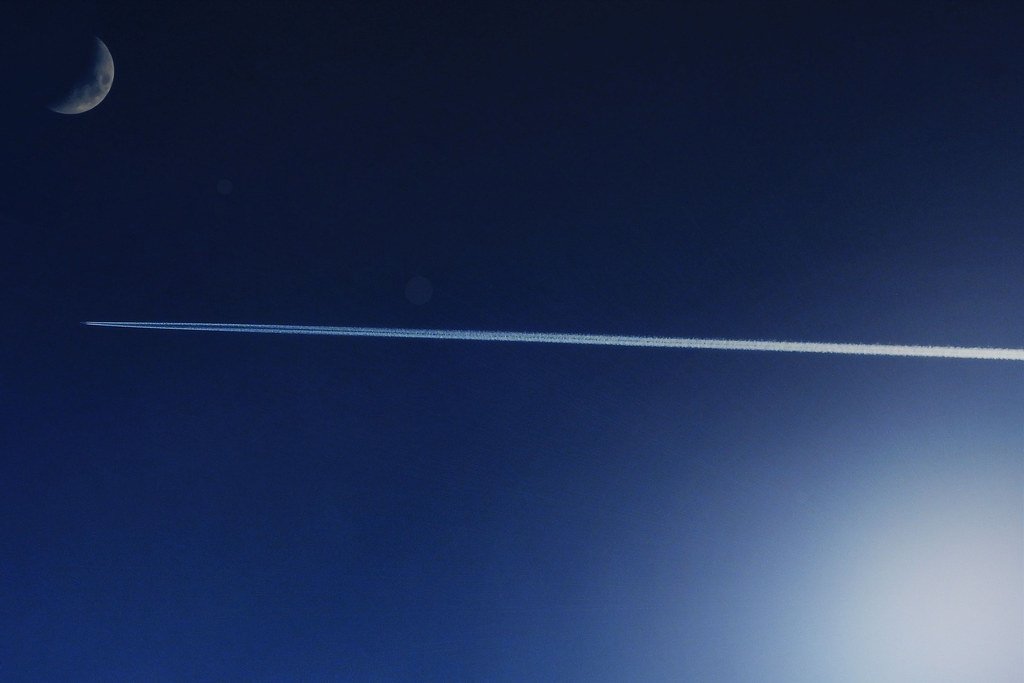
Featured photograph: “separating day and night” by K Bahr (planes, space, nature), photographed in 2017 and marked Public Domain Mark 1.0 on Flickr; sourced via Openverse. This is a real contextual aviation photograph—not Steve Frazer’s aircraft, sighting, or footage. The SWNS-distributed recording is linked via the original news coverage rather than reproduced without confirmed rights.