A premium TV can survive years of heavy use and still lose the picture a few pixels at a time. Not through the familiar ghost of a channel logo burned into the center of the screen, but from dead pixels collecting around the edges. RTINGS has a memorable name for the phenomenon: edge rot.
In an investigation published November 5, 2026, the independent testing site reported that 14 of 16 older white OLED (WOLED) televisions in its 18,000-hour accelerated longevity test developed some form of edge deterioration. Among three televisions using Samsung Display’s competing quantum-dot OLED (QD-OLED) technology, none did.
That sounds like a devastating scorecard. It is also a scorecard that needs context: the sample was small, mostly represented 2020–2022 televisions, and the sets endured a demanding testing schedule. The finding does not mean 87.5% of WOLED TVs in homes will develop edge rot. No television released in 2024 or later was included in this investigation.
What exactly is “edge rot”?
RTINGS uses the term for dead pixels, patches of failed pixels, and other visible defects that appear along the outer boundary of a WOLED screen. In some televisions the fault is barely noticeable without a test pattern. In others, dark clusters creep far enough inward to interfere with ordinary viewing. RTINGS publishes photographs of affected panels, including sets belonging to staff members who used them under ordinary household conditions.
Edge rot is not the same as burn-in. Burn-in produces persistent image shapes from uneven use of OLED pixels, often associated with repeated static graphics. Edge rot is concentrated around the panel perimeter; varying what you watch does not appear to prevent it. Nor does RTINGS claim to have proved that the visible damage in every unit comes from the same cause.
What the 18,000-hour test actually found
RTINGS put 100 televisions through an extended accelerated longevity project, generally running them for 15.5 to 20 hours a day with high brightness and repeated power cycles. Its published methodology explains the deliberately harsh schedule, designed to reveal aging and component failures faster than normal viewing would.
| Panel type | Tested | With edge rot | Significant or severe |
|---|---|---|---|
| Older LG Display WBC WOLED | 10 | 9 | 8 |
| Newer LG Display WBE WOLED | 6 | 5 | 3 |
| Samsung Display QD-OLED | 3 | 0 | 0 |
Source: RTINGS model-level inspection. The figures describe these individual tested sets, not population-wide failure rates.
Five earlier WBC sets were classified as severely affected, compared with one WBE model. The severe cases included the LG BX, LG A1, LG C1, Sony A80J and Vizio OLED among WBC panels, plus the Sony A90J among WBE panels. The 2022 LG A2 and 2023 LG G3 were the two WOLED televisions in the study without edge rot. The G3 was also the only 2023 WOLED tested, so one encouraging result cannot establish an entire generation’s reliability.
It matters that these were LG Display-manufactured panels, not necessarily LG-branded TVs. Sony and Vizio also sold affected WOLED-panel models. And one tested television per model is not enough to rank the reliability of an individual brand or model with statistical confidence.
Why might the borders be failing?
An OLED’s organic materials need protection from the surrounding environment. RTINGS says manufacturing contamination and defects or deterioration in the panel’s protective encapsulation are plausible explanations. If a barrier fails, moisture can damage sensitive layers. But these are hypotheses, not a confirmed diagnosis of the tested TVs: proving the mechanism would require microscopic failure analysis of the panel layers.
RTINGS also distinguishes possible effects of calendar age on edge-layer delamination from the effect of operating hours on pixel failure. Those mechanisms may overlap, and the investigation cannot determine how much either contributes for any single television.
LG and Samsung give different answers
In its response published by RTINGS, LG Electronics and LG Display acknowledged awareness of the phenomenon, saying it may arise in a small number of OLED products after prolonged exposure to high temperature, humidity or other harsh conditions. The companies said they do not expect it under normal everyday viewing and stressed ongoing improvements to design and manufacturing.
Samsung Display, whose QD-OLED panels emerged without edge rot in this small test, credited its Thin Film Encapsulation approach for protecting panel edges against moisture. Its explanation is a manufacturer claim, not independent proof that QD-OLED can never develop similar faults.
The strongest corroboration beyond the stress test is that RTINGS documented significant edge rot in two employee-owned televisions—a 2020 LG GX and 2021 LG C1—used in ordinary homes. Those observations challenge the idea that the symptom exists only in extreme laboratories. They still cannot establish its frequency among consumers.
What about 2024, 2025 and 2026 OLED TVs?
We do not yet know whether the latest WOLED panels are vulnerable at the same rate, less vulnerable, or effectively protected. Industry specialists told RTINGS that manufacturing improvements made around 2024 could help; its new Longevity 3.0 test is tracking newer displays, including modern WOLED designs. Until newer sets have aged, declaring the problem fixed—or declaring all new LG OLEDs defective—would outrun the evidence.
It is also worth remembering the larger reliability picture. RTINGS says OLEDs performed well for complete panel and component failures in its broader longevity program, even as the sets showed burn-in or localized edge damage under stress. Three OLED monitors inspected for this specific issue showed no edge rot, although that is far too small a sample to generalize.
What should owners look for?
If you own an older WOLED, look closely at the corners and borders while displaying a solid white, gray, red, green or blue test image. Dead pixels may present as stationary black dots or irregular dark clusters. Check whether the problem persists across inputs and content, photograph the defect, and consult your model’s warranty terms or the manufacturer’s support team. If a pixel-shift feature makes the last rows hard to see, consult your TV’s instructions before temporarily changing settings, and restore the protection afterward.
No viewing trick has been demonstrated to repair true dead pixels or prevent edge rot caused by physical panel deterioration. Random “pixel healing” videos should not be treated as a fix for a manufacturing or encapsulation defect.
For shoppers, the question is more specific than “Should I fear OLED?” It is whether a particular generation of panels has enough real-world age and independent evidence behind it to justify the price—and whether the warranty offers useful protection against edge failures, not just classic image retention.
RTINGS has documented the symptom. Manufacturers disagree about the likely risk under everyday conditions. What remains missing is the long-term evidence for current-generation panels. Will newer designs stop the damage at the border, or will that answer only appear years after the purchase?
Video and original reporting
Watch the related short-form commentary on WOLED edge rot. The video is a secondary explainer supplied with this story; the RTINGS investigation is the primary source for measurements and photographs.
Primary research: RTINGS, “Edge Rot Plagues WOLED TVs” (Nov. 5, 2026) · RTINGS, 100-TV longevity test methodology · RTINGS, Longevity 3.0.
Additional reporting: VideoCardz, Nov. 8, 2026 · TechPowerUp report.
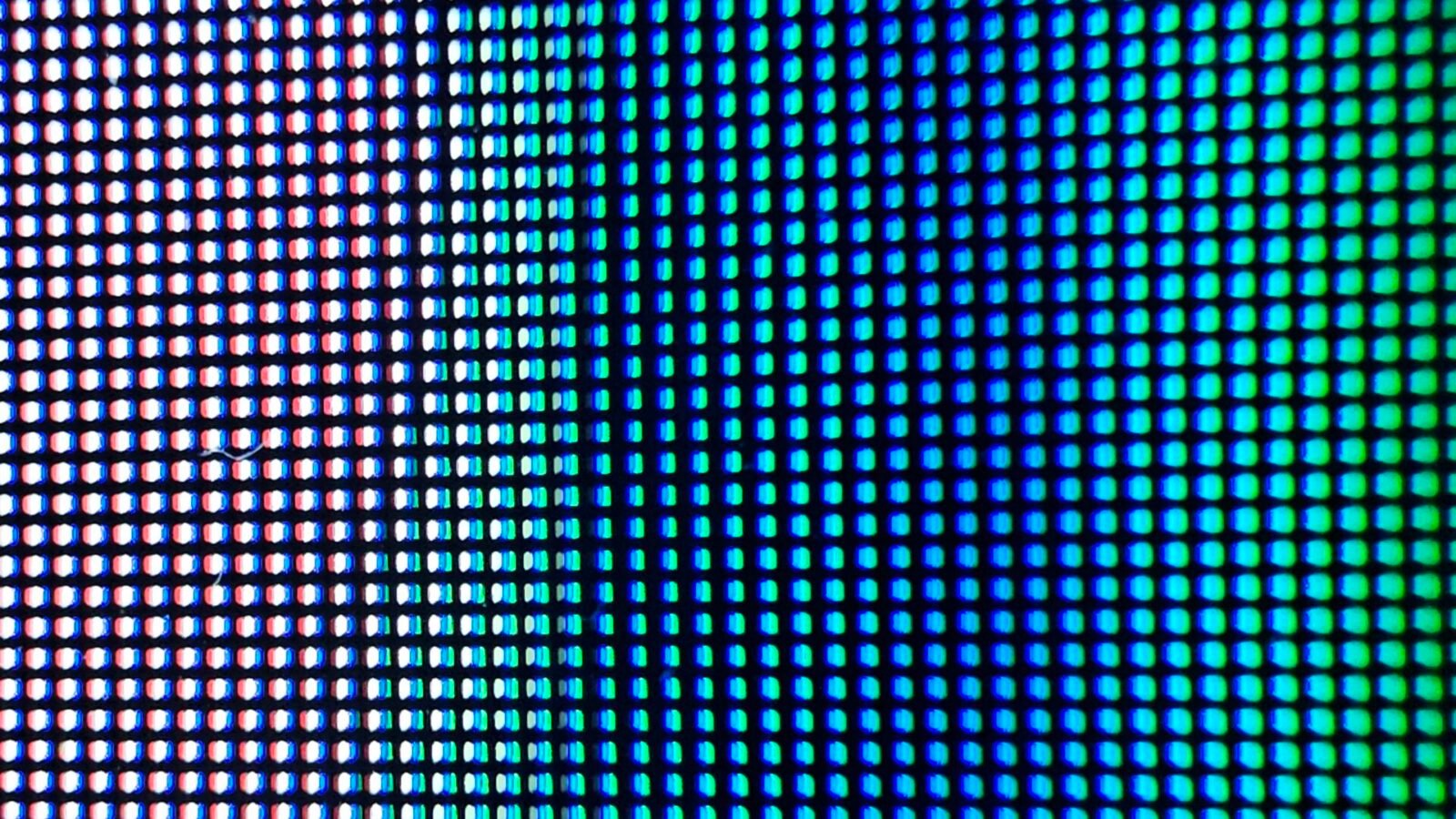
Featured image: Actual close-up photograph of the LG C1 OLED television panel by TECH EDU (December 3, 2023), via Wikimedia Commons; licensed CC BY-SA 4.0. No editorial alteration; WordPress may create display-size crops. The LG C1 was one of the models in RTINGS’ study, but this photograph does not depict edge rot. For genuine photographs of the panel defects, see RTINGS’ original investigation.