WASHINGTON, November 13, 2026 — A psychedelic compound extracted from a Central African shrub has moved closer to the American clinical-research system—not because regulators have decided that it works, but because federal agencies are paying to find out. On November 12, the Department of Health and Human Services (HHS) announced up to $4.9 million over five years for the groundwork needed to study ibogaine, while a separate National Institute of Mental Health (NIMH) opportunity offers $20 million for research into fast-acting psychiatric treatments. One of the ibogaine teams is led by Mark Cuban Cost Plus Drug Company.
There is a critical boundary around the headline: the initial $4.9 million awards do not fund treatment of patients, authorize clinical trials, or mean that ibogaine has FDA approval. They support manufacturing, regulatory preparation, study design and the evidence needed to seek permission for future trials, according to HHS’s November 12 announcement.
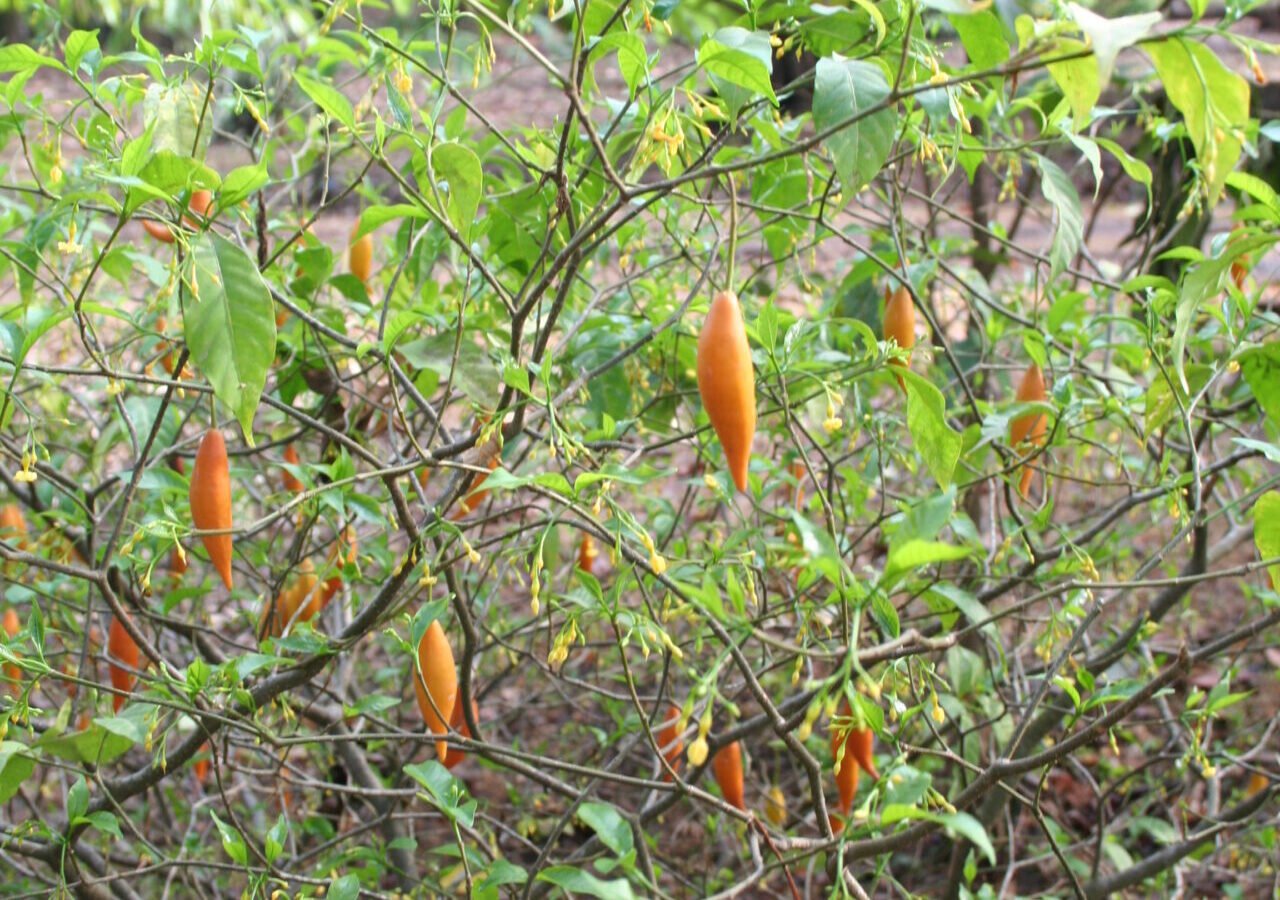
Featured photo: Tabernanthe iboga growing at Limbe Botanical Garden, Cameroon (2007). Photo by Marco Schmidt / Wikimedia Commons, CC BY-SA 2.5, resized for web. Documentary botanical image; not a photograph of the HHS announcement.
What the federal government is actually funding
The Advanced Research Projects Agency for Health (ARPA-H) named two awardee teams. Mark Cuban Cost Plus Drug Company, PBC will help establish the chemical, engineering, clinical and regulatory foundation for a domestically manufactured, single-molecule ibogaine hydrochloride product initially aimed at post-traumatic stress disorder (PTSD). Beond, Inc. is tasked with supplying clinical data related to dosing, safety, potential efficacy and how long any apparent benefit lasts. ARPA-H says the awardees will make research findings openly available.
The total commitment is capped at $4.9 million across five years; the public announcement does not specify how much each company receives. This is a corporate research role for a company associated with Mark Cuban—not evidence that Cuban personally donated that amount, funded the entire initiative or has demonstrated that ibogaine is effective. ARPA-H describes the projects as foundations for potential Investigational New Drug (IND) applications, the regulatory process for studies of investigational medications.
A separate ARPA-H effort, Accelerating Safe Clinical Evaluation of Novel Treatments: Ibogaine for Better Outcomes in Opioid Use Disorder (ASCENT-IBO), is being developed for potential early-stage trials involving opioid use disorder. That initiative should not be mistaken for trials already authorized under the November 12 awards.
The other $20 million is a different program
HHS also announced a $20 million NIMH funding opportunity to build a network studying rapid-acting psychotropic interventional drugs, or RAPIDs. The category includes ketamine and esketamine, psilocybin, and other emerging compounds. NIMH expects to announce recipients in summer 2027. In other words, the $20 million is an offered research-funding opportunity, not money already awarded to Cuban’s company or proof that all of the listed drugs have the same legal or medical status.
NIMH’s research concept emphasizes an often neglected question: even when a treatment performs well in a tightly controlled study, will it work safely, durably and affordably across ordinary clinical settings and diverse patient groups?
Why ibogaine attracts veterans—and why the science remains unsettled
Ibogaine is a psychoactive alkaloid associated with Tabernanthe iboga, a plant from Central Africa. Accounts from veterans and people seeking treatment for substance-use problems have helped make it a focus of medical and political interest. Such experiences are important leads for investigation; they are not substitutes for independent controlled evidence.
One of the most cited studies, published in Nature Medicine in January 2024, followed 30 male Special Operations Forces veterans with traumatic brain injuries. They independently sought a magnesium-and-ibogaine treatment protocol at a clinic in Mexico. Researchers reported improvements in disability scores and several psychiatric measures after treatment, with observations extending to a one-month follow-up. The paper itself identified a small, unusually selected population and called for larger controlled trials.
The crucial limitation is causal: there was no randomized placebo or untreated comparison group. The treatment combined ibogaine with magnesium and other supportive care. Improvements following the visit therefore cannot establish that ibogaine alone produced the change—or that the same results would appear in patients with different health conditions. Read the original open-access study and Stanford Medicine’s explanation of those limits.
The most serious obstacle is not politics. It is the heart.
Ibogaine has been associated with potentially fatal disturbances of heart rhythm. In an October 5, 2026 request for information, the Food and Drug Administration highlighted cardiac QTc prolongation, neurological risks, questions about starting doses and the need for strict screening and independent oversight. The agency has sought comments about monitoring, treatment settings, eligibility criteria and stopping rules, with a November 20, 2026 comment deadline under docket FDA-2026-N-10429.
The 30-veteran observational study reported no serious adverse events in its monitored group. That is relevant, but a small, carefully selected cohort cannot rule out rare, severe complications, especially among medically vulnerable people or those taking interacting medications. Ibogaine should not be portrayed as a proven or generally safe do-it-yourself treatment.
Follow the money—but also follow the data
The presence of Cost Plus Drug Company introduces an affordability pledge into a field where specialized treatment programs can be expensive. HHS says that, if a product eventually succeeds in trials and wins FDA approval, it wants pricing based on production costs plus a fair margin. That remains a goal, not an approved price or guarantee of access.
Beond’s contribution raises a second question: how should data from existing clinics be evaluated? Treatment records may help researchers investigate dosing and adverse events, but uncontrolled clinical histories are not automatically equivalent to prospective randomized trials. Investigators will need to explain patient selection, missing follow-up, independent verification and which findings can be reproduced.
There is an encouraging transparency commitment: ARPA-H says awardees will open-source findings. The meaningful test will be whether protocols, safety outcomes and unfavorable results become accessible enough for independent scrutiny—without exposing personal patient records.
What happens next?
The administration’s April 2026 push for psychedelic research and its collaboration with the Department of Veterans Affairs provide the policy setting for the November announcement. The next measurable milestones are the production of clinical-grade ibogaine, any FDA-authorized IND studies, public release of usable data, and NIMH’s selection of research-network recipients. Officials’ enthusiasm will matter far less than what well-designed trials show about benefits, serious harms and lasting outcomes.
Ibogaine may yet become a useful medicine. It may prove unsuitable for some groups, or fail to outperform safer treatments. Right now, federal funding is buying the chance to ask those questions more rigorously—not the right to declare an answer.
Question. Investigate. Reconsider.
Sources and further reading
- HHS, November 12, 2026: ARPA-H awards and $20 million NIMH opportunity
- ARPA-H: awardee teams, IND groundwork and ASCENT-IBO
- FDA: safety and trial-design request for public input
- Federal Register: ibogaine trial-design docket FDA-2026-N-10429
- Cherian et al., Nature Medicine (2024): observational magnesium–ibogaine study
- NIMH: rapid-acting psychotropic interventions research concept
- Endpoints News: report prompting this investigation