INVESTIGATION | CONGRESSIONAL EVIDENCE FILE | NOVEMBER 14, 2026
What did lawmakers actually hear about PCR testing, vaccine injuries, treatment disputes, nursing-home deaths, COVID research and federal money? This companion to Apep Bar’s hospital-protocol investigation follows the hearings, witnesses and primary documents—and keeps testimony separate from proven findings.
Read the companion investigation: COVID’s Protocol Wars: PCR Tests, Hospital Payments, Ventilators and the Machinery of Fear.
A hearing is evidence of a dispute, not proof of the allegation
The House Select Subcommittee on the Coronavirus Pandemic said it held 25 hearings and meetings, conducted more than 30 transcribed interviews and depositions, and reviewed over one million pages during its 2023–2024 inquiry. Its majority issued a more than 500-page final report on December 2, 2024. Democratic members published their own assessment, disagreeing with major interpretations. The Senate continued investigating vaccine safety and origins into 2026. This is a substantial official record, but it contains testimony with sharply conflicting conclusions. An accusation delivered in Congress is not automatically a finding of fact.
House majority report and inventory | House minority findings | Senate Permanent Subcommittee hearing archive
1. Anthony Fauci: social distancing, scientific advice and origins
Former NIAID Director Anthony Fauci underwent two days of closed-door questioning in January 2024 and appeared before the House subcommittee on June 3. Lawmakers pressed him over the six-foot distancing recommendation, school and public-health policy, scientific communications about possible laboratory origins and federal research relationships. His interview acknowledged uncertainty about the exact six-foot number; it did not establish that avoiding close contact was baseless. Republican investigators alleged inappropriate influence over discussions of origins; Fauci denied orchestrating a cover-up. The publicly released documents permit scrutiny of his answers and their context, not a finding that he designed hospital protocols to kill patients.
Full hearing and testimony repository | Closed-door transcripts and majority memo
2. Rochelle Walensky and the CDC’s shifting guidance
Former CDC Director Rochelle Walensky testified on June 13, 2023, about pandemic policy, data collection, school guidance and public communication. Lawmakers questioned inconsistency, vaccination messaging and the agency’s scientific judgments. The testimony addressed serious weaknesses in data infrastructure and the difficulty of communicating changing evidence. A valuable question for PCR policy is whether officials carefully distinguished a positive molecular result from infectiousness and severe disease. The hearing did not prove that the CDC manufactured positives by universally setting tests to 45 cycles.
CDC oversight hearing | Walensky’s CDC written statement
3. Peter McCullough, Harvey Risch, Pierre Kory and the early-treatment hearings
On November 19 and December 8, 2020, the Senate Homeland Security and Governmental Affairs Committee heard conflicting testimony about outpatient care. Peter McCullough, Harvey Risch and George Fareed appeared in the first session with Ashish Jha. In the second, witnesses included Pierre Kory, Ramin Oskoui, Jean-Jacques Rajter, Armand Balboni, Jane Orient and Jay Bhattacharya. Some witnesses maintained that inexpensive existing drugs and early treatment were being neglected, while others emphasized reliable randomized clinical evidence. Kory advocated ivermectin; Risch defended aspects of hydroxychloroquine treatment. Later controlled trials did not demonstrate the substantial benefits claimed for those drugs. The hearings document dissent and questions about research prioritization; they do not make the advocated treatments effective by virtue of congressional testimony.
November 19, 2020 witness statements | December 8, 2020 witness statements | Cochrane ivermectin review
4. Natural immunity and the mandates debate
On May 11, 2023, the House heard Marty Makary, Margery Smelkinson and Tina Tan discuss protection after infection and the relationship between prior immunity and vaccination. The witnesses differed in their appraisal of policy. Protection following prior infection is real but varies with time and viral evolution; it does not establish that vaccination was useless or that every mandate was warranted. The issue for accountability is whether uniform policies adequately distinguished individuals with different risks and immunological histories.
Official hearing and written testimony
5. The House questions vaccine surveillance and injury compensation
In February and March 2024, the House examined adverse-event detection and compensation programs. CDC official Daniel Jernigan, FDA official Peter Marks and HRSA official George Reed Grimes appeared in the first hearing; Patrick Whelan, David Gortler, Renée Gentry and Yvonne Maldonado appeared in the second. Legislators challenged delays, inadequate staffing and the fragmented system for evaluating injury claims. These are serious oversight questions. A suspected injury must be investigated, but a report filed after vaccination does not by itself demonstrate causation. Regulators and independent experts disputed some of the committee’s broader interpretations.
House vaccine-safety hearing, Part 1 | Part 2
6. May 2025: The Senate confronts myocarditis allegations
On May 21, 2025, Senate investigators heard Peter McCullough, Jordan Vaughn, James Thorp, Joel Wallskog and attorney Aaron Siri. Chairman Ron Johnson criticized official handling of signals involving myocarditis and other adverse events. Ranking Member Richard Blumenthal emphasized transparency while urging care in interpreting population-level risk. Myocarditis and pericarditis after mRNA COVID vaccination are documented rare adverse events, especially in certain younger male groups. That established association must not be broadened without evidence into a conclusion that all subsequent heart disease, strokes or deaths were vaccine-caused.
Senate hearing and each witness’s written testimony | CDC safety guidance
7. July 2025: Witnesses describe suspected vaccine injuries
The July 15, 2025 Senate hearing, ‘Voices of the Vaccine Injured,’ heard patient and family accounts and questions about how suspected harms are assessed and compensated. Some testimony involved vaccines other than COVID-19 vaccines, an important limit often omitted from summaries of the hearing. The accounts should be investigated without either dismissing patients or prematurely assigning a medical cause. The key documents are medical histories, clinician assessments, the timing of symptoms and suitable comparison evidence.
8. April 2026: Senate allegations about missed safety signals
At an April 29, 2026 hearing, witnesses including David Wiseman and Karl Jablonowski addressed federal methods for identifying safety signals. A majority staff report alleged that agency officials used surveillance approaches that missed important patterns; the allegation was disputed and calls for independent examination of data and methods. An imperfect algorithm is not, on its own, proof that officials intentionally concealed injuries. Any fair audit should publish its datasets, comparison periods and assumptions.
Senate April 29, 2026 hearing and supporting records
9. June 2026: Proposed vaccine-cancer mechanisms meet opposing testimony
The Senate’s June 3, 2026 panel heard Angus Dalgleish, Wafik El-Deiry, Sabine Hazan, Saskia Mostert, Aseem Malhotra, Julie Gralow and cancer survivor Tamika Felder. Some described hypotheses and concerns about cancer biology and scientific publishing. Gralow, speaking as an oncology leader, emphasized that available clinical evidence did not establish that mRNA COVID vaccination causes cancer. A plausible mechanism, clinical observation or temporal association is not proof of a population-level causal relationship; the hearing contained competing assessments and should be read that way.
Full witness roster, written statements and video
10. Andrew Cuomo and the nursing-home directive
On September 10, 2024, former New York Governor Andrew Cuomo was questioned about the March 25, 2020 directive affecting hospital admissions to nursing homes, COVID death reporting and his administration’s decisions. Republican investigators charged that the policy endangered residents and that the administration obscured the toll; Cuomo contested accusations of concealment and defended decisions made in emergency conditions. Establishing how many deaths were caused by a particular directive requires more than comparing counts before and after it: community prevalence, staffing, testing and facility conditions matter.
11. Robert Redfield, Jamie Metzl, Kristian Andersen and Robert Garry: the origin debate
House hearings in March and July 2023 examined laboratory-related and natural-emergence hypotheses. Robert Redfield, Jamie Metzl, Nicholas Wade and Paul Auwaerter testified in March; Kristian Andersen and Robert Garry were questioned in July about their influential scientific assessment. A June 18, 2024 Senate origins hearing included Gregory Koblentz, Robert Garry, Steven Quay and Richard Ebright. Witnesses challenged one another’s evidence and the framing of uncertainty. The origin of SARS-CoV-2 remains contested; neither hypothesis proves PCR diagnostics were fake, hospital deaths were staged, or vaccines were without clinical effect.
March 2023 House hearing | July 2023 House hearing | June 2024 Senate hearing
12. Peter Daszak, David Morens and missing federal records
Lawmakers questioned EcoHealth Alliance president Peter Daszak on May 1, 2024 and NIAID adviser David Morens on May 22. The Morens inquiry focused on emails, personal communication channels, records preservation and ties to EcoHealth. Committee Republicans alleged deliberate evasion of transparency rules. These issues deserve independent scrutiny because missing records weaken accountability. But even proven records misconduct would not automatically settle SARS-CoV-2’s origin, establish deliberate injury to hospitalized patients or prove a unified global operation.
Morens hearing | House final investigative report
13. CIA whistleblower James Erdman: transparency allegations in May 2026
James E. Erdman III, identified on the Senate’s hearing page as a senior CIA operations officer, testified May 13, 2026 that intelligence agencies obstructed declassification work and retaliated against personnel working on transparency projects. His statement alleges institutional interference, not a demonstrated assassination plot. The claims warrant review of records and agency responses. Invoking a historical intelligence capability is not evidence that scientists or COVID policy critics were secretly murdered.
14. Government audits: follow the money with the numbers intact
HHS’s Inspector General estimated approximately $784 million in improper payments in a COVID uninsured-provider program during its audited period because certain recipients were insured or services were unrelated or unsupported. An entirely different audit examined Medicare inpatient COVID claims: 146 of 149 sampled claims met federal requirements and three did not, involving $18,911 in improper payments, chiefly clerical errors. Both deserve reporting. Neither supports the shortcut from improper billing to intentional patient killing. Separate programs, periods and audit scopes cannot be collapsed into a single accusation.
OIG uninsured-provider audit | OIG Medicare hospital audit
15. What Congress has not proven—and what investigators should request
The reviewed hearings establish profound disputes about pandemic governance. They do not document a nationwide government order to kill COVID patients for reimbursement or a PCR-based invention of the pandemic. To resolve individual abuse allegations, investigators need patient charts, test-platform settings, sedation and restraint logs, consent records, hospital financial statements, contemporaneous directions, comparative outcomes and authenticated recordings. Witnesses who speak under oath are accountable for their statements; clinical hypotheses still require testing.
Congressional evidence can expose wrongdoing, but it also contains political argument and competing expert interpretation. An honest investigation must weigh every source—including officials’ responses, critics’ dissent and the limits of auditing—rather than treating the witness roster as a verdict.
Source videos and editorial transparency
This is a companion to Apep Bar’s larger inquiry into the allegations in the Bad Medicine interview, the historic Mullis/Fauci clip and Mullis’s discussion of PCR interpretation. These are sources of claims, not independent authentication of every assertion. The congressional hearings linked above are primary public records; hearing titles often reflect the chair’s allegations rather than an established conclusion.
Question. Investigate. Reconsider.
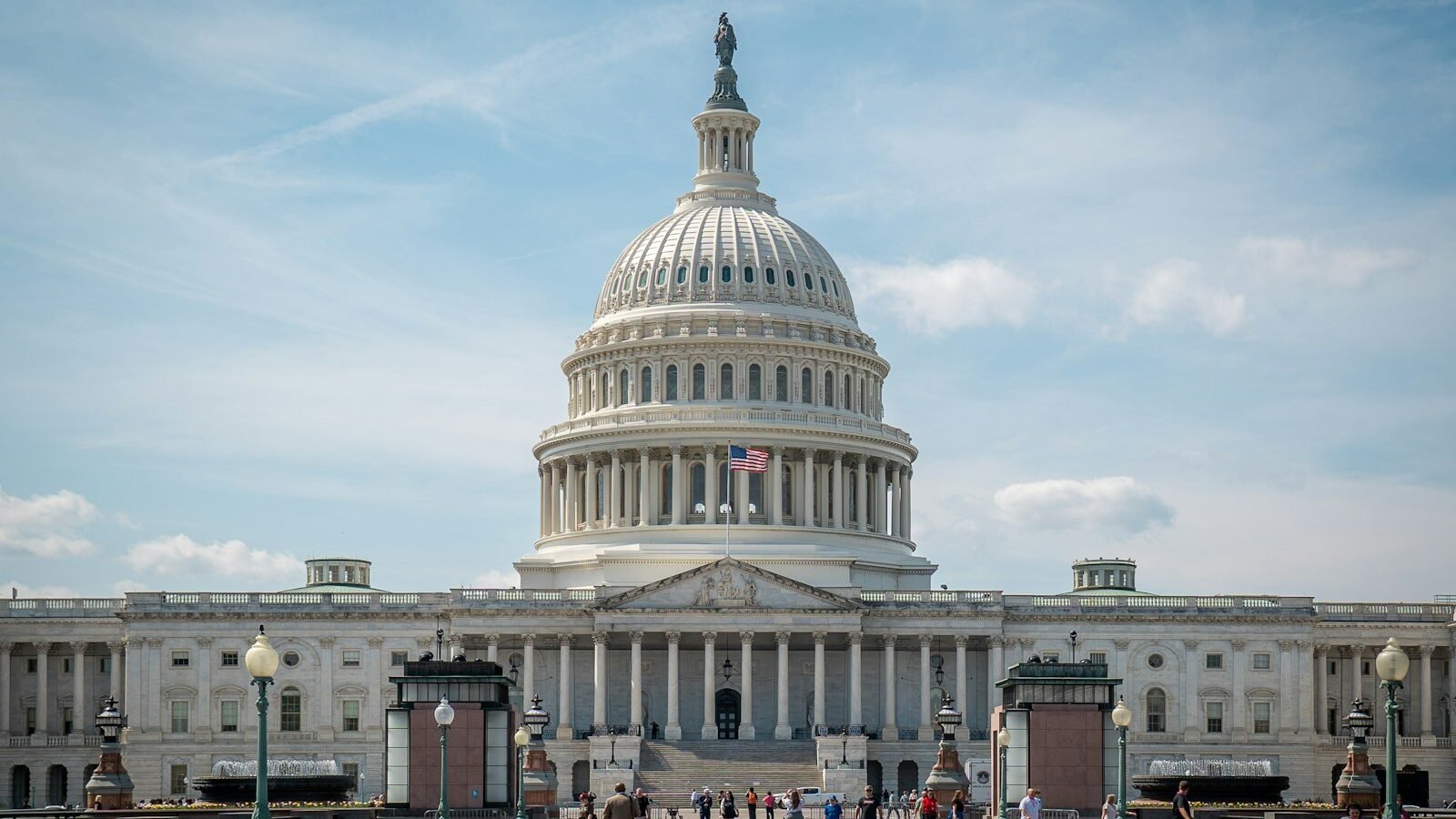
Featured photograph: United States Capitol, Washington, D.C., April 2026. Photo: Alexandra Tran / Unsplash, Unsplash License. Contextual Capitol photograph, not a photograph of any specific congressional hearing. Original photograph.