A place with no air, glass or water should not behave like a crystal. Yet the intense magnetic field around a magnetar may make the vacuum itself alter the polarization of light. NASA’s Imaging X-ray Polarimetry Explorer (IXPE) reported results in August 2026 consistent with a phenomenon physicists have been predicting for roughly 90 years.
What astronomers measured
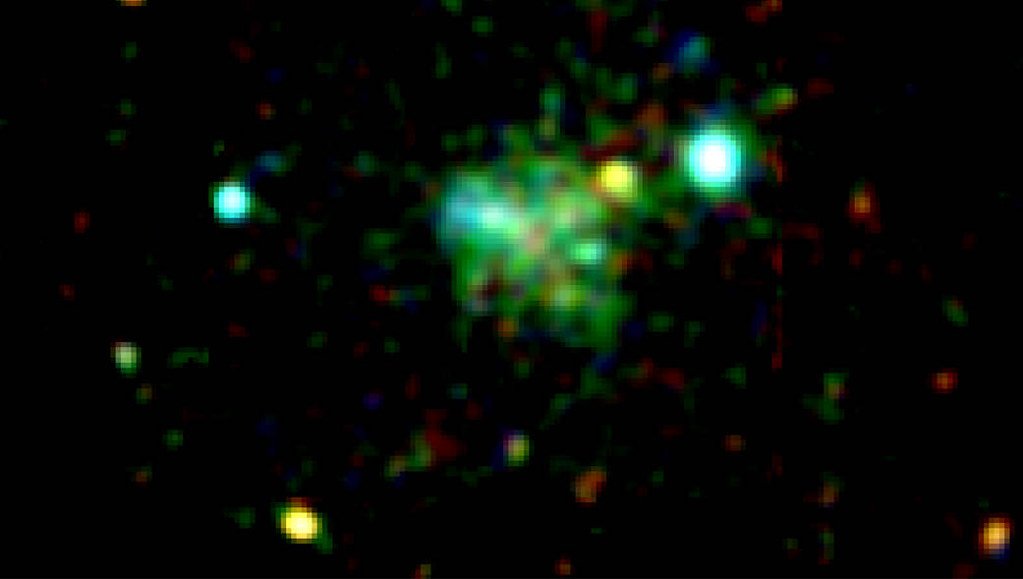
The target was magnetar 1E 1547.0-5408, a neutron star with an extraordinary magnetic field. IXPE measures the polarization of X-rays, giving astronomers a way to test what happens to light close to that field. The underlying quantum-electrodynamics idea is that a powerful magnetic field can make otherwise empty space behave differently depending on the light’s polarization. That effect is called vacuum birefringence.
Why ‘may’ matters
The measurement is a serious test of established theoretical physics, not evidence of magic or a new energy source. Astrophysical modeling is required to connect a telescope’s signal to physical conditions near the star. Researchers must distinguish the vacuum effect from emission geometry and conditions around the magnetar. NASA described the result with careful language rather than declaring a universally settled proof.
A strange result with a real scientific pedigree
The compelling part of this story is not that scientists ‘discovered nothing has properties.’ Quantum physics has long predicted behavior of fields and particles in a vacuum. The new opportunity is to confront that prediction with measurements made near one of the most extreme natural magnets. Further observations can test whether the interpretation holds up.
Primary sources
Apep Bar — Question. Investigate. Reconsider.