Microsoft ended ordinary support for Windows 10 more than a year ago. Apparently, nobody told every Windows 10 computer.
Despite the October 14, 2025 support deadline and years of pressure to move to Windows 11, a sizable share of Windows users is still running the older operating system. Now Microsoft’s latest earnings report offers an intriguing number: its Windows OEM and devices revenue fell 22% year over year in the quarter ended September 30, 2026.
That looks like a victory for the holdouts. But there’s a catch. Microsoft’s own disclosures point to several causes of the decline—and do not establish that people refusing Windows 11 are the dominant one.
The 22% decline is real. So is the missing context.
In its October 28 earnings release, Microsoft reported that Windows OEM and devices revenue declined 22%. OEM means the Windows licenses sold to PC manufacturers, which preinstall the software on new machines. The combined figure also includes hardware and related device offerings. It is revenue, not a measure of total company profit or a head count of people refusing to upgrade.
During the fiscal 2027 first-quarter earnings call, Microsoft’s finance chief gave an even sharper figure: Windows OEM revenue alone fell 27% from the same quarter a year earlier.
Yet Microsoft as a whole did not suffer a 22% sales plunge. Its total revenue rose 19% to $92.3 billion, while its cloud and infrastructure businesses continued expanding. The Devices and Consumer segment, which includes much more than Windows PCs, declined just 3% to $15.5 billion.
One company. Two very different stories. The PC side is under pressure; the broader software-and-cloud machine is not.
What Microsoft actually blamed
Microsoft attributed the OEM decline to a combination of unusually strong demand in the previous year as Windows 10’s support deadline approached, manufacturers and channel partners reducing inventory, and weaker underlying demand for PCs.
That matters because year-over-year comparisons can exaggerate the appearance of a collapse when the earlier quarter got an exceptional one-time boost. In 2025, businesses and consumers had a reason to replace aging PCs or accelerate upgrades before the Windows 10 deadline. In 2026, that particular deadline-driven surge was no longer there.
Microsoft also said inventory remained elevated. When manufacturers have too many PCs or licenses already in the channel, they may order less even if everyday customers are still buying some machines. In its outlook, the company warned that Windows OEM and devices revenue could decline in the mid-thirties percentage range in the next quarter, citing continued inventory pressures, demand weakness and that difficult prior-year comparison.
So the video’s core observation—that Windows sales are hurting—is supported. Its stronger explanation—that Windows 10 holdouts are what made Microsoft’s threats stop working—goes beyond what the earnings evidence can prove.
Windows 10 holdouts are not imaginary
There is independent evidence that millions of users are still finding reasons to keep the older system. Statcounter’s October 2026 global Windows-version figures put Windows 10 at 25.12% and Windows 11 at 74.29% of measured Windows web usage.
That is roughly one in four Windows page views recorded in Statcounter’s dataset coming from Windows 10. It is not a census of installed PCs, unique people, or Microsoft’s license sales. Statcounter explains that it measures page views on participating websites, which can be influenced by browsing habits and geography.
The trend also complicates the idea of an outright migration revolt: Windows 11 is comfortably ahead. Holdouts are substantial, but many people have moved on.
Why someone might keep a perfectly good Windows 10 machine
Some motivations are obvious. If a PC still runs the applications its owner needs, replacing it because of an operating-system deadline feels more like an invoice than an upgrade. Others may prefer a familiar interface, distrust a newer system, or need specialized business software that takes time to validate.
There is also a hardware barrier. Microsoft’s Windows 11 requirements include a supported processor, TPM 2.0, Secure Boot capability and other minimum specifications. An otherwise usable older PC may fail those requirements. That doesn’t prove Microsoft designed the rules to force hardware purchases; it does mean that for some users, the official upgrade path requires buying or replacing hardware.
And the PC market has its own economics. Component prices, budgets and inventory cycles can postpone purchases irrespective of how people feel about Windows 11. Microsoft’s 2026 annual report specifically identifies OEM inventory levels, device demand and pricing as factors affecting Windows licensing revenue.
For more on the costs and conflicts reshaping desktop computing, see Apep Bar’s reporting on GPU rivals, RAM pressures and the battle for your PC.
The part nobody should mistake for a bluff: security
Windows 10 computers did not suddenly stop working on October 14, 2025. Microsoft’s own support guidance is explicit that the operating system continues to run. What ended was regular security and technical support for the general consumer release.
Continuing to use Windows 10 without security patches is possible, but carries growing risks. The consumer Extended Security Updates program currently offers eligible Windows 10 version 22H2 PCs critical and important security updates through October 12, 2027. Microsoft’s stated enrollment choices include syncing PC settings at no additional cost, redeeming 1,000 Microsoft Rewards points, or paying a one-time $30 U.S. fee (plus applicable tax).
Those extensions don’t deliver new features or ordinary technical support. And they are not an invitation to ignore cybersecurity. If a device cannot move to Windows 11, the sensible choice is to check ESU eligibility and keep applications, backups and other protections current—not assume that the absence of an immediate failure means the machine is safe indefinitely.
Did Microsoft’s ultimatum backfire?
Perhaps in a limited sense. Some users clearly aren’t rushing to replace computers on Microsoft’s preferred schedule, and that makes the end-of-support story less tidy than a marketing brochure might suggest. But an earnings report cannot tell us how many potential PC purchases were delayed by dislike of Windows 11, hardware compatibility requirements, higher costs or plain satisfaction with an existing machine.
Microsoft’s quarterly figures document a sales decline and offer several plausible contributors. They do not demonstrate a consumer rebellion as the principal cause. The curious contradiction is bigger: a technology company can report strong overall growth while a familiar product line struggles to persuade customers they need something newer.
The unanswered question: when a computer still does what its owner needs, who should decide when it becomes obsolete—the user, the security timetable, or the company selling the replacement?
Watch: The claim that sparked the debate
The linked short video is commentary about Microsoft’s earnings, not an official company statement or documentary footage of an event. Its key numbers were checked against the linked Microsoft primary sources above.
Watch the original YouTube Short: People Won’t Leave Windows 10 (contextual commentary, not an official Microsoft statement).
Commentary on Microsoft earnings and Windows 10 holdouts; not official Microsoft footage.
Primary sources and further reading
- Microsoft FY27 Q1 earnings release, October 28, 2026
- Microsoft earnings call transcript and financial outlook
- Statcounter worldwide Windows-version usage, October 2026 and methodology
- Microsoft consumer Windows 10 Extended Security Updates program
- Microsoft Windows 11 system requirements
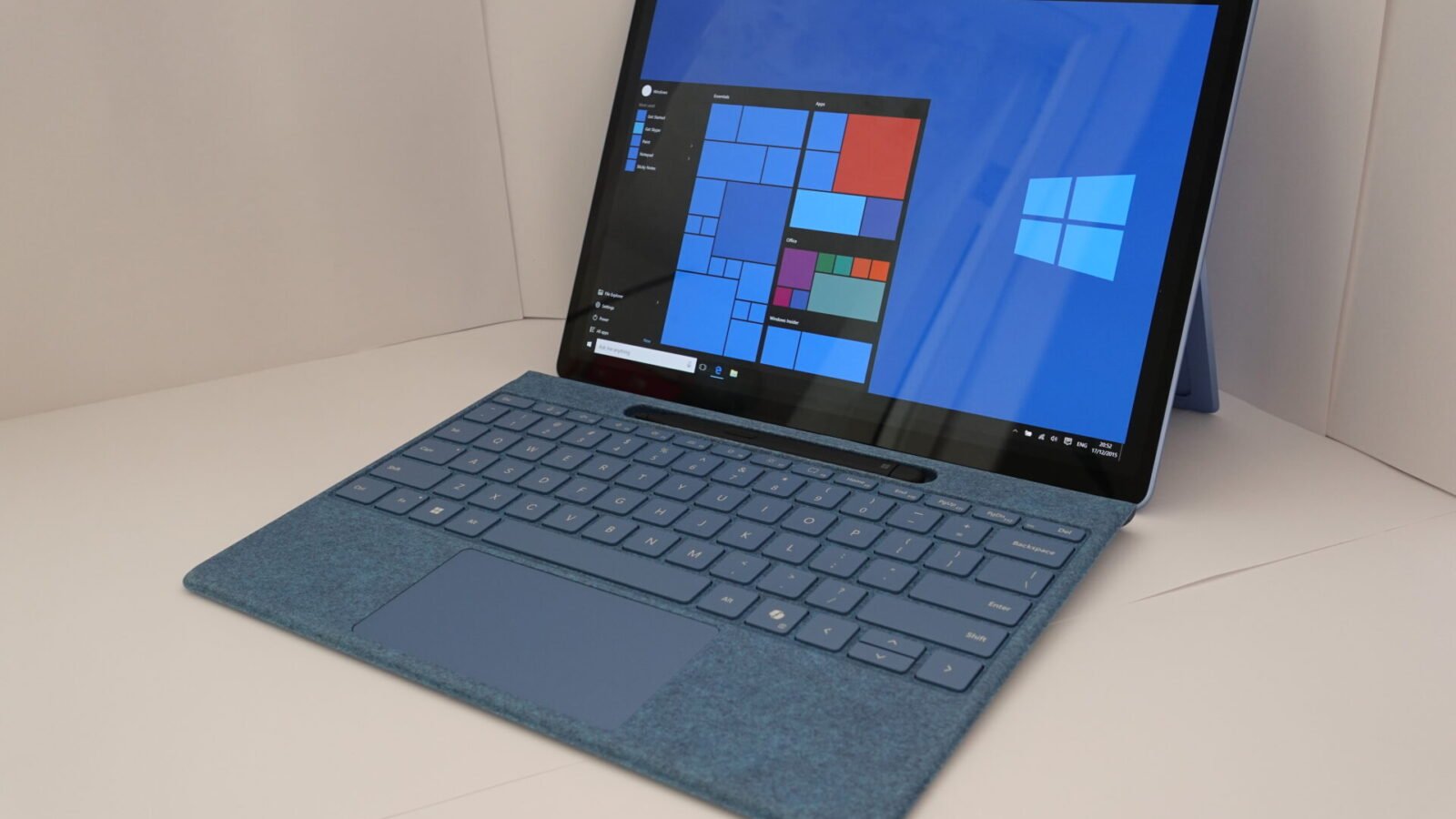
Featured photo: an actual Windows-themed desktop computer, photographed in 2024 by KK IN HK (Wikimedia Commons, CC BY-SA 4.0); contextual illustration of the PC market.