AMSTERDAM, November 7, 2026 — The artificial-intelligence boom has a physical footprint: land, electricity, cooling water, transmission lines and enormous capital commitments. This weekend, demonstrators across Europe are challenging who gets to decide where that footprint lands—and who pays for it.
On Friday, protesters entered a Microsoft-associated data-centre construction site in Amsterdam, climbed cranes and staged a demonstration. Reuters reported that the site owner, Pure Data Centres, offered dialogue and urged participants to leave safely. Microsoft said it respects peaceful protest but opposes unlawful actions. The actions form part of the Stop Dirty Data Centres coalition’s Europe-wide campaign. Reuters reporting.
Follow the money—and the infrastructure
Data centres support cloud services, business systems and AI training and inference. Their operators and investors can profit from growing computing demand; host communities may receive construction employment, tax revenue and infrastructure investment. But the distribution of benefits depends on individual deals, and the public may bear costs if utility upgrades, water supplies or tax concessions are not transparently allocated.
Before declaring a project a public benefit, residents should be able to inspect its beneficial ownership, tax abatements, power-purchase arrangements, expected peak electricity demand, water sourcing and any public infrastructure commitments. Those figures must be verified project by project; a company’s overall spending announcement does not establish a specific community’s net gain.
What is happening in Europe?
Reuters describes protests planned in multiple countries and a dispute over how quickly governments should approve major projects. Campaigners want pauses on large developments until stronger oversight is in place. Industry advocates counter that data centres are necessary for economic growth and digital infrastructure. Neither position removes the need for credible site-level environmental assessment.
In September, the European Commission proposed efficiency disclosure and labelling rules addressing energy and water consumption. Reuters reported that data centres represented roughly 2.5% of EU electricity use, with capacity projected to rise substantially. Disclosure can expose trade-offs, but transparency by itself does not cap consumption. Reuters on EU proposals.
The American political response
The debate is also reshaping US policy. Brookings researchers describe state and local moratoriums, referendums and disputes about nondisclosure agreements, tax exemptions and community participation. The central governance question is whether local residents can assess a project’s costs before approvals become irreversible. Brookings analysis, November 4.
Five records every community should demand
- Ownership and financing: project companies, parent companies, lenders and public incentives.
- Energy: forecast annual consumption, peak load, grid-upgrade cost and who pays.
- Water: withdrawal permits, seasonal demand, drought contingencies and wastewater plans.
- Land: zoning changes, acquisition terms, displacement risks and environmental assessments.
- Public return: enforceable jobs commitments, tax receipts, infrastructure benefits and independent monitoring.
The unanswered question
Artificial intelligence is often presented as something weightless, operating in the cloud. Its buildings are not. Whether a development deserves approval should turn on evidence and enforceable conditions—not corporate assurances alone, and not unsupported allegations about every project. The public has a right to know who owns the infrastructure, who receives the returns and who is left with the bill.
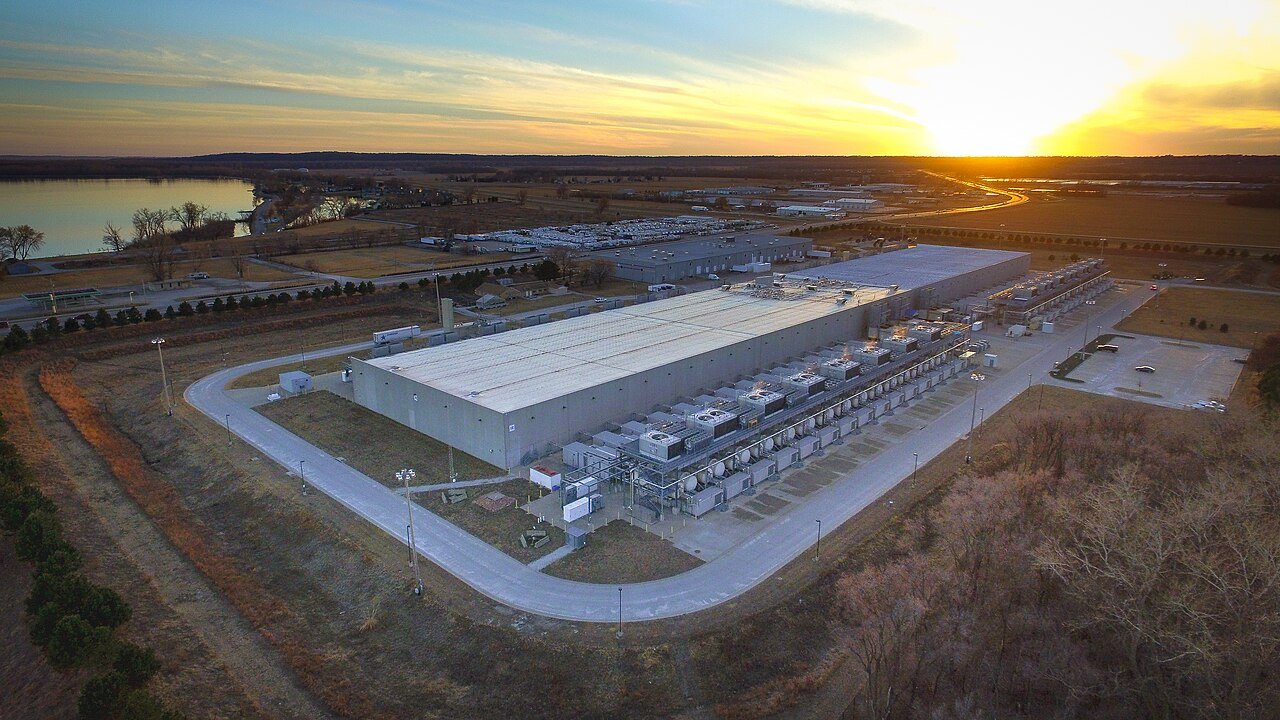
Image: Documentary photograph of Google’s Council Bluffs, Iowa data centre (2017), Chad Davis / Wikimedia Commons, CC BY 2.0. Contextual illustration of an operating data centre, not the Amsterdam protest site.
Additional reporting: Associated Press, Amsterdam protests; Reuters, sustainable data-centre policy.