TECHNOLOGY & POWER | FACT-CHECKED NEWS ROUNDUP | NOVEMBER 6, 2026
One app is trying to use less memory. A chipmaker is retreating from game-cartridge ROM. And AMD’s next quarterly revenue forecast exceeds Intel’s. The common thread is not a secret plot: it is a technology economy rapidly repricing who gets computing resources, and what consumers are left holding.
The future of computing arrived this week wearing three very different disguises: a Discord app that appears to sip RAM, a Nintendo cartridge supply chain losing a major chipmaker, and an AMD financial forecast that could overturn a decades-long hierarchy. They sound like separate headlines. They are—but they also reveal the same tug-of-war over memory, production capacity, software efficiency and control.
The November 6 episode of UFD Tech’s They Finally Did It pulls together these developments with news about Steam, Bluetooth, Google’s school AI controls, a Nintendo security exploit and the rescue of old PC games. We checked the headline claims against announcements, financial filings and independent reporting. Several are solid. Some need an asterisk large enough to park a graphics card under.
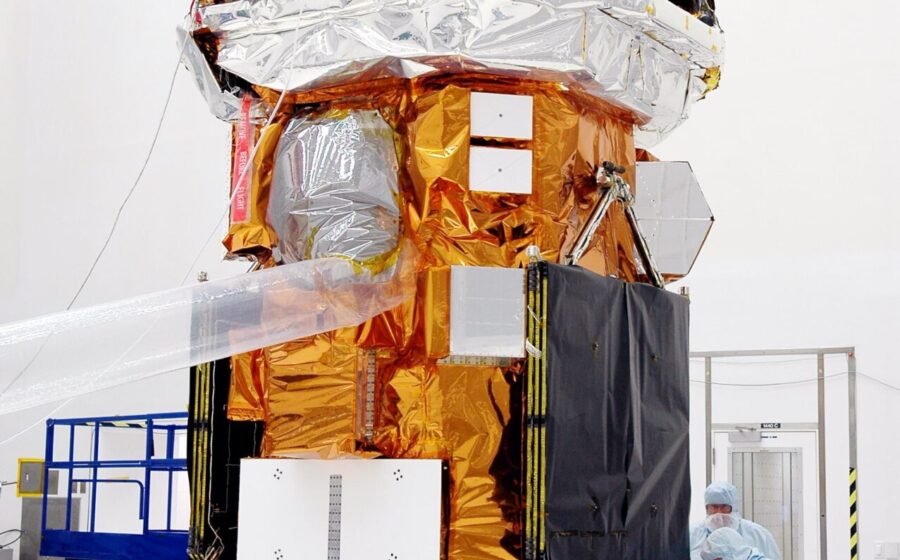
Image credit: Documentary photograph of Google’s Council Bluffs, Iowa, data center by Chad Davis (2017), via Wikimedia Commons, CC BY 2.0. This is a contextual image of an existing data center, not a photograph of the companies or announcements discussed below.
1. Discord Is Rebuilding Its Client in Rust. No, a 290 MB Screenshot Is Not a Universal Benchmark.
Discord co-founder and chief technology officer Stanislav Vishnevskiy confirmed on November 4 that the company is moving its client architecture toward Rust. On desktop, the project is designed to replace Electron with GPUI, a Rust-based user-interface framework. On mobile, React Native will give way to a native interface sharing underlying Rust application code with desktop.
Early evidence is promising. A Windows Task Manager screenshot of a build reportedly called Discord Phoenix showed roughly 290 MB of memory use, while the existing Electron client has been observed using a gigabyte or more and can reach several gigabytes in heavy sessions. Windows Latest examined the demonstration, and The Verge reported on the rebuild.
But that screenshot is one early build in one setting. It does not prove a 90%-plus reduction for every user, workload, call or server list. Nor has the complete replacement shipped to everyone. Vishnevskiy said user testing is expected, without announcing a release date. The noteworthy confirmed decision is architectural: a major communications platform is abandoning its cross-platform web-wrapper approach in pursuit of efficiency.
2. AMD’s Revenue Could Pass Intel’s—But the Quarter Is Not Over
Here is the headline most likely to escape its proper tense. AMD has not yet reported an actual quarter with more revenue than Intel. On November 3, AMD published third-quarter results and fourth-quarter guidance projecting approximately $17 billion in Q4 2026 revenue, plus or minus 3%. Intel’s October 29 financial release forecast $15 billion to $16 billion for the same quarter.
Put the midpoints side by side and AMD is ahead by roughly $1.5 billion. Even AMD’s low-end guidance is higher than Intel’s high-end estimate. But these are management forecasts, not audited year-end outcomes; one or both companies could miss or beat their guidance. In the completed third quarter, Intel still posted $16.5 billion compared with AMD’s approximately $13.4 billion.
AMD’s data-center segment revenue jumped 97% year over year in the reported quarter, according to its release. That is a powerful indicator of the AI infrastructure boom, though the company also sells server CPUs and other computing products. Lisa Su’s leadership and AMD’s EPYC business explain part of the company’s transformation; it would be a mistake to reduce an entire corporate turnaround to a single quarter’s AI orders.
For PC buyers, revenue leadership does not automatically mean better prices, stronger competition or more affordable components. The real test is whether an AI-led industry also invests in the consumer market that helped build it.
3. Nintendo’s Cartridge Supplier Is Moving On. Physical Games Are Not Dead.
Macronix, a long-running supplier of ROM chips used in Nintendo game cartridges, is gradually withdrawing from the lower-margin ROM business as it reallocates capacity toward products including NOR and NAND memory. In its third-quarter discussion, ROM was down to about 5% of sales, having fallen 39% year over year, according to reporting on the company’s results by Ars Technica and TechSpot.
The business logic is uncomfortable but straightforward: a factory with finite wafer capacity favors chips buyers urgently need and will pay more to obtain. Data-center demand is one factor lifting the economics of other memory products. Nintendo’s cartridge makers are competing for industrial resources in a market reshaped by AI investment.
That does not mean Nintendo has announced an end to physical cartridges or that its games will suddenly vanish from shelves. Other suppliers exist, and the impact on future retail prices is uncertain. There is also a difference between a cartridge holding a complete game and a game-key card that relies on a download. The latter preserves some physical resale characteristics while weakening the independence of the physical medium.
Apep Bar recently examined the contested claims behind AI’s wider hardware squeeze. The cartridge case is a narrower and better-documented example of supply priorities changing.
4. Valve’s New Steam Rule: Five Minutes of Play—By Anyone
Steam’s developer-review checklist now requires that a submitted game have been launched and played through Steam for at least five minutes. It sounds obvious, which is part of Valve’s point: an executable can work on a developer’s machine yet fail when installed and launched from Steam.
The detail missing from punchy summaries is that Valve says playtime from any user counts. It does not have to come from the game’s original developer. Valve reports that its review target of three to five business days has stretched to as much as 12 business days, with repeated reviews of avoidable launch or configuration problems contributing to the backlog. The new checklist also addresses achievements, redistributables and cloud-save setup.
The policy may help filter low-effort releases, including some AI-generated submissions, but Valve has not said it is banning AI-assisted games through this measure. The primary, documented purpose is functional review and fewer failed submissions—not an AI-content purge.
5. Bluetooth’s 7.5 Mbps Milestone Is Real. So Are the Fine-Print Limits.
On November 4, the Bluetooth Special Interest Group announced the adoption of Bluetooth High Data Throughput (HDT). Its new physical-layer technology can reach a specified maximum bit rate of 7.5 megabits per second, nearly four times the Bluetooth LE 2M PHY rate.
That is a radio-layer maximum, not a guaranteed file-download speed for any given headset, phone or laptop. The technical overview identifies multiple modes, and the highest-rate modes are optional. Product support, interference, distance and protocol overhead will shape real-world performance.
Standardized premium lossless and high-resolution wireless audio is an anticipated application, with industry rollout expected in 2027. You will not obtain the new capability merely by wishing an old headset into a firmware update. Both hardware support and device compatibility matter.
6. Google’s Classroom AI Choice Has a Search-Shaped Catch
Google announced on November 3 that access to Gemini, Gemini Notebook, Gemini in Classroom and Google Search will be off by default for K–12 student accounts until administrators enable them. That sounds like expanded school control. But Associated Press reporting explains the central limitation: Search itself now includes AI features. Schools may separately choose to enable Search rather than Gemini, but enabling Google Search is not equivalent to obtaining the traditional AI-free search experience.
That distinction turns an apparently technical setting into a governance question. If a school wants conventional search but does not want generative AI exposed to students, what meaningful options does it have inside Google’s ecosystem? The company says its new controls respond to educators. Critics argue that bundling AI into the default search experience undermines those choices. These are competing assessments of a documented policy—not proof that every student is being forced to use the standalone Gemini chatbot.
7. Civilization VII, a Switch Exploit and a Recall That Needs Better Proof
A security-research exploit known as CivSwitch uses an unpatched physical version of Sid Meier’s Civilization VII as an entry point for limited code execution on Nintendo hardware. That is an important technical development, but it should not be confused with a general-purpose, unrestricted Switch 2 jailbreak.
The more dramatic claim—that the physical game has been formally recalled by Nintendo—rests so far on reported retailer communications and order cancellations. Notebookcheck described a reseller notice referring to security requirements, but reported that it was unclear whether Nintendo had instructed publisher 2K to recall the cartridge. We found no authoritative public Nintendo notice establishing a comprehensive recall.
Status: Exploit reports have technical support; the scope, initiator and formal status of the reported cartridge withdrawal remain unverified. In a security story, “some retailers say they cannot supply it” is not the same as “Nintendo has recalled every copy.”
Separately, PC Gamer reported that the new Ocarina of Time remake was already being run experimentally on PC through emulation, with graphical and performance problems. An early emulation demo is not an official PC release or a guarantee of a smoothly playable game.
8. EA Opens Its Vault; God of War Gets More Time
There is one encouraging preservation story among the shortages. Electronic Arts announced on November 5 that 25 classic PC games were arriving on Steam alongside GOG and the EA App. Seven received more substantial restoration and anniversary treatment, including Road Rash and several Wing Commander entries; others are faithful modern-platform releases, not brand-new remasters. EA traces the project to a 2022 discovery of a substantial physical archive, including original tapes.
Meanwhile, Sony’s Santa Monica Studio updated its official pre-order announcement to move God of War Laufey from February 16 to May 20, 2027. The studio cited finishing work; theories that the delay was dictated by quarterly financial targets go beyond the public evidence.
The contrast is almost poetic. While chipmakers find cartridges less profitable, archivists inside a major publisher are rescuing decades-old games from the machinery of digital forgetting.
9. The Other RAM Fight: Who Gets to Decide What Counts as Waste?
OpenAI CEO Sam Altman drew criticism after describing home-PC memory as inefficiently utilized compared with centralized inference infrastructure. He subsequently said the remarks had been taken out of context, emphasizing that he supports greater memory production and consumer access. The earlier argument was about scarce DRAM and utilization, not a public policy proposal to confiscate PC memory.
Both sides still illuminate a basic disagreement. A data center values utilization across many customers; an individual values a computer that works privately, offline and on demand. Spare RAM is not automatically wasted RAM, any more than a spare tire is wasted because it spends most of its life unused. For broader context, see Apep Bar’s earlier report on the personal-computing memory dispute.
The Question Behind the Headlines
Discord’s rewrite suggests software can respond to constrained resources by becoming leaner. Macronix’s exit shows that production does not necessarily flow to the devices consumers want most; it flows toward margins. AMD’s guidance shows how much momentum has shifted toward data-center computing, even before its projected revenue milestone is achieved. Google and Valve illustrate a quieter power: platforms can define the terms on which schools, developers and users participate.
None of this requires a single mastermind. The documented incentives are enough to warrant attention. The question is whether the next great technological leap will make personal computing more capable—or simply make consumers compete harder for a shrinking share of its benefits.
Question. Investigate. Reconsider.