OPINION | APEP BAR | November 6, 2026
Red team. Blue team. Different speeches, different enemies, different promises. Then comes the bill: wars that outlast presidents, surveillance powers that outlive emergencies, billion-dollar campaign machinery—and families still asking which expense they can postpone. Perhaps the most important divide in Washington isn’t always Democrat versus Republican. Perhaps it is the distance between the people who make the decisions and the people who live with them.
The election-night confetti has barely settled, and America’s favorite political sport is back: cheering for one team as if every victory on the scoreboard is a victory in the kitchen, at the pharmacy and at the rent office.
After the November 3 midterms, the Associated Press projected Democratic control of both the House and Senate. That result matters. It changes who sets congressional agendas, conducts oversight and decides which bills advance. But it is not a receipt proving that ordinary people have suddenly regained control of their government.
We have been promised a fresh start by both parties, in election after election. Meanwhile, the country’s most durable political arrangements have an odd talent for surviving every fresh start.
The parties are not identical. The structure is the problem.
Let’s dispense with the weakest version of the argument: Democrats and Republicans do not vote alike on every issue. They have fought consequential battles over health care, reproductive rights, taxes, labor protections, immigration and the courts. Those differences change real lives. Pretending otherwise would be as careless as assuming an election cures every problem.
But a system can contain fierce partisan conflict while preserving an enormous bipartisan comfort zone: the power to wage war, expand security institutions, accommodate wealthy donors and shift risks toward the public. The parties fight over the steering wheel. Too often, the public is left paying for the road.
This is an opinion about institutional incentives, not a claim that every politician belongs to one secret club. We do not need an all-powerful conspiracy to explain why funders, officeholders, contractors and established institutions so frequently have louder voices than a struggling household. The incentives are visible.
War: the country pays, and accountability keeps changing addresses
In October 2002, Congress authorized military force against Iraq by 296–133 in the House and 77–23 in the Senate. Many Democrats opposed the resolution; enough supported it for the authorization to pass. The distinction matters. The vote was neither unanimously bipartisan nor a purely Republican act.
The larger record is grim. Brown University’s Costs of War project estimates roughly $8 trillion in costs associated with post-9/11 U.S. wars, at least 940,000 direct deaths and millions more indirect deaths in affected war zones. Those are research estimates with defined scope and uncertainty—not a cash ledger proving every dollar was stolen or every death was caused by the same decision.
Republican and Democratic administrations have made different choices about wars, withdrawals, drone operations, arms transfers and diplomacy. Yet military commitments and their human costs have persisted across party changes. At home, the cost arrives as public debt, veterans’ needs, foregone priorities and families who wait for news from a deployment. Abroad, it arrives in destroyed homes and irreplaceable lives.
We are repeatedly told that the next conflict is essential. How often are ordinary voters given an equally forceful accounting of the alternatives, the exit plan and the costs they will inherit?
Civil liberties: fear can assemble a bipartisan majority faster than freedom can
Consider one of the clearest vote counts in modern U.S. history. On October 25, 2001, the Senate passed the USA PATRIOT Act 98–1. The legislation expanded government investigative authorities in the name of fighting terrorism. Its provisions and later extensions, modifications and expirations require individual scrutiny; not every original power remains in force today.
The lasting lesson is not that security threats were imaginary. They were painfully real. It is that extraordinary powers can be easier to authorize in a moment of fear than to oversee afterward.
Apep Bar recently examined that longer history in The Crisis-to-Control Machine. The argument is not that every emergency was engineered. It is that every emergency should trigger a second question: who gets new authority, and what happens when the emergency ends?
Neither party deserves a free pass when surveillance is dressed up as safety, due process as an inconvenience, or dissent as a threat. The Bill of Rights is not supposed to change color when Congress does.
The economy: better aggregate numbers can coexist with a worse daily bargain
It is tempting to say everyone gets poorer every year. That is not what the evidence says. The Census Bureau reported that real median household income increased 2.6% in 2025, and the official poverty rate declined. Those gains matter. Good-faith criticism must acknowledge them.
But national averages are not a substitute for a family’s budget. The Federal Reserve’s May 2026 household survey found that 16% of adults had not paid all their bills in the previous month and 26% had skipped medical care because of cost during the previous year. At the same time, 73% said they were doing okay financially or living comfortably. Both findings belong in the same conversation.
Then look at ownership. In the second quarter of 2026, the Federal Reserve estimated that the wealthiest 1% of households held 32.5% of U.S. net worth, while the bottom half held just 2.3%. These are shares of net worth, not shares of income. Wealth isn’t just what can be spent this month. It is who owns the appreciating assets, who can absorb a crisis, and who can pass opportunities to the next generation.
That is the insult hidden in an improving headline statistic. The economy can grow while the distance between economic security and economic precarity remains immense. A booming market is excellent news if you own a meaningful piece of it. It is less comforting when your landlord raises the rent and your child needs a dentist.
Money speaks fluent Republican and Democrat
In the 2023–24 federal election cycle, the Federal Election Commission recorded about $4.4 billion in reported independent expenditures. Legally, independent expenditures are separate from candidate campaign spending and cannot be coordinated with a candidate. The financial scale is nonetheless staggering.
In a Pew Research Center survey, 83% of Republicans and Republican-leaning independents and 80% of Democrats and Democratic leaners said major campaign donors had too much influence on members of Congress. Americans can agree on the diagnosis across party lines, even while their elected leaders keep operating inside the system.
The Supreme Court’s Citizens United decision protected corporate independent political expenditures; it did not legalize unlimited direct corporate contributions to candidates. The legal distinction matters. So does the political reality: people who can fund a barrage of advertisements, hire lobbying teams and retain counsel enjoy advantages unavailable to someone working two jobs.
Our colleagues have explored one slice of this in AIPAC, both parties and the money behind Washington’s Israel debate. A contribution is not proof of a bribe; a donor’s policy preference is not proof that an official takes orders. But the public is entitled to trace the money and compare promises with votes.
Maybe that is the real bipartisan consensus: before the public can get a law changed, it must first compete for attention with the people who can afford to influence its wording.
Epstein, secrecy and the danger of turning suspicion into evidence
The commentary video that prompted this column voices the frustration behind the phrase “it’s all one game.” It also makes sweeping claims that people across both parties appear in the Epstein files and suggests their alleged associations prove a coordinated political deception. That does not follow from the evidence presented. Being named or mentioned in a document, contact book or flight log is not itself proof of criminal wrongdoing.
There is another important correction. The Epstein Files Transparency Act became law on November 19, 2025, and the Justice Department said it had released nearly 3.5 million pages by January 30, 2026. Legitimate questions remain about completeness, redactions, institutional failures and protection of victims. But “nothing was released” is not accurate.
If our complaint is that politicians manipulate the public, we cannot improve the situation by treating every viral accusation as established truth. Accountability requires names, documents, dates, corroboration and fairness—not guilt by association. Otherwise, the supposed alternative to propaganda becomes one more factory producing it.
So is the answer to stop voting? No. It is to stop outsourcing citizenship.
The video’s speakers suggest that a game cannot continue without players. The metaphor is catchy. The advice is incomplete. Elections do not disappear because disgusted people abstain. Institutions still function, officeholders still make decisions, and organized interests continue showing up. Nonparticipation can be a personal political choice, but it is not a reliable mechanism for stripping entrenched interests of power.
Voting matters. So do primaries, local meetings, labor organizing, public-records requests, watchdog journalism, independent candidates, protest, direct community aid and the boring but potent discipline of following how representatives actually vote. A voter can support a candidate on one consequential issue and still demand an independent audit of that candidate’s donors, war votes and privacy record.
Do not confuse skepticism with nihilism. If every officeholder is dismissed as equally corrupt before the evidence is examined, the people who really abuse power receive a remarkable gift: no one bothers distinguishing them from anyone else.
And do not let a party label become a personality. Your neighbor with a different yard sign is probably worrying about some of the same bills, insurance premiums, rent increases and prospects for their children. The person whose power most deserves scrutiny may be delighted to see the two of you arguing.
Who actually gets the victory lap?
November’s winners will have speeches. November’s losers will have explanations. Washington will have another round of hearings, fundraising appeals and television arguments. People outside the capital will have Monday morning.
Here is the standard I would impose on both parties: show us how your decisions reduce the cost of survival, restrain unnecessary wars, protect rights even when it is inconvenient, disclose the influence behind your legislation and make power easier for ordinary people to challenge. If you cannot demonstrate those outcomes, your team’s victory is not automatically ours.
Red and blue are different colors. They are not substitutes for accountability.
Perhaps the most radical question in American politics is not “Which side are you on?” but “Who benefits when we keep treating politics like a rivalry instead of a job review?”
Question. Investigate. Reconsider.
Editorial note: This is commentary and analysis. Data, vote counts and legislation are linked to primary records; conclusions about power and responsibility are the author’s opinion. The linked short video is the prompt for the column, not documentary proof of its allegations.
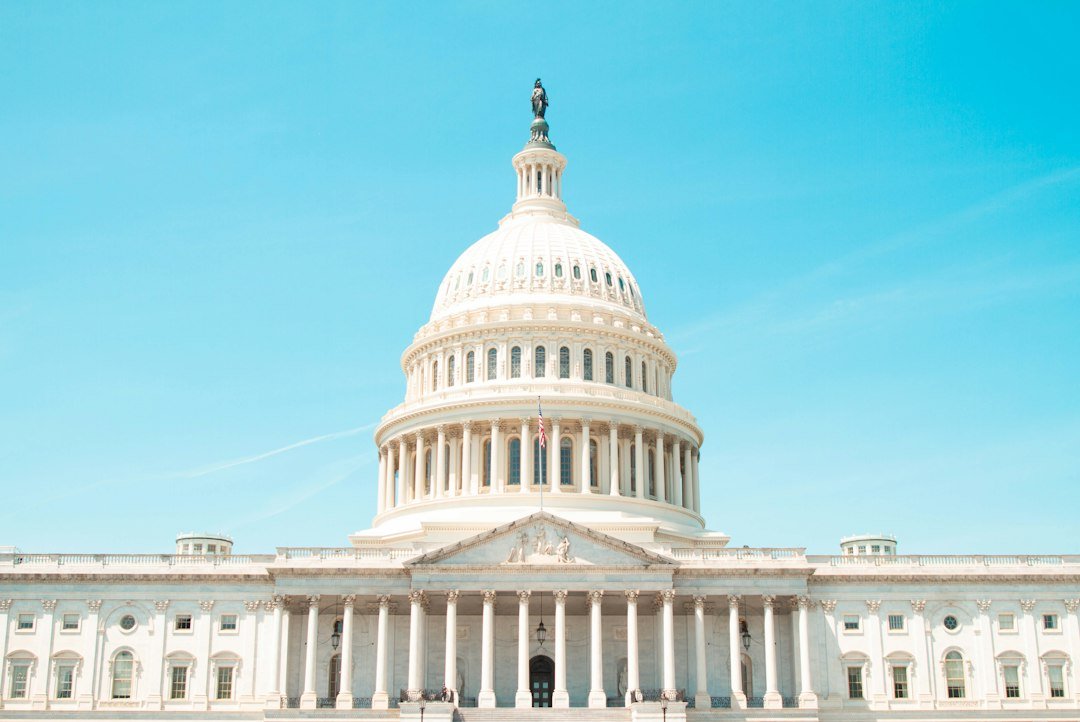
Featured image: Documentary photograph of the United States Capitol by Caleb Perez / Unsplash, reused from Apep Bar’s existing credited media library. Archival/contextual image, not footage of the November 2026 election.