Indigenous Lands, Extraordinary Claims — Part 3 of 8 | November 27, 2026
A name can do more work than a camera. Before a viewer sees a light over Skinwalker Ranch or an instrument reading, the name has already suggested a story. The essential question is whether that story belongs to the evidence—or whether a modern paranormal brand has encouraged audiences to treat distinct Indigenous traditions as a ready-made explanation.
After examining Nasca landscape engineering, this series turns to northeastern Utah. This is an examination of public claims and representation. It is not a guide to Diné ceremonial knowledge, and it does not translate spiritual concepts into extraterrestrial beings.
The ranch speaks for its own project
The ranch’s official website describes a 512-acre site in the Uintah Basin and promotes investigations of aerial phenomena, electromagnetic disturbances and other reported anomalies. It also sells subscription access to cameras and additional material and links to its television series. Those are directly observable features of its public presentation.
The website is a primary source for what the ranch claims about itself. Its language about extraordinary activity remains the project’s characterization, not an independent finding adopted here. A subscription, an impressive instrument or a television appearance cannot by itself establish the cause of an observation. Commercial presentation does not prove a report false, either; it makes source identification especially important.
A place with living political and cultural identities
The Ute Indian Tribe’s own public history identifies the Uintah, Whiteriver and Uncompahgre bands and explains the tribe’s home on the Uintah and Ouray Reservation in northeastern Utah. Its account includes the removal of Whiteriver and Uncompahgre people from Colorado. This is community-authored regional context, not a paranormal backstory.
That source should not be stretched into tribal endorsement of the ranch’s interpretations. Ute and Diné identities are not interchangeable. Nor does proximity authorize a reporter to assign a belief to a whole nation or turn a community’s history into evidence of an alien presence. Specific attribution matters as much in cultural reporting as it does in a laboratory notebook.
A publicly stated boundary around knowledge
In her March 8, 2016 essay about J.K. Rowling’s use of Native traditions, Cherokee Nation scholar Adrienne Keene challenged the collapse of diverse peoples into one generic Native community. Discussing the Diné material involved, she deliberately declined to reproduce deeper explanations after consulting a Navajo mentor. Her published argument is about representation and the limits of outsiders’ entitlement to knowledge.
Keene’s essay concerns Rowling, not an investigation of Skinwalker Ranch. It is not a statement on behalf of every Diné person. Its relevance here is the editorial principle we draw from it: responsible discussion can explain why a commercial adaptation is problematic without exposing the cultural material that adaptation has made audiences curious about. Refusing to supply such detail is not withholding scientific evidence for an alien theory.
What an instrument result would need to show
An unexpected reading begins an investigation; it does not finish one. To evaluate an alleged electromagnetic anomaly, an independent researcher would need the instrument model, calibration, sampling method, timestamps, operating conditions and relevant background measurements. The observation must be distinguishable from interference, equipment behavior and ordinary variation before a novel cause becomes persuasive.
The same discipline applies to images. An unidentified light is an observation with an unresolved identity. Establishing its distance, dimensions, motion and source requires additional information. Multiple sensors can strengthen a case when their records are independently interpretable and synchronized; simply displaying several instruments does not establish that they measured the same event.
These are standards proposed for assessing claims, not a claim that we have audited the ranch’s complete dataset or explained every incident. The public sources reviewed for this article do not establish an extraterrestrial cause. They establish a public investigation and entertainment project making extraordinary claims, alongside Indigenous-authored cautions about how cultural material is represented.
Watch the source, and keep the categories separate
For the project’s own audiovisual presentation, the HISTORY series page provides program material. It should be approached as the program’s presentation of an investigation, not as independent validation of every interpretation. A compelling sequence can prompt a useful question while leaving the causal question open.
The distinction does not require ridiculing witnesses or treating living traditions as curiosities to be disproved. It requires allowing each source to speak within its actual authority. A ranch can describe its experiments. A tribal source can describe its community. A cultural critic can explain the damage of flattening differences. None of those roles automatically supplies the missing evidence for the others.
There is room to investigate unusual observations without recruiting Diné traditions as an explanation for them. Keeping that separation visible makes the scientific questions clearer and the cultural reporting more accurate.
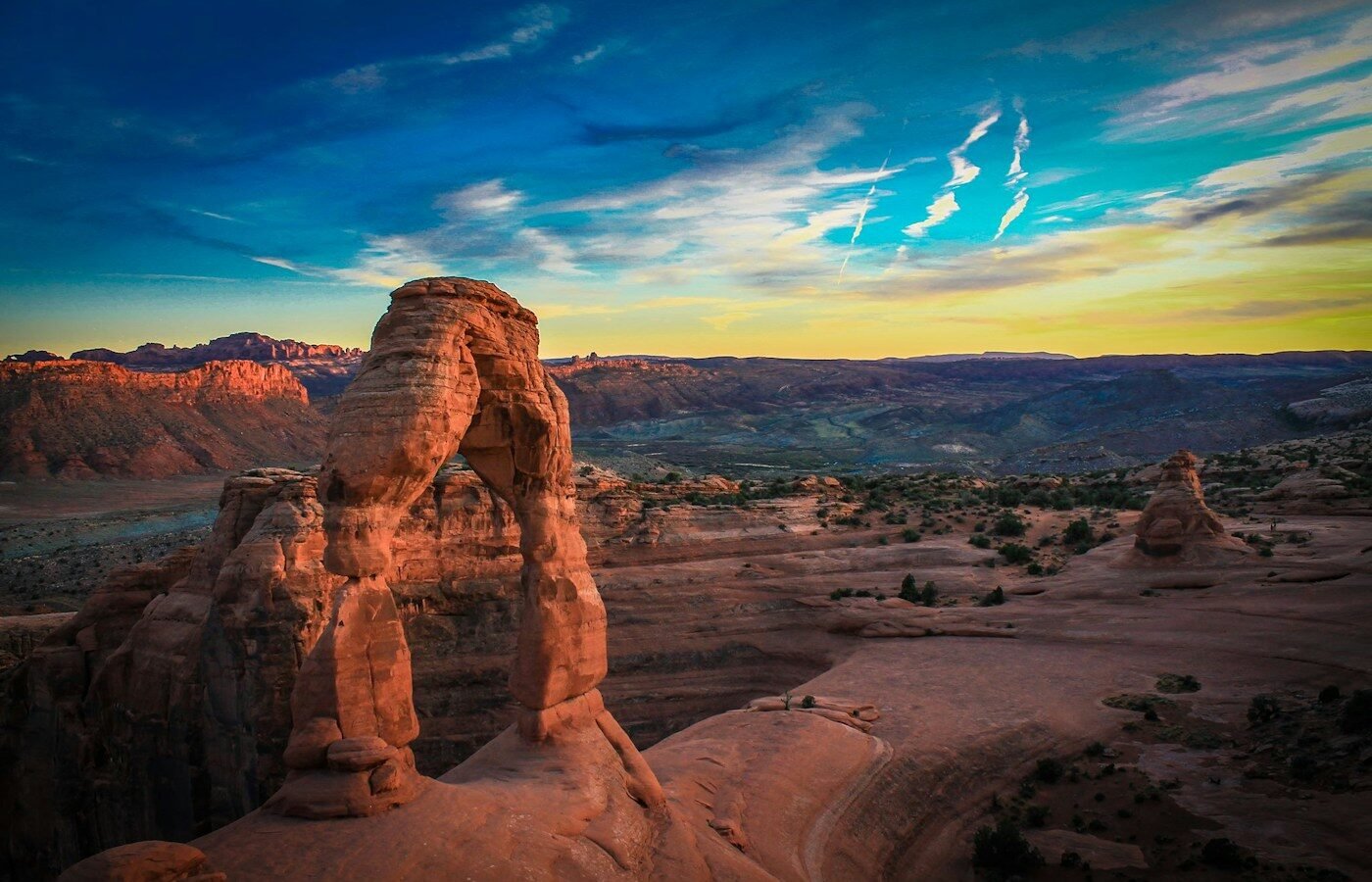
Featured photograph: Utah landscape by SoloTravelGoals / Unsplash, used under the Unsplash License. Contextual imagery only: not Skinwalker Ranch, not a documented paranormal event and not a representation of Diné traditions. Sources reviewed November 27, 2026.