A telescope built to study the distant universe made an unexpected discovery much closer to home. ESA announced in October 2026 that Euclid had detected its first previously unknown comet, C/2026 S1 (Euclid), using images taken September 16–24. The discovery returned to wider coverage on November 25.
What the evidence shows
Moving-object detection software identified a streak appearing across multiple exposures. Astronomers can compare the changing apparent position of a comet to estimate its trajectory. This icy object follows an unusually long orbit, making observations valuable for studying visitors to the inner Solar System.
What remains uncertain
An unusual orbit is not evidence of artificial origin or a threat to Earth. Orbital models depend on the precision and duration of the available observations. Additional measurements can refine estimates of the comet’s future path.
The Apep Bar question
The discovery demonstrates that observations designed to address one scientific problem can yield an entirely different result hiding in the same images.
Sources
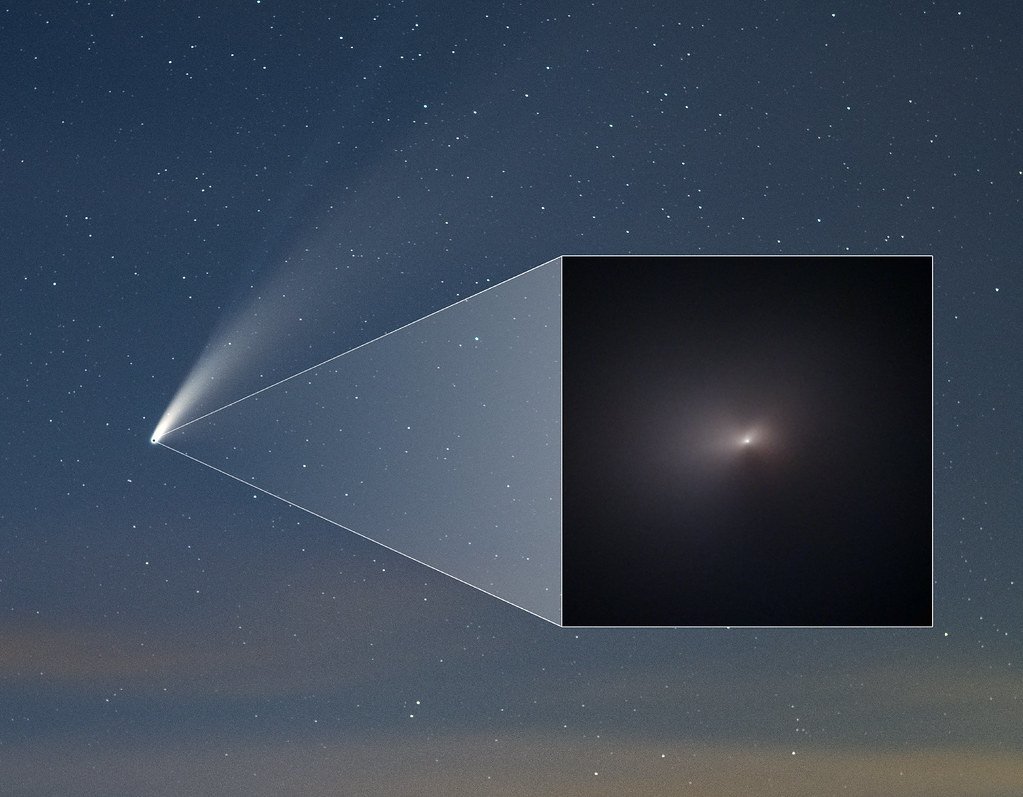
Featured image: Hubble image of comet NEOWISE; comparative comet photograph, not C/2026 S1. "Hubble Snaps Close-Up of Celebrity Comet NEOWISE" by NASA Goddard Photo and Video is licensed under CC BY 2.0. To view a copy of this license, visit https://creativecommons.org/licenses/by/2.0/.