For generations, the bronze masks of Sanxingdui have looked like visitors from another world. A study of the objects has now drawn attention to something less spectacular, but potentially more revealing: traces of silk associated with ancient ritual bronzes. The discovery offers a glimpse of materials that rarely survive in the archaeological record.
A hidden layer of the ritual
Researchers studying bronzes from the ancient Shu cultural sphere in southwest China reported silk residues associated with objects recovered at Sanxingdui. The study, published in Antiquity, links delicate organic material with an archaeological assemblage better known for its striking metal faces and elaborate ritual equipment. The finding raises questions about how textiles may have wrapped, decorated or accompanied offerings, although the precise sequence of ritual actions cannot be reconstructed from a residue alone.
Why the surviving evidence matters
Bronze endures. Silk normally does not. That imbalance can distort the way we imagine ancient ceremonies: a museum display dominated by metal and stone can disguise the important role of cloth, wood, fiber and other perishable materials. Investigators must also distinguish material actually identified through laboratory analysis from broader interpretations about religious meaning. A mask’s appearance is not proof of extraterrestrial contact, and unusual eye shapes cannot independently tell us what the object represented to the people who made it.
A civilization seen through what survived
Sanxingdui’s elaborate bronze tradition is a well-documented achievement of ancient communities in the Sichuan region. Museum exhibitions and continuing excavation have expanded the known range of objects, yet major questions persist over how ritual spaces were used, who handled the offerings and what the imagery meant. The silk evidence is important not because it solves those puzzles, but because it changes the list of materials the answers must account for.
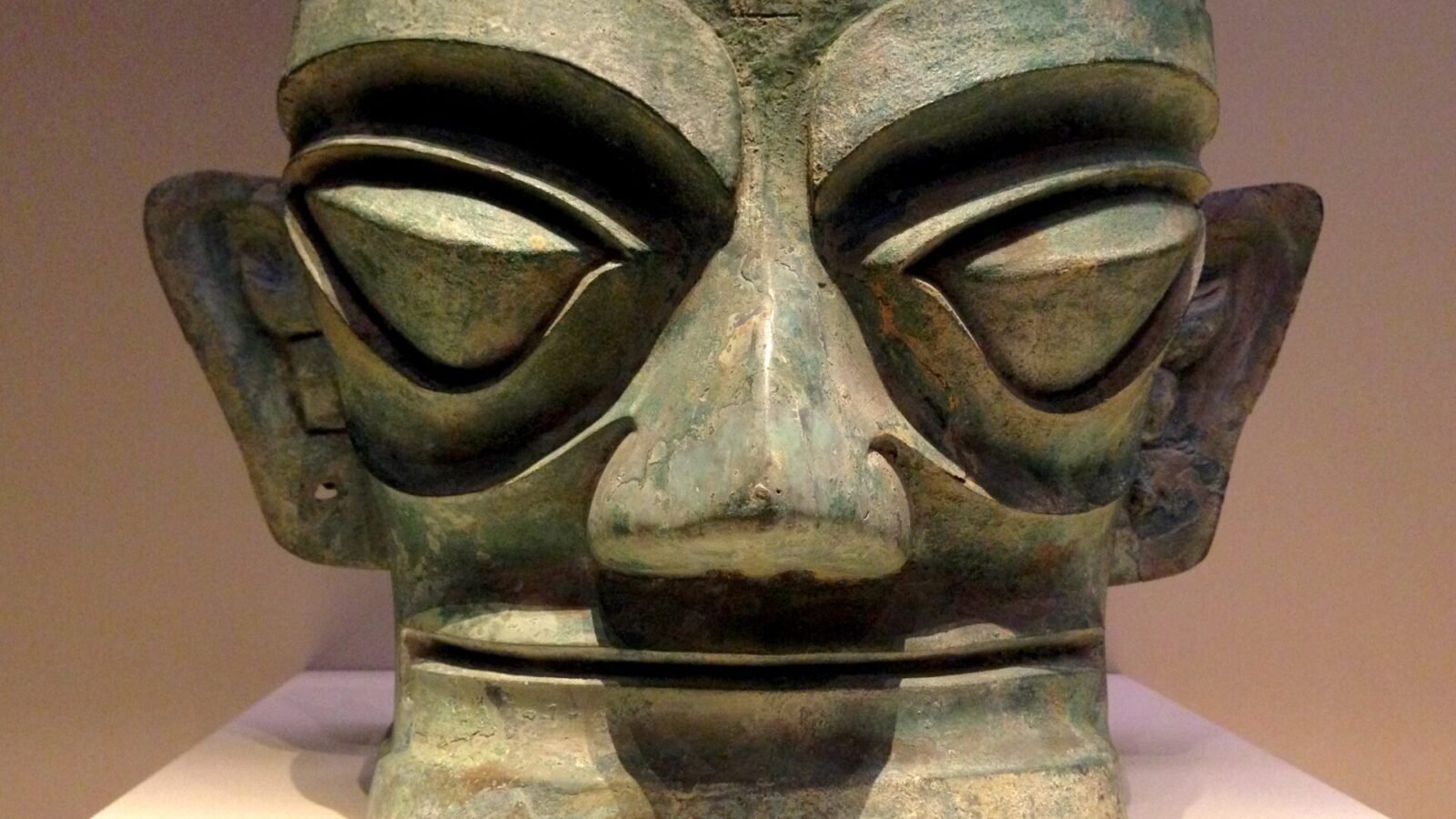
Photograph: An authentic Sanxingdui bronze mask in a museum collection, used as historical context; it is not identified as the specific object sampled in the study. Credit and license are recorded on the site’s linked media attachment.
Source documents
- Antiquity: Silk and sacrifice at Sanxingdui (primary study)
- Hong Kong Palace Museum: Sanxingdui archaeological finds
The question: how much of an ancient ceremony disappears when its most important materials decay?