Not every cosmic mystery is a strange light in the night sky. Some were hiding in observations astronomers had already collected. In September 2026, scientists working with NASA’s Chandra X-ray Observatory reported a group of 84 unusually soft X-ray sources in six galaxies.
What makes them unusual?
The objects appeared in Chandra’s lowest-energy X-ray images but faded at higher energies. Researchers inferred that they also emit substantial high-energy ultraviolet radiation, leading to the name ‘hypersoft X-ray sources.’ The sample includes detections in the spiral galaxies M31 and M101, alongside four elliptical galaxies.
Several possible engines
Compact stellar objects are prominent suspects: a white dwarf, neutron star or black hole drawing matter from a companion can create heated material that shines in high-energy wavelengths. But the team has not settled the identity of every member of the new class. Understanding these sources could matter for how energetic radiation affects surrounding gas and for particular paths toward stellar explosions.
A discovery is the beginning, not the ending
Identifying 84 sources does not mean astronomers discovered 84 new kinds of objects. The research defines a shared observational behavior and then asks which physical systems explain it. Chandra’s long historical exposures were important because the low-energy signals are difficult to isolate and can be obscured by gas. Follow-up observations and models will be required before the interpretation is secure.
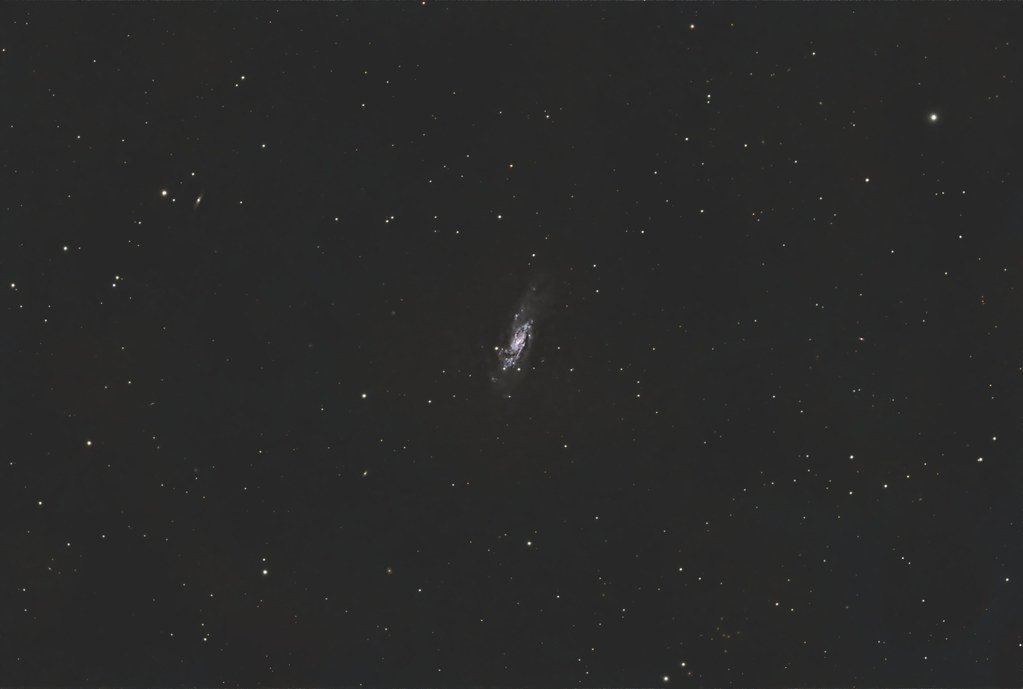
Featured image is a genuine photograph of spiral galaxy NGC 4559, included as a visual example of a galaxy. It is not among the six galaxies reported in this specific Chandra sample.
Watch NASA/Chandra’s official 2:57 video tour of this discovery.