Pompeii has a way of making a catastrophe feel suddenly personal. New reporting on an excavation at the House of Cornelius Maximus describes a wooden wardrobe that remained sealed for almost two millennia, preserving items that once belonged to an ordinary household living in the shadow of Mount Vesuvius.
What was inside the cupboard?
The collection included vessels, a bronze lamp, tweezers, a perfume container, an incense burner and 38 coins, along with a necklace bearing at least 24 small charms. Their forms recalled deities, plants and parts of the body. Archaeologists recovered the objects in a city overwhelmed by the eruption of AD 79, a disaster that unexpectedly preserved details of daily life.
Charm does not mean proof of magic
It is tempting to imagine the necklace as an elaborate spell, but a surviving object rarely reveals one person’s private belief. Amulets can indicate protection, faith, fashion, social identity or combinations of these. Even when scholars know analogous artifacts, they must be cautious about attributing a specific ritual to an unidentified owner.
The story ordinary objects tell
Public fascination often centers on wealthy villas and dramatic casts of volcanic victims. This cupboard points instead toward grooming, household storage and the hopes carried by little possessions. The find is a reminder that the ancient world was neither all monuments nor all mystery: it was filled with people choosing what mattered enough to keep close.
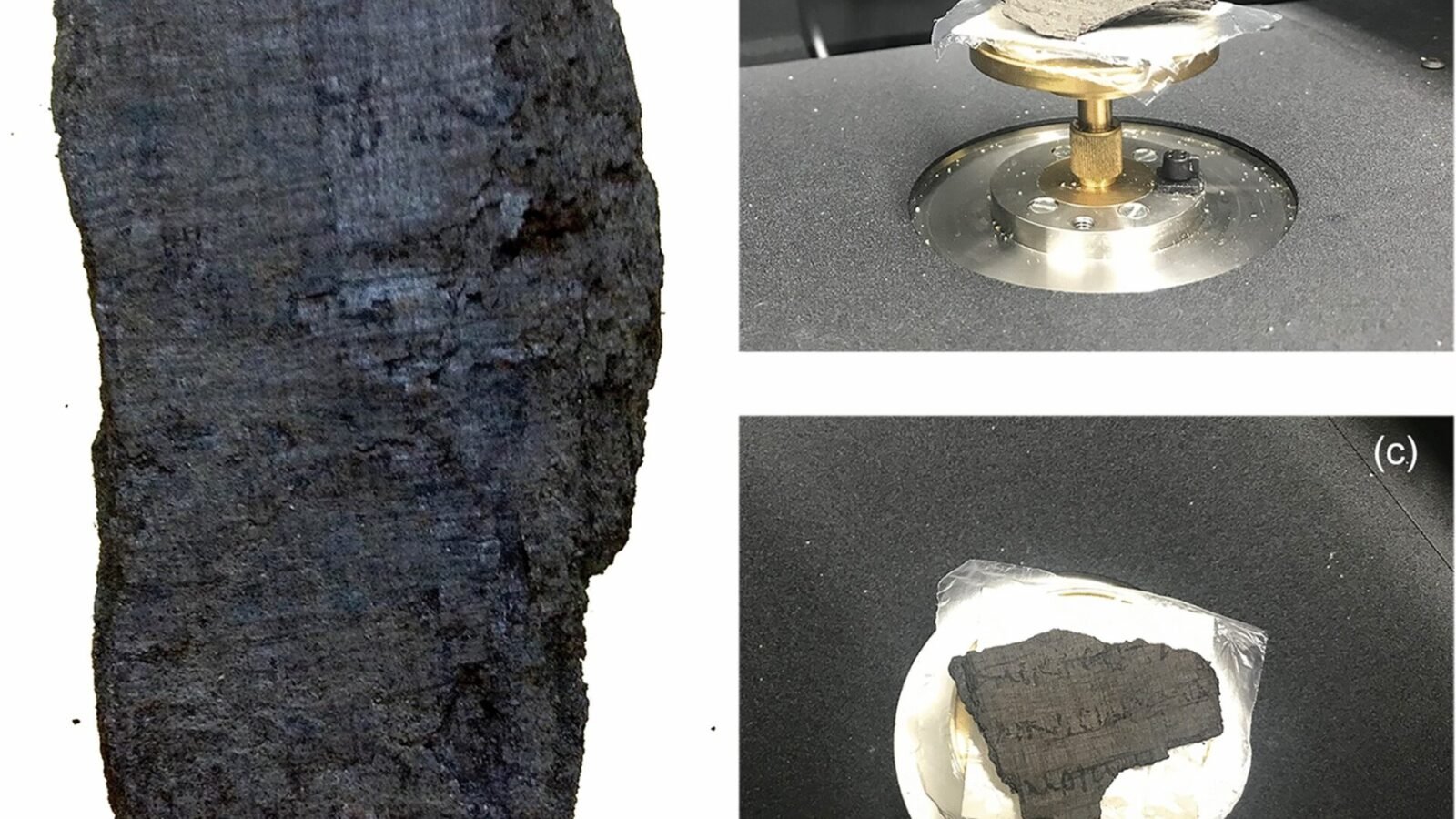
Featured documentary image shows actual carbonized Herculaneum papyrus fragments from the Vesuvius disaster region, not the specific Pompeii wardrobe or its contents.