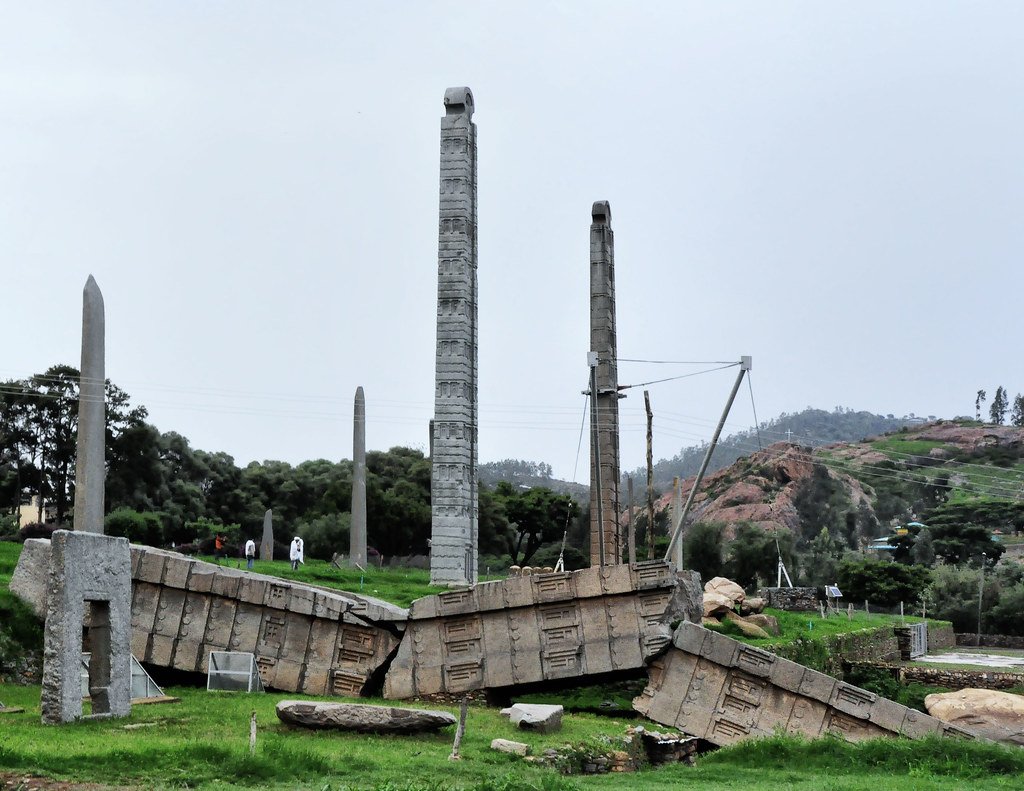
Stand among the towering carved stones of Aksum, Ethiopia, and an uncomfortable question arises: why is one of the ancient world’s major African powers so often missing from the popular picture of early civilization? Its engineers worked in monumental stone. Its rulers issued coins. Its connections reached across the Red Sea. And some of its most striking evidence is still standing.
A stone city with an international reach
The UNESCO World Heritage description identifies Aksum as the heart of an ancient Ethiopian civilization that flourished during the first centuries of the Common Era. The kingdom’s strategic position linked the African interior to the Red Sea and trading worlds beyond it. Its power was commercial as well as political.
Aksum’s surviving remains include vast stelae, royal tombs and ruins of ancient structures. The elaborate stone monuments resemble tall, multi-story façades, with rows of carved window-like features. Their effect is architectural rather than merely decorative: they present the image of buildings rising toward the sky, even though the stelae themselves were solid stone.
What the stelae tell us—and what they do not
Scholars generally associate the largest stelae with the kingdom’s elite funerary traditions. Monument construction involved enormous skill in quarrying, transporting and raising heavy stones. Yet visitors should be careful about assigning every surviving monument to a single king or treating unproven explanations for their purpose as settled fact.
At Aksum, archaeology, inscriptions and architecture offer the foundation for history. The spectacular stonework does not need a mythical builder to make it remarkable. The documented engineering is already extraordinary.
An empire’s monument—and a modern argument over ownership
The heritage story did not end in antiquity. One of Aksum’s celebrated obelisks was taken to Italy during the twentieth century, then returned in pieces to Ethiopia and re-erected in the 2000s. Its journey shows how cultural monuments can become prizes of empire—and later symbols of restitution.
UNESCO’s protection of Aksum recognizes both the importance of the ancient city and the challenge of conserving what survives. It also reminds us that being included on a world-heritage list is not the same thing as receiving equal attention in classrooms, documentaries or public memory.
When you picture the ancient world’s tallest monuments, does Aksum appear alongside Rome and Egypt—or has the map of historical prestige been drawn too narrowly?
Sources and photo
UNESCO World Heritage Centre: Aksum; UNESCO documentation on the return and re-erection of the Aksum obelisk.
Featured photograph: “Stelae, Aksum, Ethiopia” by Rod Waddington, CC BY-SA 2.0; real surviving monuments at the site.