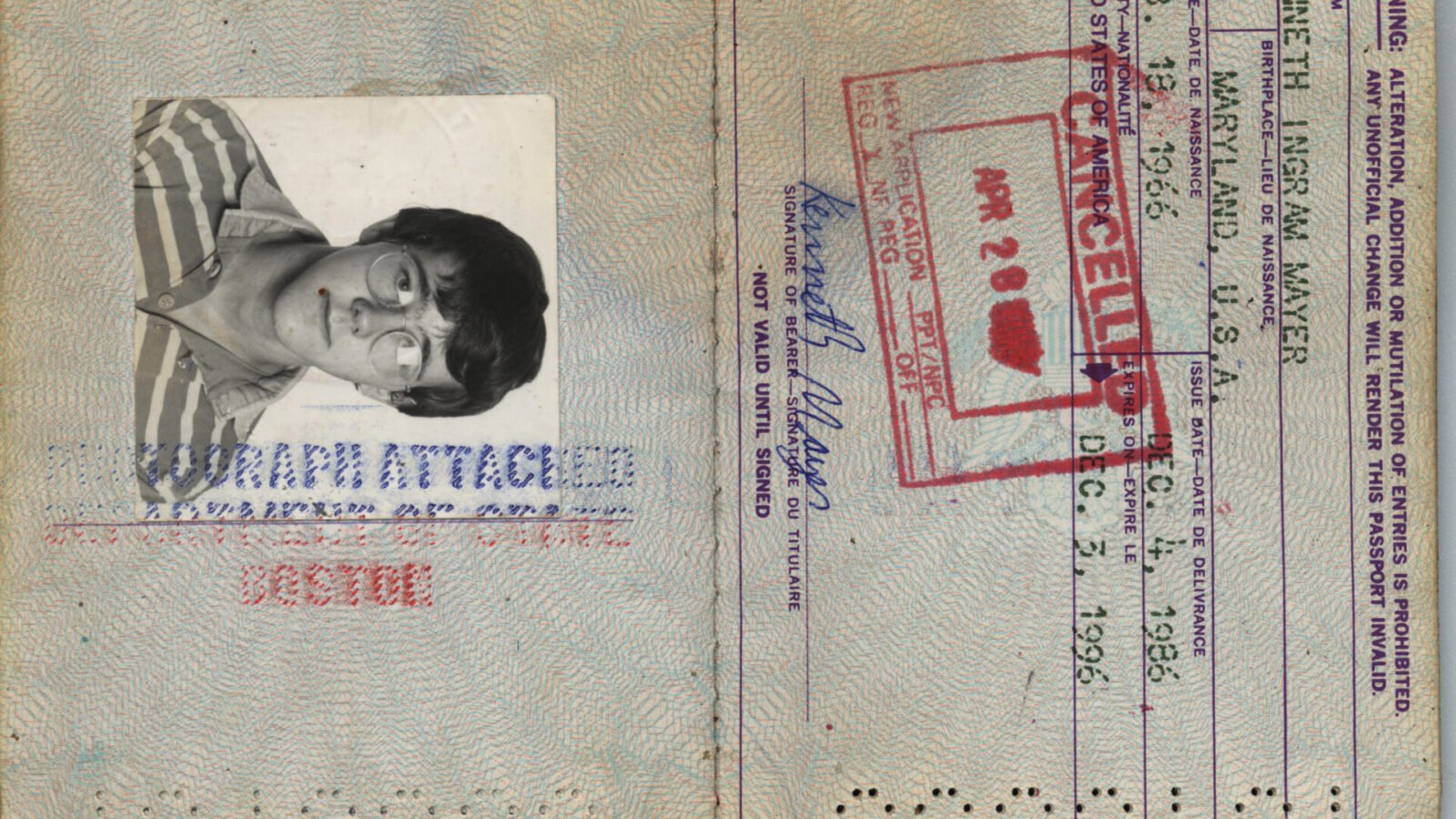
A fake passport does not have to survive a customs officer to be valuable. Sometimes it only has to fool a website.
That deceptively simple weakness helped turn OnlyFake, a service selling convincing digital identity documents, into a profitable criminal business. Its founder, Ukrainian national Yuriy (also spelled Yurii) Nazarenko, pleaded guilty in the United States in February 2026. By the government’s account, the operation generated at least 10,000 fake IDs, including U.S. passports, driver’s licenses and Social Security cards. Nazarenko agreed to forfeit $1.2 million in proceeds. The Justice Department separately described customer revenue as at least hundreds of thousands of dollars. Those figures should not be treated as identical accounting measures.
But the arrest was not necessarily the end of the machine. On November 5, 404 Media journalist Joseph Cox published a detailed interview-based account of Nazarenko’s rise, conviction and life after prison. Separately, investigators at fraud-detection company Resistant AI have tracked what they argue is continuity from OnlyFake to two successor brands. Their findings raise a more troubling question: When a forgery platform has customers, tools and a distribution network, what exactly does arresting its creator accomplish?
The government’s case: forged documents by the thousands
The U.S. Attorney’s Office for the Southern District of New York announced on February 26, 2026 that Nazarenko had pleaded guilty to conspiracy to commit fraud involving identification documents and related authentication features. Prosecutors said OnlyFake operated roughly from 2021 through 2024, accepted cryptocurrency payments and offered bulk purchases of up to 1,000 fraudulent documents.
Customers could obtain files resembling scans or ordinary phone photographs of documents lying on a desk or table. That mattered because many financial institutions and crypto exchanges accept remote uploads as part of their know your customer (KYC) checks. A convincing picture can create an appearance of documentary proof without any genuine passport or license existing behind it.

That is the verified core of the criminal case. It does not establish that every fake document was used in a completed theft, nor does it provide a public count of people individually victimized. A counterfeit document is itself a serious fraud-enabling product, but a potential downstream crime should not be reported as a proven one without evidence.
From painstaking Photoshop work to a subscription business
In the new 404 Media investigation, Nazarenko described his early work painstakingly altering document images by hand before automating the process. He later incorporated AI-generated elements, including faces and backgrounds, into the service. The resulting business resembled a conventional software startup in at least one grim respect: it sold efficiency, scale and customer support.
Cox reported that, in 2024, he purchased documents from OnlyFake and successfully used one to sign up for an account at the OKX cryptocurrency exchange. That is a reported firsthand test by 404 Media, not a universal finding that every bank or platform was vulnerable. In the same account, Nazarenko describes deleting emails and destroying a laptop after the initial exposure, then eventually being arrested in Romania and extradited to New York.
404 Media further reports that he was sentenced in June 2026 to time served and then spent additional time in immigration detention before deportation. Those later personal details come from the newspaper’s interviews and account of court documents; the DOJ press release cited above predates sentencing and does not independently confirm them.
The North Korean connection: an important distinction
One of the most consequential claims in the new reporting concerns North Korean operatives seeking remote technology jobs. According to 404 Media, Nazarenko received a February 2024 letter from a United Nations panel stating that North Korean IT workers had used OnlyFake to produce documents for online accounts and job applications. The outlet reports seeing the letter. Apep Bar has not independently authenticated that correspondence, so the specific OnlyFake connection is attributed to Cox’s reporting rather than presented as a separate finding by this publication.
The larger North Korean employment-fraud problem is independently established. In an October 13, 2026 advisory, the FBI warned that state-linked remote IT workers were using false identities, intermediaries and other deception to obtain work at Western companies. The Bureau also warned of stolen data, extortion and wages contributing revenue to North Korea’s government. The agency recommends layered checks rather than assuming that one document or one warning sign proves who an applicant is.
These are two separate evidentiary claims: the FBI documents a broad illicit remote-hiring network; 404 Media reports that a specific document-forgery service appeared in a UN inquiry into that network. The latter is plausible in light of the former, but they are not interchangeable.
The site disappeared. The capability apparently did not.
OnlyFake’s old domains went dark after federal action. Yet in May 2026, Resistant AI investigators reported that the business’s underlying ecosystem appeared to resurface under the name MacDoc. Their case did not rely merely on a lookalike website. They described continuity in the seller accounts, forum histories, promotional trails and document generator.
Then came a second turn. In an October 8 report, updated October 19, Resistant AI said MacDoc had evolved into another brand, Verif2Go. The researchers reported that an account opened on the original OnlyFake platform still worked on the later service, with historical purchase records visible. That is meaningful evidence of shared account infrastructure, though it does not by itself prove Nazarenko personally runs the successor operation.
The distinction matters. A conviction identifies a defendant and punishes his conduct. It does not automatically dismantle every database, collaborator, customer relationship or successor service associated with the original product. A security vendor investigating a competitor’s threat ecosystem has commercial interests, so its technical attribution merits scrutiny; nevertheless, its account-reuse and forum-continuity observations are specific, falsifiable pieces of evidence, not simply a theory that every similar website must share an owner.
Does AI make an ID convincing—or simply make forgery cheaper?
“AI fake IDs” is an irresistible headline. It is also an incomplete technical explanation. Resistant AI’s May investigation argued that much of the effectiveness of this class of forgery service came from meticulously assembled document templates, data validation and automated formatting. Some visual elements used generative or AI-assisted processes; others depended on conventional software and accumulated document knowledge.
That is important because a security response focused solely on spotting visible AI artifacts can miss an entirely different failure: accepting uploaded images as enough proof of identity. Conversely, claims that ordinary verification has become useless are too sweeping. Specialized fraud detectors, cross-checks against independent records, human review and ongoing account monitoring can raise the cost of deception. None is infallible.
The FBI’s latest advisory likewise cautions that overreacting to isolated indicators can wrongly exclude legitimate workers. Verification policies need to resist fraud and avoid treating innocent applicants as suspicious merely because of their nationality, accent or remote location.
What remains unanswered
How many actual account takeovers or fraudulent hires can be tied conclusively to OnlyFake documents? How much of the original service’s infrastructure survived federal intervention? Who controls the later brands? And what evidence will show that new identity checks protect people without building an even more intrusive surveillance apparatus?
Those are not minor loose ends. They are the difference between celebrating a criminal conviction and understanding a market that can survive it. Apep Bar has previously examined the human consequences of identity and account disputes, including a contested Cash App identity-theft case. As more of life is mediated through screenshots, scans and automated approvals, the same question keeps returning: who—or what—does a digital identity check really verify?
Sources and further reading
- U.S. Justice Department, OnlyFake guilty-plea announcement (February 26, 2026) — official case summary and documentary exhibit.
- 404 Media, An AI Fraud Kingpin’s Confessions (November 5, 2026) — the original newsletter shared by the reader, linking to Cox’s full feature.
- 404 Media, The Confessions of an AI Fraud Kingpin (November 5, 2026) — Joseph Cox’s original interviews and investigation.
- FBI/IC3 advisory on North Korean remote IT worker operations (October 13, 2026) — primary official guidance.
- Resistant AI, OnlyFake/MacDoc investigation (May 28, 2026) and Verif2Go follow-up (October 2026) — independent technical analysis from a commercial fraud-detection vendor.
- 404 Media podcast, Inside a Fraud Factory (February 7, 2024) — earlier audio discussion of the journalist’s testing, not footage of the 2026 proceedings.
Featured photograph: A real United States passport photographed by Ken Mayer / Wikimedia Commons, CC BY 2.0. Contextual image; not a forged document produced by OnlyFake or evidence from the criminal case. The photo may be cropped for display.