Britain has prepared emergency broadcasts for a day when electricity, water, phones and the internet could all fail at once. That is documented. The suggestion that officials know such a disaster is imminent is not.
The BBC has revealed plans for an emergency radio service that could operate for at least three days during a nationwide power failure. The UK government has published scripts on how to manage without water or working toilets. Households are being encouraged to keep several days of basic supplies. To readers of a November 2026 ZeroHedge article by Steve Watson, via Modernity, these developments add up to a disturbing conclusion: “Something Big Is Coming.”
There is a serious story here. But it is about Britain’s dependence on fragile infrastructure, the control of emergency information and what a blackout could actually do to ordinary households. To understand it, we need to separate a documented contingency plan from a prediction.
The emergency BBC studio is real
According to BBC correspondent David Sillito’s November 7, 2026 report, an emergency studio could be staffed by roughly 100 people, with sufficient fuel, food and water for at least 72 hours. Backup radio transmission facilities would depend on generators, while some communication links would operate independently of the public internet. Satellite-equipped BBC vehicles could help send reports from around the country.
Why FM radio? Because a working smartphone is only one part of a communications chain. Cell towers, data centers, routers, local electricity and network backhaul must also work. A battery-powered or wind-up FM receiver can still pick up news if the broadcaster’s transmitter remains powered, even when mobile data disappears.
In a prolonged outage, that radio channel could convey information about drinking water, medical care, shelter and emergency services. There is nothing imaginary about the need. But the existence of an emergency backup service is not evidence that it has been activated, or that officials possess a secret date for disaster.
The government wrote scripts about water and toilets—last year
The most unsettling detail is also one of the easiest to verify. On December 16, 2025, the UK’s Department of Health and Social Care published a collection of public-health radio scripts prepared by the four chief medical officers. They cover water and sanitation, food and nutrition, and protection from extreme heat or cold during a complete national power outage.
The advice is unglamorous because the consequences would be unglamorous. Electric pumps help deliver water; refrigeration keeps food safe; heating and sewage systems depend on utilities. Without electricity, a simple toilet flush or glass of clean water may become a problem. Scripted public-health instructions are sensible preparation for those conditions.
Crucially, the government document calls a complete national blackout “very unlikely.” It says the scripts were released in the interests of transparency and describes them as advice from independent medical officers, not government policy. They are neither newly leaked nor proof that an event has been scheduled.
A three-day stockpile: government order or advice?
The government’s Be Ready campaign recommends three days of essentials at home, including bottled water, non-perishable food, medication, a flashlight, warm clothing, some cash, a portable power bank and a battery-operated or wind-up FM radio. It specifies three liters of drinking water per person per day, with more required for cooking or washing.
There is no general compulsory stockpiling order in that checklist. The government explicitly recognizes that not everyone can take every suggested step, and recommends collecting supplies gradually while supporting neighbors. Its advice addresses multiple kinds of emergency, not exclusively sabotage or war. The distinction between a recommendation and an order is not pedantry; it is the difference between accurately describing a resilience programme and portraying it as a coercive mobilization.
Why this scenario appears in official risk planning
In July 2026, the Cabinet Office published a new National Risk Register, the public version of the government’s assessment of serious threats and hazards. The register is intended to help businesses, public bodies and community organizations prepare for events with severe consequences. The UK’s earlier risk assessments had already considered large-scale electricity transmission failures and knock-on disruption to other services.
A serious government risk assessment is supposed to include events that are unlikely but devastating. Severe weather, system malfunction and deliberate attacks can all threaten infrastructure. Publishing a worst-case scenario tells us that officials are planning for it; it does not tell us which scenario, if any, is about to occur.
There is nevertheless room for a hard investigation. How long could local hospitals, pharmacies, pumping stations and mobile towers actually keep operating without external power? Which communities have backup generators? Can vulnerable residents receive information if they cannot afford a radio? The answers deserve far more attention than a vague countdown.
Spain’s blackout was real—and investigators have explained its causes
The widespread blackout across Spain and Portugal on April 28, 2025 demonstrated how quickly modern systems can unravel. But accounts still invoking an unresolved possible cyberattack omit an important development: a March 20, 2026 expert-panel report from ENTSO-E.
That European grid investigation identified interacting technical factors, including oscillations, gaps in voltage and reactive-power control, rapidly reduced generation and cascading disconnections. Its published findings do not establish cyber sabotage as the cause. The early observation that an attack had not yet been ruled out should not be confused with the conclusions reached after the investigation.
The lesson is arguably more sobering: a system can collapse without one visible enemy or one dramatic act of destruction. Complex networks sometimes amplify a cluster of ordinary failures into an extraordinary emergency.
The £70 million aircraft programme is a research project
Another claim involves high-altitude aircraft to restore mobile and internet communications. The investment is real: Britain’s Advanced Research and Invention Agency describes an Enduring Atmospheric Platforms programme backed by £70 million. It is funding research on aircraft able to remain in the stratosphere and support communications payloads for up to a week.
Its stated ambition is advanced connectivity—including service to underserved areas—not proof that the UK already has a fully operational airborne emergency replacement for all national communications. A funded technology programme and a deployed rescue capability are different things.
A broadcaster of last resort—or an information monopoly?
ZeroHedge’s deeper concern is about control of the narrative. If the internet, television and cell networks failed, the surviving national FM broadcasts could become an unusually influential information channel. Officials would need to give instructions quickly. Citizens would also need ways to know whether those instructions were current, reliable and subject to independent scrutiny.
That is a legitimate accountability debate. It raises concrete questions: Who approves official scripts? Can the broadcaster correct government errors in real time? What independent local broadcasters can stay on air? Will isolated, disabled or non-English-speaking residents receive accessible guidance? And how will people check what they are told?
None of those questions requires accepting the further allegation that the emergency arrangements were designed to manufacture consent for a planned crisis. That interpretation needs evidence of intent beyond the existence of generators, backup radios and old scripts. Previous Apep Bar reporting has explored other infrastructure choke points, including who controls repairs to undersea internet cables.
What is still unknown?
The public does not have complete technical detail about every backup transmission site, water-pumping system or hospital generator. Nor does it have a reliable basis for determining exactly how long a real nationwide outage would last. The plans described here do not, by themselves, establish an imminent attack or a scheduled national blackout.
The emergency studio is real. The scripts are real. The infrastructure vulnerabilities are real. The prediction remains unproven. If something big really is coming, the next question cannot be answered by atmosphere alone: what specific evidence shows it—and who will make that evidence public?
Sources and further reading
- BBC News, November 7, 2026: What happens if all the lights go out? This is the plan for a Black Sky event
- UK Department of Health and Social Care: Public-health scripts for a national power outage (December 2025)
- UK government: Be Ready emergency supplies checklist
- UK Cabinet Office: National Risk Register 2026
- ENTSO-E: March 2026 investigation into the April 2025 Iberian blackout
- ARIA: Enduring Atmospheric Platforms research programme
- ZeroHedge/Modernity: “Something Big Is Coming” (the commentary examined)
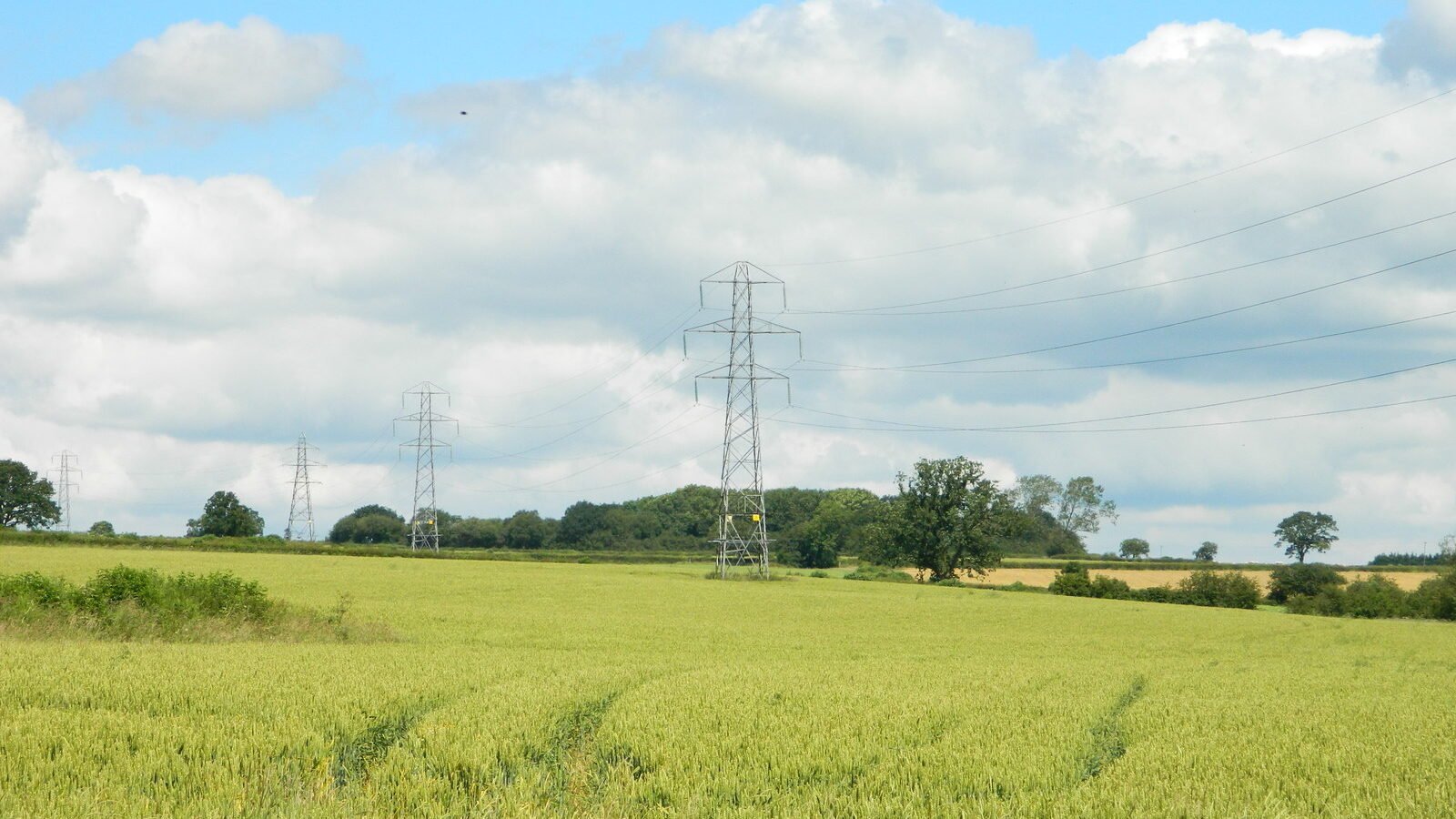
Featured photo: Actual UK National Grid pylons in Radbourne, Derbyshire; photographed by Rob Howl, July 12, 2012. Geograph Britain and Ireland / Wikimedia Commons; CC BY-SA 2.0. This is documentary infrastructure photography, not footage of a blackout. Site-generated crops may be applied.