Imagine a container that assembles itself without a builder. Certain simple fatty-acid molecules can organize into tiny membrane-bound spheres in water, a behavior that makes them attractive to researchers studying how the first cell-like systems may have emerged.
The chemistry of an inside and an outside
Modern cells rely on complicated membranes and active biological machinery. Proposed protocells are more modest. The attraction of simple vesicles is that they can separate a chemical interior from its environment without requiring the full set of genes and proteins found in life today. NASA’s astrobiology learning materials identify such compartmentalization as an important step scientists investigate in origin-of-life scenarios.
A bubble is not an organism
A vesicle does not automatically metabolize, reproduce with heredity or evolve through natural selection. A credible origin-of-life explanation must link membranes with reliable chemical information, energy sources and changing environmental conditions. Researchers debate what came first and how the pieces could have cooperated.
Why the debate matters
Different settings—shallow pools, geothermal systems and submarine environments—offer different advantages and obstacles. Experiments can show that particular reactions are possible; they do not alone reconstruct the actual sequence of events billions of years ago. The scientific excitement lies in building mechanisms that can be tested rather than declaring the oldest mystery solved.
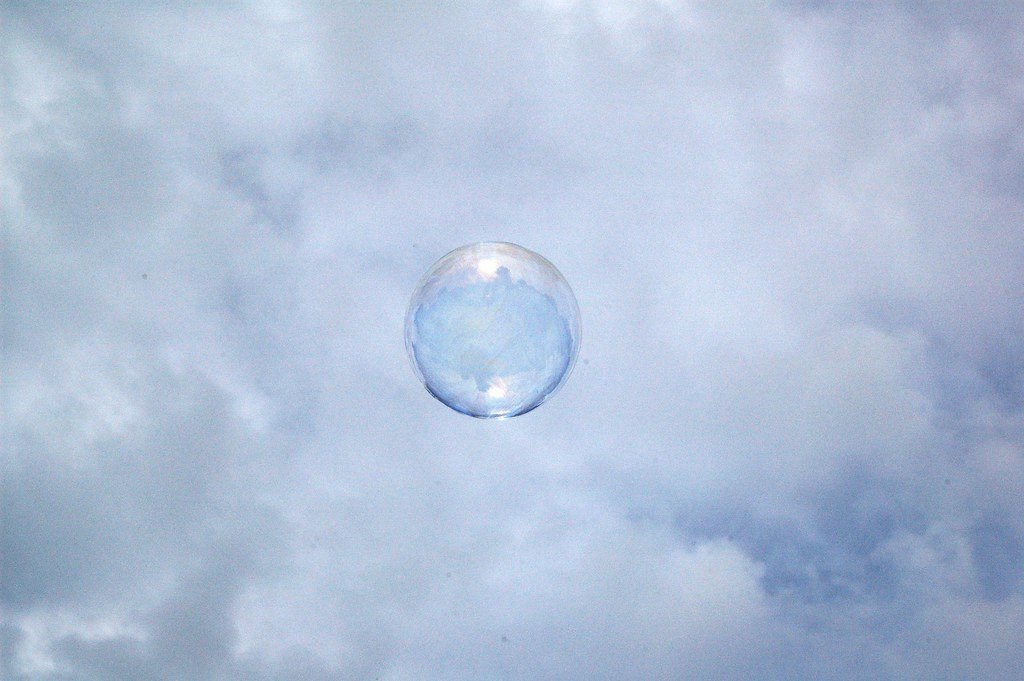
Featured image is a genuine photograph of a soap bubble, an analogy for a boundary, not a photographed protocell or scientific experiment.