One of the Seven Wonders of the ancient world has reappeared—at least in a computer. After decades of underwater archaeology and painstaking architectural reconstruction, researchers working on Alexandria’s vanished lighthouse now describe a digital model with 67 internal rooms across nine levels and a broad access ramp. The new picture is extraordinary. It is also a scientific reconstruction, not a perfectly preserved floor plan recovered from the sea.
A French documentary, Le phare d’Alexandrie: Les derniers secrets (The Lighthouse of Alexandria: The Last Secrets), was scheduled to premiere on France 5 on November 5, 2026. Its release puts a spotlight on a multidisciplinary effort led by the Centre d’Études Alexandrines (CEAlex), the French National Centre for Scientific Research (CNRS) and La Fondation Dassault Systèmes.
A structure that ruled the ancient harbor
Built in the early third century BCE under the Ptolemaic dynasty, the Lighthouse of Alexandria helped guide ships to a major Mediterranean port. Its tower stood on Pharos Island and endured for centuries before earthquakes and the passage of time devastated it. Later construction transformed the shoreline, leaving many of the monument’s remains submerged near today’s Citadel of Qaitbay.
Archaeologist Isabelle Hairy and colleagues have spent years documenting underwater stone blocks, their dimensions and their possible architectural relationships. The challenge is monumental in both senses: the archaeological site preserves only a small portion—roughly one-tenth, according to the project’s press materials—of the original structure.
Inside the proposed reconstruction
The project’s digital twin links archaeological measurements with structural and architectural analysis. The team’s current reconstruction describes a 103-meter-high lighthouse, a raised causeway supported by 16 arches, a monumental entrance and three major structural volumes. Its modeled interior contains 67 rooms spanning nine levels, a broad ramp that could accommodate riders, and internal stairs connecting large vaulted spaces.
These are the features proposed by researchers as part of a developing reconstruction. They should not be mistaken for the discovery of 67 intact rooms on the seabed. A digital twin can test whether ancient stone evidence, building physics and written descriptions fit a plausible architectural arrangement. It cannot erase every missing piece of the historical record.
Stones from the seabed, evidence from the screen
Excavation, photogrammetry, comparison with ancient representations and structural modeling all contribute different kinds of evidence. The model is strongest where physical blocks can be measured, and more provisional where centuries of collapse have removed the original evidence.
Apep Bar recently reported on a bronze ring found in the ancient harbor, whose lighthouse-like engraving raises a different set of questions about how the monument was pictured and administered. This newer investigation addresses the architecture itself rather than ownership of that artifact.
There is an important reason to tell the story now: the documentary brings long-running underwater fieldwork and recent reconstruction together for a public audience, while exposing the model’s assumptions to scrutiny.
See the research and documentary
France Télévisions’ official documentary dossier documents the November 5 screening and the research team. The project partner’s digital-twin overview describes the proposed ramp, rooms, arches and structure. Both are source descriptions, not independent certification that every modeled feature is certain.
One ancient lighthouse, thousands of underwater blocks, and a complex virtual building. When most of the stone is missing, how much of the original architecture can science reconstruct—and which parts must remain informed hypotheses?
Sources
- France Télévisions: The Lighthouse of Alexandria—The Last Secrets (October 2026 dossier, November 5 scheduled broadcast)
- CEAlex/CNRS PHAROS project: digital-twin methodology
- La Fondation Dassault Systèmes: Lighthouse of Alexandria revealed through digital twins
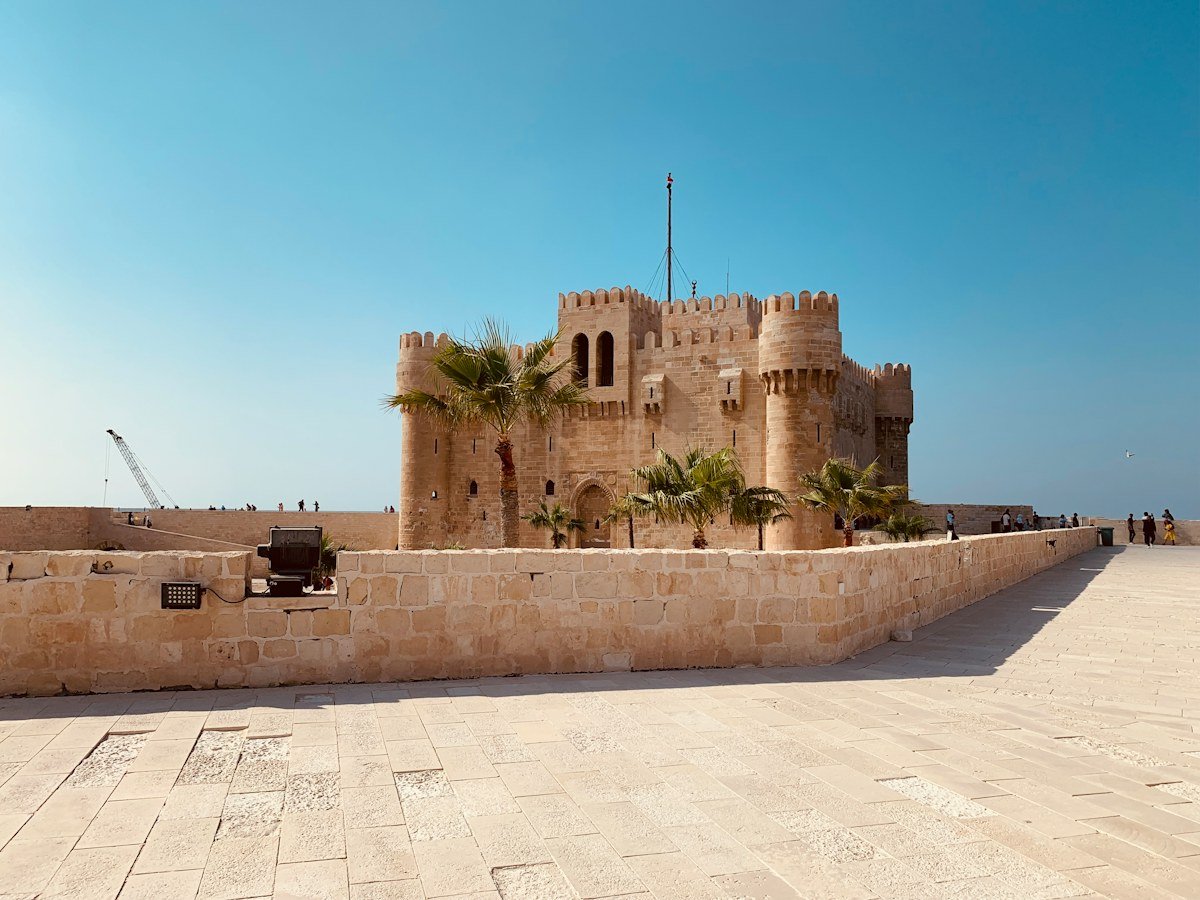
Featured photograph: the real Citadel of Qaitbay at Alexandria, photographed by Farah Samy / Unsplash, Unsplash License. The present-day fort stands near the ancient lighthouse site; it is not a photograph of the original Pharos or the digital reconstruction.