Two ancient teeth have turned Southeast Asia into an unexpected stop on the timeline of giant rodents. An international paleontology team described Yakamys sirindhornae, a newly named rodent that lived around 34 million years ago in what is now southern Thailand. The animal may have weighed around 30 kilograms—roughly 66 pounds—even though researchers have found only a small part of its skeleton.
An enormous claim from small evidence
The study, published in Scientific Reports and reported by McGill University on November 10, 2026, identifies the animal from a lower second molar and an associated incisor discovered in the Krabi Basin. The teeth display characteristics that allow paleontologists to place the animal within an early rodent lineage known as ischyromyids. The size of those teeth is remarkable.
Using seven different equations based on relationships between tooth size and body mass, researchers estimated a range from approximately 21.4 to 47.3 kilograms. Their summary estimate is about 30 kilograms, but the published paper explicitly acknowledges uncertainty. There is no complete Yakamys skeleton allowing us to confidently reconstruct every aspect of its height, body shape or behavior.
Why its address matters
Much of the popular story of rodent gigantism revolves around later giant species in South America. The new fossil places an unusually large early rodent in Southeast Asia during the late Eocene, expanding the geography—and likely the evolutionary pathways—behind that pattern. The researchers argue that very large rodents emerged earlier and more widely than the best-known examples alone had suggested.
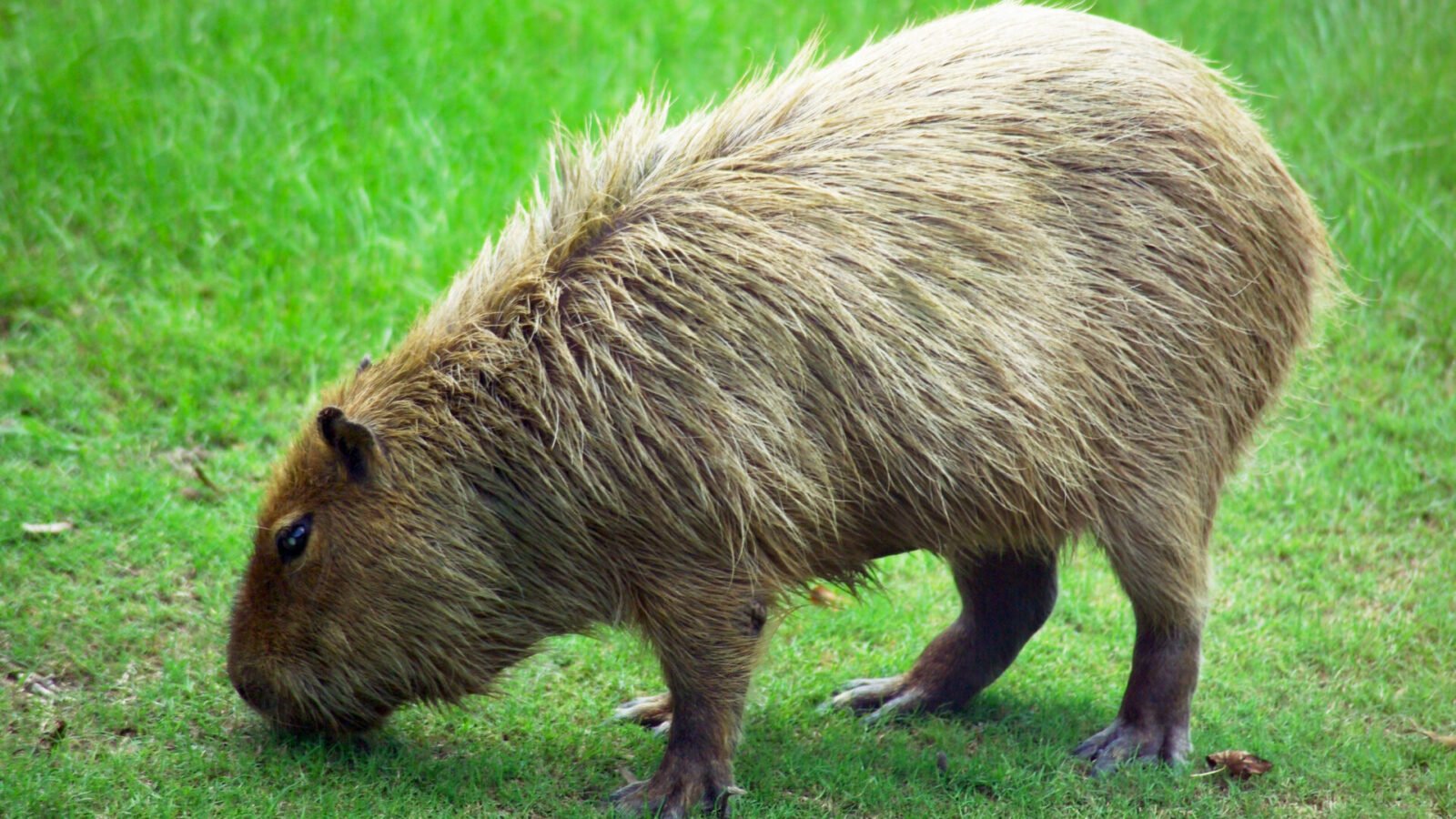
The ancient animal should not be mistaken for a modern capybara, even though the living species offers a familiar visual comparison. Capybaras belong to a different branch of the rodent family tree, and a photograph of one is not a reconstruction of Yakamys.
The fossil record is still incomplete
When a headline says scientists discovered a giant rodent, it can conjure a fully assembled beast emerging from the ground. The actual discovery is more intriguing scientifically: specialists used fine anatomical details and statistical comparisons to infer the existence of a substantial animal from sparse remains.
The next important find would be more teeth or bones confirming its proportions and ecological niche. Until then, the strongest conclusion is that the diversity of ancient rodents was broader—and stranger—than many familiar evolutionary maps suggest.
Primary study and reporting
Scientific Reports: A giant Eocene ischyromyid from Southeast Asia; McGill University research release as reproduced by ScienceDaily, November 10, 2026.
Featured photo: a real living capybara at Hattiesburg Zoo, by VigilancePrime, CC BY 3.0. This is a modern comparison species, not Yakamys or an image of the recovered fossil.