For generations, “O-negative is the universal blood donor” has been taught as a lifesaving rule. It is. But there is an asterisk big enough to matter in an emergency.
People with a rare blood type known as the Bombay phenotype can suffer a serious transfusion reaction even to ordinary type O-negative red blood cells. Another rare condition, Rh-null, can make compatible blood almost impossibly scarce—particularly after a patient develops certain antibodies. The paradox is real: the blood routinely called “universal” may be unsafe for some of the people who most desperately need a donor.
A November 11, 2026 Sciencing article revived the question. But “debunked” needs explaining. Medical specialists have known about these exceptions for decades. The discovery is not that O-negative stopped working; it is that a shorthand description of blood compatibility was never an unconditional guarantee.
Why hospitals still rely on O-negative blood
Most people learn eight common blood types: A, B, AB and O, each positive or negative for the RhD antigen. The letters describe carbohydrate antigens on red blood cells, while RhD refers to an antigen on a separate red-cell protein. O-negative red cells lack A, B and RhD antigens, so they carry a low risk of causing a reaction based on those major blood-group systems.
That makes O-negative especially valuable when trauma teams must transfuse red cells before a patient’s blood group can be confirmed. The American Red Cross still identifies O-negative as the universal red-cell donor type, while the Mayo Clinic emphasizes that emergency type O blood has the lowest risk of severe incompatibility when testing cannot wait.
But O-negative cells are not blank biological slates. They carry other blood-group antigens. And patients can carry antibodies that attack those markers, even when the familiar A, B and RhD labels look compatible.
The Bombay exception: type O blood that is not safe for type O
The most revealing exception has a name and a history. First described in Bombay (now Mumbai) in 1952, the Bombay phenotype—also called Oh—involves an absence of the H antigen on red blood cells. H is the molecular foundation on which A and B antigens are normally built. Ordinary group O red cells have plenty of it.
People with the Bombay phenotype can make anti-H antibodies. Those antibodies can attack ordinary type O cells, including O-negative units. The NCBI reference text on the Hh blood group explains that these patients generally require blood from another person with the Bombay phenotype. A clinical case report in Laboratory Medicine demonstrates why finding suitable donors can become a painstaking search involving specialized registries and frozen inventories.
Here the “universal donor” label breaks in a very specific and medically documented way. The problem is not that O-negative blood is inherently defective. It is that one person’s immune system may recognize an antigen the simple eight-type chart never mentions.
Rh-null: “golden blood” comes with a difficult price
Rh-null blood is often nicknamed “golden blood” because of its extreme rarity, not because it has supernatural properties. Its red cells lack all Rh antigens—not merely RhD. That distinction matters: an ordinary Rh-negative donor still has other antigens in the Rh family.
Some Rh-null patients develop an antibody called anti-Rh29 after exposure through transfusion or pregnancy. Once that happens, conventional red-cell units, including O-negative ones, may be incompatible. A 2026 review of reported Rh-null cases describes how rare-donor registries, frozen units and specialized planning can become essential. This is a risk linked to the patient’s actual antibody profile—not a reason to claim that every Rh-null person automatically reacts to every conventional donor unit.
Apep Bar has previously examined a different blood-group discovery in “A Woman’s Blood Didn’t Match Anyone Else’s. Scientists Found a New Blood Group.” These stories expose the same blind spot: the eight everyday blood types are a useful introduction to a much larger and more complicated map.
Plasma and platelets change the rules again
There is another common source of confusion: “blood” is not a single product. Hospitals transfuse red cells, plasma and platelets for different reasons. Compatibility changes depending on which component is being given.
For red cells, O-negative is the standard universal-donor shorthand under ABO/RhD rules. For plasma, AB is the universal donor type because AB plasma lacks anti-A and anti-B antibodies; the donor-recipient logic is essentially reversed. For platelets, ABO-identical products are preferred when possible, but clinicians can use mismatched units under established precautions.
Importantly, platelets do express ABO antigens, contrary to some oversimplified explanations. Their surrounding donor plasma also carries antibodies. A review from the American Society of Hematology and Canadian Blood Services clinical guidance explain why both the platelet surface and accompanying plasma affect compatibility. In other words, the “universal” label changes meaning depending on what the patient receives.
Could scientists make truly more compatible blood?
The exception has even inspired laboratory experiments. In a 2023 Nature Communications study, scientists used an enzyme derived from the bacterium Akkermansia muciniphila to remove H-antigen structures from ordinary type O red cells, making them behave like Bombay-phenotype cells in laboratory tests.
The researchers demonstrated the conversion in vitro; they did not establish an approved transfusion treatment or demonstrate that converted units are safe in patients. It is an intriguing attempt to solve a real compatibility problem, not an announcement that universal blood has finally been invented.
What protects a patient when “universal” is not enough?
Before routine transfusions, blood banks check the patient’s type, look for clinically significant antibodies and, when indicated, crossmatch donor red cells against the recipient’s sample. The American Society of Hematology describes these safeguards. When time is critical, physicians weigh the danger of delaying blood against the compatibility information available; they do not treat “universal” as a promise of zero risk.
Infection screening is another safety issue altogether. A blood unit can be antigen-compatible yet carry a residual infectious risk, although modern donor screening and testing have greatly reduced that danger. Neither type O-negative nor any rare phenotype makes a unit automatically infection-free.
The real verdict is less sensational—and more useful—than the headline “myth debunked.” O-negative red cells save lives precisely because their compatibility is extraordinarily broad. The rare exceptions show why doctors need more than a blood-type label and why rare-donor networks matter. The question is not whether to abandon “universal donor,” but how to make sure nobody mistakes a life-saving shortcut for an absolute rule.
Watch: how ABO and RhD compatibility works
Contextual explainer: Neural Academy, “Blood Types — ABO and Rh Blood Group Systems” (July 7, 2021). This educational video demonstrates the usual ABO/RhD red-cell rules; it does not document a Bombay-phenotype or Rh-null case and does not override the rare exceptions explained above.
Primary sources and further reading
- American Red Cross — blood types and component compatibility
- NCBI Bookshelf — Hh blood group and Bombay phenotype
- Immunohematology (2026) — Rh-null scoping review
- American Society of Hematology — platelet ABO/Rh compatibility
- Nature Communications (2023) — enzymatic conversion of type O red cells
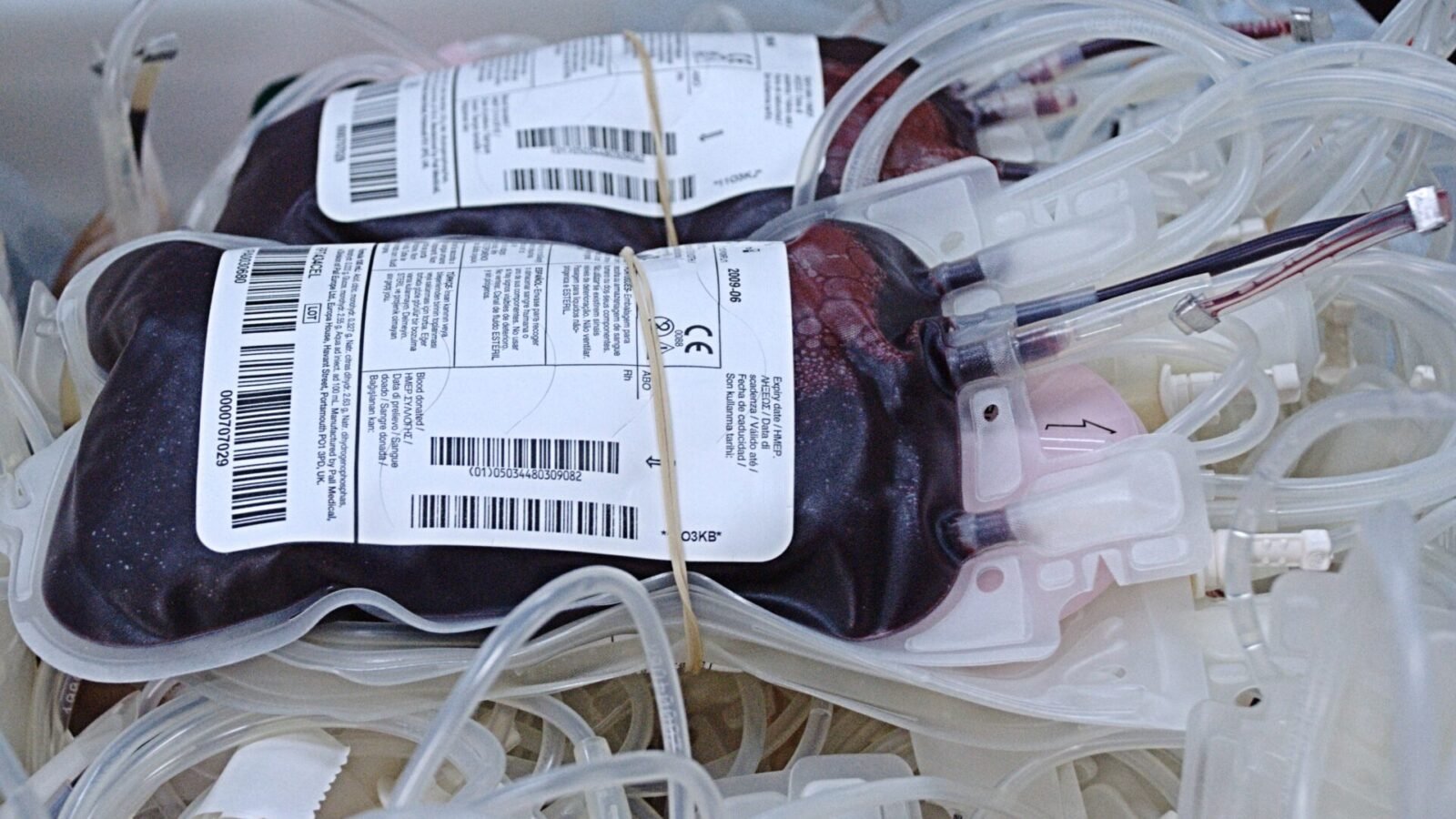
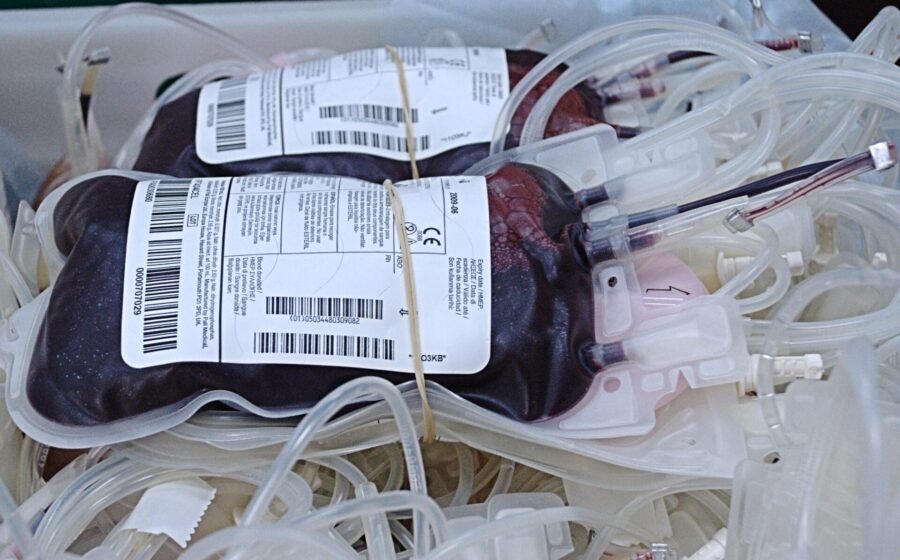
Featured photograph: Actual donated blood units, photographed by Antonio (montuno), 2008, via Wikimedia Commons, CC BY-SA 2.0. Contextual image; the bags are not claimed to contain rare blood. WordPress display crops are adaptations under the same license.