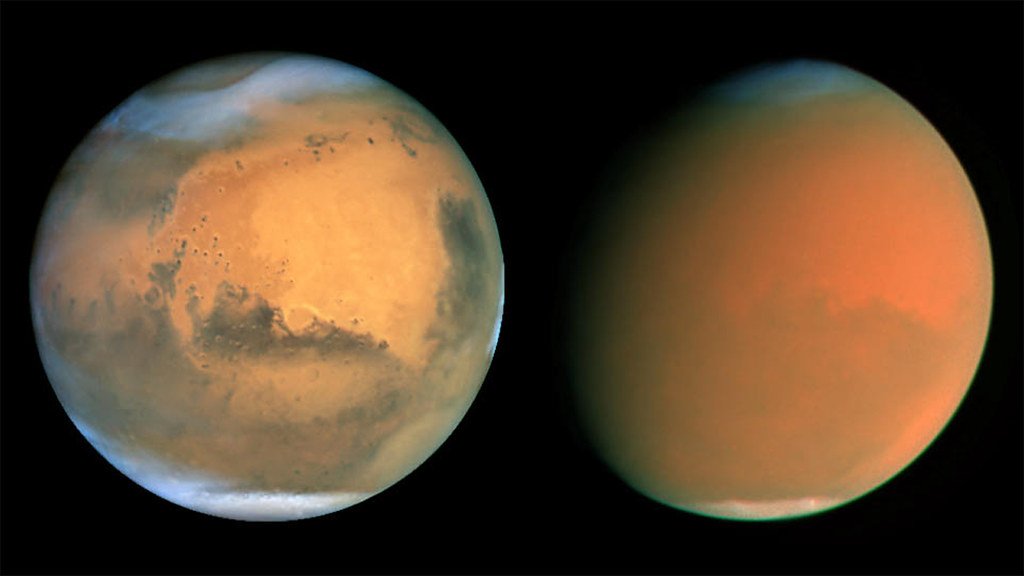
Two NASA spacecraft took the long way to Mars—and just used Earth to pick up speed. On November 9, 2026, the agency announced that both ESCAPADE probes completed powered flybys combining Earth’s gravitational pull with sustained engine burns. NASA said the pair remains on track to reach Mars in September 2027.
Why this maneuver is unusual
ESCAPADE stands for Escape and Plasma Acceleration and Dynamics Explorers. NASA describes the mission as the first time it has used a powered Earth flyby to propel spacecraft toward Mars, and said it performed the maneuver twice over two days. Unlike an ordinary gravity assist, a powered flyby also uses propulsion while the spacecraft travels through the gravity-assist geometry.
What the probes will investigate
The twin spacecraft are designed to investigate the interaction of the solar wind with the Martian magnetosphere and how energy and particles move through that environment. The work may help scientists understand atmospheric loss and the space conditions future Mars missions will encounter. Successful departure maneuvers do not mean the science mission is already completed: arrival and measurement campaigns remain ahead.
The distinction worth keeping
This is a reported, completed navigational milestone, not a claim about new life on Mars. The next checks are cruise performance, arrival in 2027 and the quality of the resulting measurements. Mars still has mysteries; the route there is now news of its own.
Sources and documents
Question. Investigate. Reconsider.