APEP BAR | NEWS ANALYSIS — November 4, 2026. T-Mobile just said no to Elon Musk. Not to every SpaceX satellite, and not to the Starlink service that already works with T-Mobile phones. It said no to something more consequential: letting SpaceX use its cellular network as the backbone of a competing mobile carrier.
That distinction matters. A viral short about T-Mobile and Starlink argues that the rejection effectively confirms Musk is launching his own phone service. The competitive ambition is real. But the video’s explanation blurs an existing satellite partnership, a rejected wholesale-network arrangement and a series of spectrum deals that still do not magically replace cell towers.
And there’s a new twist: according to a November 2 Washington Post investigation, SpaceX is discussing a possible deal to buy Boost Mobile or use its network. After the biggest carriers denied SpaceX a direct shortcut, it may be looking for a side entrance.
What T-Mobile actually refused
On October 28, 2026, T-Mobile CEO Srini Gopalan was asked about working with SpaceX as a mobile virtual network operator, or MVNO. Such operators can market their own wireless plans while purchasing network access from an established carrier. They don’t have to build a nationwide collection of towers before signing up customers.
Gopalan was unambiguous: “I see no room for an MVNO with SpaceX.” He said T-Mobile evaluates wholesale deals according to the additional markets, distribution or capabilities they bring. In his telling, SpaceX did not offer the kind of added value that would justify an MVNO arrangement with a would-be competitor. The words appear in the company’s October 28 earnings-call transcript.
That is a rejection of a new business model, not an announcement that the existing SpaceX relationship has been canceled. The same transcript discusses satellite connectivity as a complementary product and specifically references T-Satellite.
It wasn’t only T-Mobile. The Washington Post, citing people familiar with the conversations, reported that Verizon and AT&T also rebuffed SpaceX’s request for access to their networks. The direct quotations from T-Mobile establish its public position; the broader private negotiations are attributed reporting, not public agreements.
Wait. Isn’t T-Mobile already working with Starlink?
Yes. This is the missing paragraph in the alarming version of the story.
T-Mobile continues to advertise T-Satellite with Starlink, a direct-to-cell service designed to connect compatible ordinary smartphones in areas where conventional towers cannot reach. T-Mobile’s product page says a phone may display “T-Mobile SpaceX” or “T-Sat+Starlink” when it connects through the satellite service. It also describes limitations involving sky visibility, slower data and supported apps.
In this arrangement, satellites are a fallback for terrestrial coverage gaps. In the MVNO arrangement SpaceX was seeking, the roles reverse: SpaceX could become the seller of a full mobile plan, while T-Mobile’s extensive terrestrial network would do much of the everyday work.
One is a service T-Mobile can sell to its customers. The other could help create a competitor for those customers. The corporate incentives are rather different.
The spectrum purchases that changed the calculation
SpaceX has been accumulating something more valuable than a catchy name for a phone plan: licensed radio spectrum. In September 2025, EchoStar announced an approximately $17 billion agreement involving AWS-4 and H-block licenses. In November 2025 the companies expanded that deal to include additional AWS-3 spectrum for approximately $2.6 billion.
According to EchoStar’s latest Form 10-Q, filed November 3, 2026, the combined consideration is approximately $20 billion. The filing says regulatory approval was granted in May 2026 and licenses were transferred to a trust, but the final acquisition closing was still targeted for November 30, 2027, subject to conditions. A signed purchase agreement and a completed transfer are not the same event.
SpaceX also reached a deal in October 2026 to acquire a nationwide portfolio of lower-frequency wireless spectrum from Grain Management. Reuters reported a roughly $8 billion figure attributed to other reporting, while noting that financial terms were not officially disclosed and regulatory approval was still needed.
Why care about frequencies? Different spectrum bands have different coverage and capacity characteristics. Lower-band signals tend to travel farther and penetrate obstacles better than higher frequencies. Those properties matter if SpaceX wants to move beyond emergency texts under an open sky toward something resembling everyday mobile service.
But spectrum is permission to use radio frequencies, not a finished network. Licensed bandwidth alone doesn’t create tower sites, backhaul, customer support, reliable indoor reception or nationwide voice coverage. Nor does a satellite overhead eliminate the physics and capacity limits of direct-to-phone connections.
Starlink Mobile: the satellite company wants to be the carrier
SpaceX’s stated ambition had already gone beyond the rumor stage. In August 2026, President Gwynne Shotwell said SpaceX intended to develop the terrestrial side of its acquired spectrum and turn Starlink into a broader mobile offering. Reuters reported the announcement and industry analysts’ sharply different assessments.
The proposed model combines satellites for sparse and remote coverage with ground infrastructure for capacity, urban performance and buildings. It’s a plausible direction, but it is not a confirmed mass-market launch with announced pricing, national coverage and a start date. Launch plans and final service capabilities remain subject to infrastructure, regulatory and commercial realities.
That is why a carrier with an existing ground network can be so tempting. Build one from scratch, and SpaceX faces enormous costs and years of practical engineering. Buy or lease access to someone else’s, and a consumer offer becomes more imaginable.
Is Boost Mobile the back door?
On November 2, the Washington Post reported that SpaceX had explored a purchase of Boost Mobile or a deal giving it access to Boost’s network. The report said Musk met with EchoStar chairman Charlie Ergen in October, citing people familiar with private negotiations. Reuters also covered the reported talks.
Boost could offer a customer base, billing and distribution operations, and an existing way to provide service over other networks. But the supposed back door may still require a key. Boost uses network-leasing agreements involving AT&T and T-Mobile, and assigning or expanding those arrangements to SpaceX may require carrier consent. The reports did not establish that any Boost transaction had been signed or approved.
In other words, a company that built rockets to escape Earth is discovering how difficult it can be to escape the American wireless wholesale market.
What the short gets right—and what it skips
- Correct: MVNOs can launch consumer mobile brands by leasing capacity from major networks. T-Mobile rejected an MVNO arrangement with SpaceX.
- Correct in direction, not as a finalized service: SpaceX is actively working toward its own competing mobile offer and has announced substantial spectrum transactions.
- Misleading: T-Mobile did not announce the end of its already-operating T-Satellite partnership with Starlink.
- Overstated: Buying spectrum does not mean Starlink can immediately run a full nationwide phone carrier without terrestrial infrastructure or commercial partnerships.
- Still uncertain: Whether SpaceX can secure Boost access, what regulators and carrier contracts will permit, and when or how a consumer Starlink Mobile plan would actually launch.
The stakes go beyond one billionaire’s phone bill
For consumers, a credible fourth major network could mean more choices and competitive pressure. But there are competing possibilities: satellite coverage could remain a niche add-on; network-building costs could limit price competition; or a new entrant could concentrate still more communications infrastructure inside an already powerful technology ecosystem.
There are also questions about spectrum ownership, regulatory oversight and how much leverage established carriers should have over potential rivals seeking access to their infrastructure. Those are policy questions, not answers supplied by a viral video.
Apep Bar has previously examined Starlink-associated advertising surveillance risks. That is a separate story from the mobile-carrier dispute, but both show why the future of connectivity deserves scrutiny beyond glossy satellite marketing.
So the real question is not whether T-Mobile has dumped Starlink. It hasn’t. The question is whether SpaceX can become big enough to compete with its existing partner—and who will control the connection when it does.
Watch: “T-Mobile Says No to Starlink”
The short below is the commentary video supplied for this story. It is useful for understanding the circulating claim, but its interpretation is not a substitute for the earnings transcript, securities filing and current reporting linked in this article. The video’s creator and publication date were not independently confirmed.
Watch on YouTube if the player does not appear.
Source documents and further reading
- T-Mobile Q3 2026 earnings-call transcript (October 28) — CEO’s MVNO comments.
- T-Mobile official T-Satellite service page — ongoing satellite partnership and service limits.
- EchoStar Form 10-Q, filed November 3, 2026 — spectrum transaction status and timing.
- Reuters, October 8 — additional low-band spectrum agreement.
- The Washington Post, November 2 — reporting on carrier refusals and possible Boost Mobile deal.
- Reuters, November 2 — independently published summary of reported Boost talks.
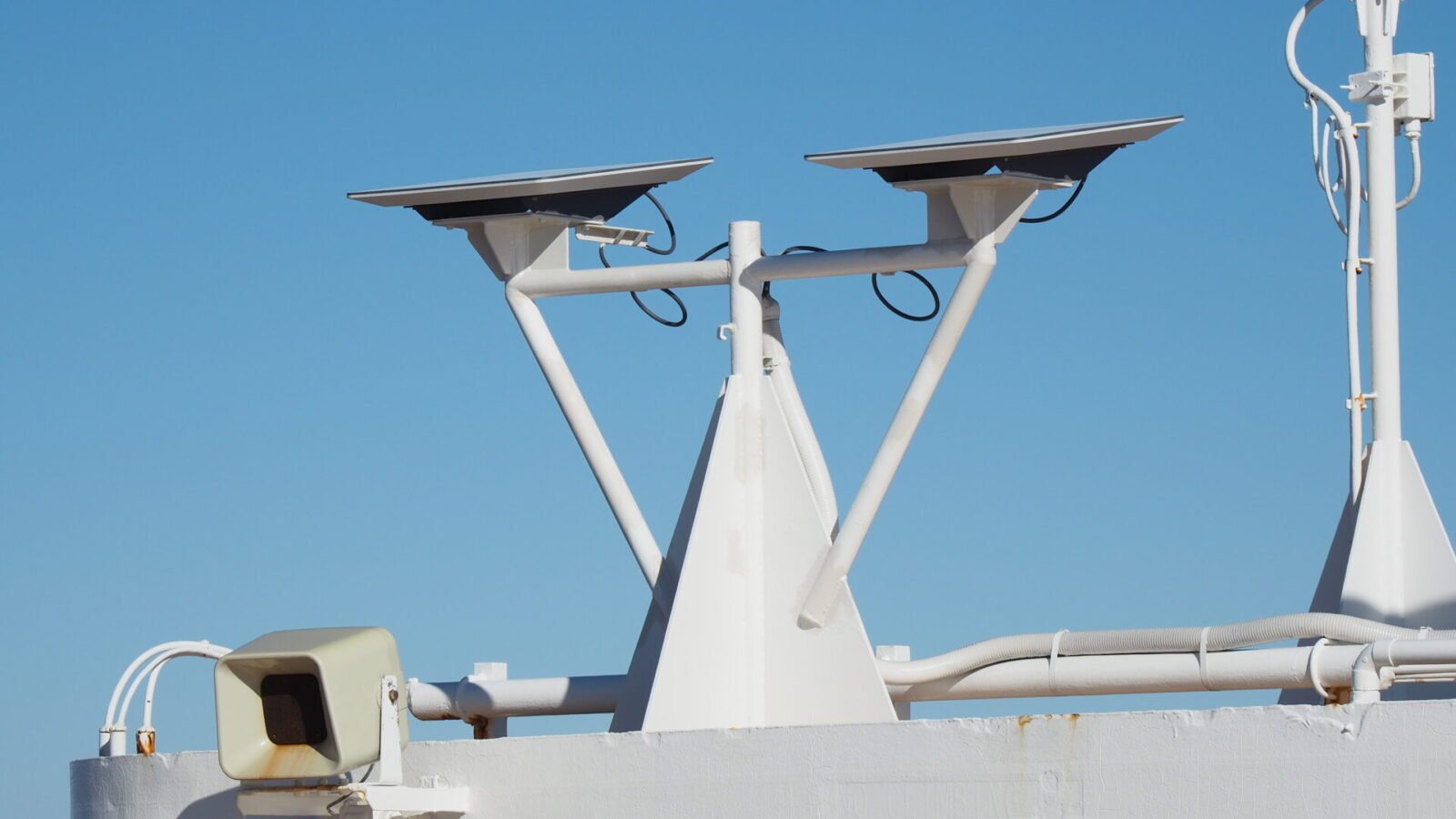
Featured photograph: Actual Starlink satellite internet user terminals aboard a ship, photographed January 11, 2025. Ka23 13 / Wikimedia Commons, CC BY 4.0, unmodified. Used as contextual imagery of Starlink’s existing broadband hardware; these dishes are not Starlink direct-to-phone satellites or a depiction of negotiations with T-Mobile.