The Galileo Project reported commissioning three observing arrays near Las Vegas in an October 2, 2026 preprint. Its method uses observations from separated sites to estimate the positions of objects moving across the sky.
What the evidence shows
A single camera generally records direction but cannot establish distance without additional information. With observations from multiple locations, triangulation can help estimate range. The project reports testing its measurement system against aircraft data, a useful way to assess the pipeline with known targets.
What remains uncertain
A successful measurement of ordinary aircraft does not establish the origin of every unidentified object. Weather, detection geometry, calibration, object identification and coverage affect future interpretations. The preprint is preliminary.
The Apep Bar question
For UAP research, reliable distance estimates could be more revealing than dramatic footage. This project shows how a question can become experimentally testable.
Sources
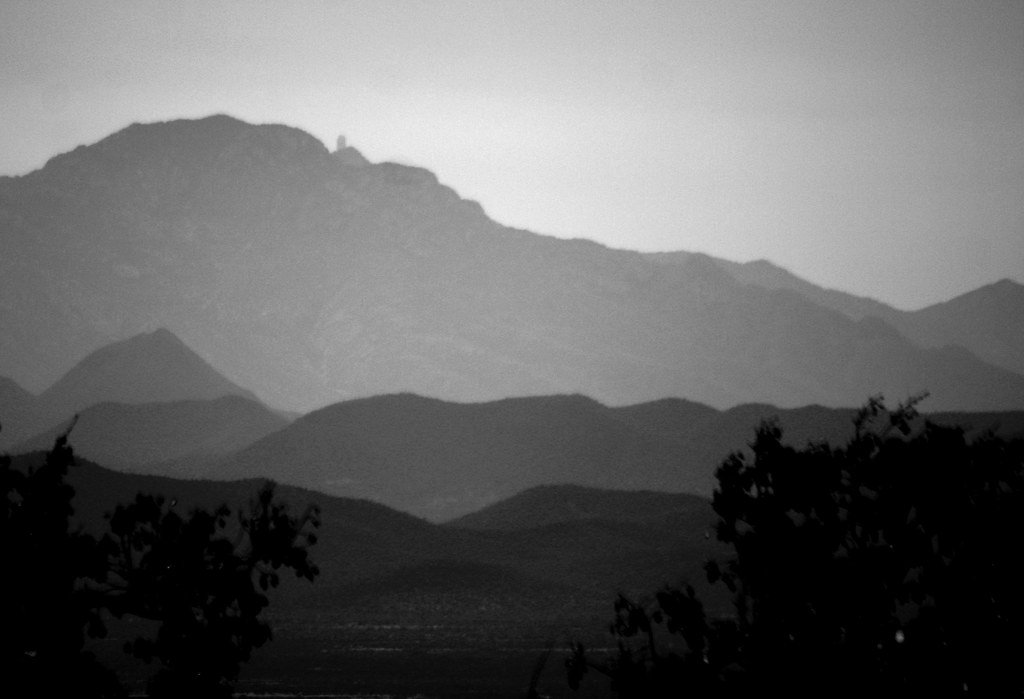
Featured image: Kitt Peak National Observatory seen from afar; contextual ground-based observing facility, not the Galileo Project array. "Kitt Peak National Observatory, from afar" by kevin dooley is licensed under CC BY 2.0. To view a copy of this license, visit https://creativecommons.org/licenses/by/2.0/.