Imagine needing help, asking the smart speaker on the counter to call 911, and hearing that it cannot. That is the unsettling premise of a viral account about a woman who reportedly sought help during an assault. The personal story is not independently verified. The technical limitation behind it, however, appears in Amazon’s own product documentation.
In this case, the difference between a viral claim and a documented product rule is not a footnote. It is the story.
A disturbing allegation, told secondhand
Attack of the Fanboy reported on November 12, 2026, that a TikTok creator identified as Mia discussed a video made by another woman. According to that retelling, the woman said an ex-partner had assaulted her and that Alexa declined to call 911 because an emergency subscription was not active. Mia also described having heard Alexa decline a 911 request in an unrelated situation at home.
Those are reported claims—not independent findings. The cited story does not supply a verified device log, an authenticated recording of the alleged emergency exchange, a police report or a first-person interview corroborating the circumstances. The device model, account settings, linked-phone services and any configured emergency contact are unknown. The assault allegation deserves care, not sensational certainty.
There is nevertheless a separate question we can answer with primary sources: what would Alexa normally do if somebody asked it to call 911?
What Amazon actually says about 911
Amazon’s Alexa and Alexa Device FAQs say that standard Alexa Communication does not support calling 911 by default. Amazon’s Alexa terms further explain that this calling feature is not a replacement for conventional telephone service or a means of reaching emergency services.
Alexa can make routine calls to many numbers. A 911 call is different. Some separately linked telephone services or specific calling configurations can enable emergency calling, according to Amazon, so the correct statement is “not supported by default,” not “impossible on every Alexa device under every configuration.”
The paid service is not direct 911 dialing
Amazon’s paid Alexa Emergency Assist offers access to an Urgent Response agent when an eligible subscriber says “Alexa, call for help.” The agent can then request the dispatch of police, fire or ambulance services. Amazon expressly states that the offering is not a 911 service.
Its instructions outline requirements: an active subscription, valid emergency address, verified phone number, a supported device and a working connection. Emergency Assist does not automatically dispatch responders. A person normally needs to explain the emergency to the agent, who can pass information to dispatchers. Amazon also warns that outages affecting power or the internet can make the service unavailable.
The TikTok account relayed a specific monthly amount. That figure was not independently established in the reporting as the current price, and it should not be confused with confirmation of what an actual device said during the alleged attack. The substantiated distinction is between regular Alexa calling and the separately purchased agent-assisted service.
What about Alexa’s emergency contact?
There is a significant third option. Amazon allows users to designate an emergency contact in the Alexa app. With that contact already configured, certain requests for help can prompt Alexa to attempt a phone call and text to the trusted person.
That is not the same as contacting 911. The person receiving the alert would need to respond and, if necessary, seek emergency assistance. A missed call, outdated number or failed internet connection can defeat the plan. We do not know whether the woman in the viral allegation had set up such a feature.
So there are three different experiences a customer might confuse: asking a standard Alexa system to dial 911; using a paid Emergency Assist subscription to reach an agent; and asking Alexa to alert a preconfigured personal contact. They are not interchangeable, and one phrase does not guarantee the same result on every account.
When the fine print becomes a safety issue
Emergency communications require more than a voice interface. Reliable location and callback information matter, and regulated emergency-calling services operate under obligations different from a consumer voice assistant. That does not resolve the practical consumer problem: people often learn the limits of a technology precisely when they can least afford a surprise.
Amazon’s policies are available to read. But the ethical question is whether the limitation is unmistakable to a purchaser before an emergency. A speaker that is useful for shopping, lights, reminders and calls can invite an assumption that it will place the most important call of all. That assumption may be wrong.
Could setup screens explain the 911 limitation more prominently? Should an unsupported 911 request trigger the clearest available instructions for seeking immediate help? Are customers adequately informed about the distinction between a service that contacts a response agent and a direct connection to a 911 operator? These are questions about product design and expectations, not proof of wrongdoing in the unverified incident.
What Echo owners can do now
- Keep a dependable way to call emergency services. Amazon itself advises using a mobile, landline or other service for 911 rather than relying on regular Alexa Communication.
- Check whether an emergency contact is configured. Follow Amazon’s setup guide, confirm the number and make sure that person understands the arrangement.
- For paid Emergency Assist, verify device compatibility and test the service appropriately. Amazon provides a dedicated test command. Do not make a real 911 call simply to test your configuration.
- Plan for power and internet disruptions. A cloud-connected speaker can be unavailable when either fails.
For anyone experiencing intimate-partner violence, the National Domestic Violence Hotline offers support and safety-planning resources in the United States at 800-799-7233 or by texting START to 88788. In immediate danger, use a functioning phone to call 911 when safe to do so. The hotline is not an emergency-dispatch service.
Watch: Amazon explains Emergency Assist
Amazon published its introduction to Alexa Emergency Assist on September 20, 2023. This is a company promotional explainer, not footage or corroboration of the alleged assault.
What we know—and what we don’t
Established: Regular Alexa calling excludes 911 by default; an agent-assisted emergency subscription exists; a separately configured personal emergency-contact feature exists; and these options have different limits.
Not established: The specific alleged assault, the exact words spoken by a device during that incident, the account’s settings, and whether another call route was available.
The question raised by the story survives even without treating the viral narrative as proven: when technology can hear a plea for help, how clearly must it explain what it cannot do?
Primary documents and reporting
- Attack of the Fanboy — report about the viral claim (November 12, 2026)
- Amazon — Alexa Communication FAQs
- Amazon — Urgent Response FAQs
- Amazon — What Is an Alexa Emergency Contact?
- Amazon — Alexa Terms of Use
- National Domestic Violence Hotline — support resources
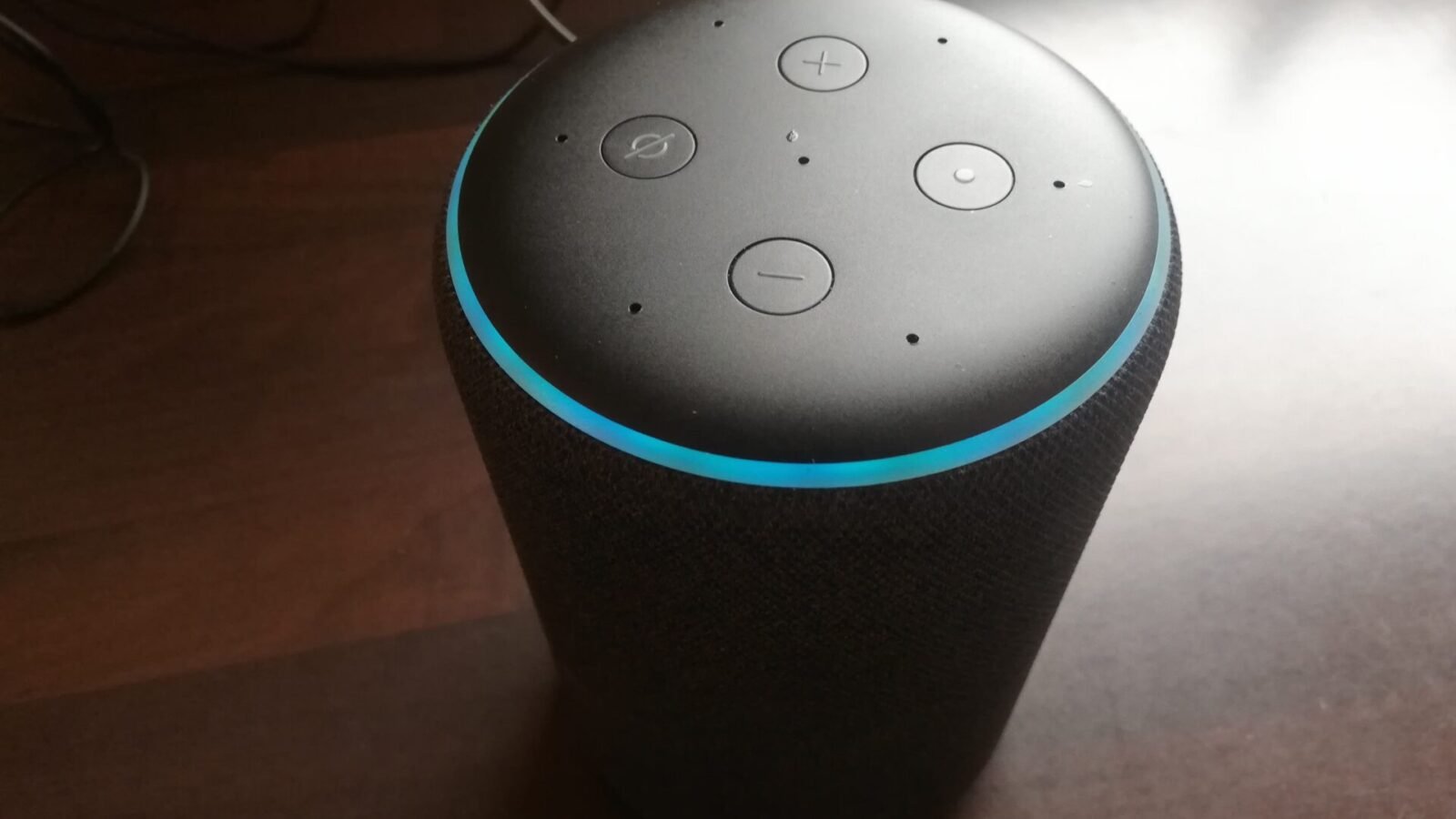
Featured image: “Alexa Amazon Echo Smart Speaker – Flashing Blue Ring” by Smart Home Perfected, CC BY 2.0. An actual photograph of an Echo speaker, used for context; it does not depict the alleged incident.