NEWS ANALYSIS | By Lotta Goddess | November 14, 2026
A federal proposal framed as a fix for SNAP eligibility would, by the government’s own estimates, cut off millions from grocery benefits while pushing more families through new paperwork. Here is what the proposal actually says—and what it does not.
A rule sold as a way to stop unusually wealthy households from collecting food assistance comes with a startling number in its own paperwork: 6.3 million people. That is how many Americans the U.S. Department of Agriculture estimates would no longer receive Supplemental Nutrition Assistance Program (SNAP) benefits once its proposed eligibility changes reach their full effect in fiscal year 2029. The agency also projects knock-on consequences for school meals and another layer of work for state benefit offices.
The rule, published November 10, 2026, is a proposal, not an enacted cutoff. Its public-comment period runs through December 10. The details are laid out in USDA’s November 10 proposal and the Federal Register text, 91 FR 72454. Treating the projected losses as benefits already terminated would misstate the facts—and obscure the debate about what comes next.
What USDA wants to change
The disputed policy is broad-based categorical eligibility (BBCE). Today, many states use eligibility for certain services funded through Temporary Assistance for Needy Families (TANF) to simplify the process of qualifying for SNAP. A household may be treated as having cleared specified income and asset tests, rather than being assessed again against each federal SNAP limit.
This does not mean anyone with a TANF-related document automatically receives an unlimited food allowance. SNAP still calculates benefits based on a household’s circumstances, and categorical eligibility cannot override several nonfinancial restrictions. What BBCE changes is which financial screens the household must pass to qualify in the first place.
Under the new proposal, a household could qualify categorically through TANF only if it actually receives TANF ‘assistance’ as defined in federal regulations—typically ongoing support for basic needs, including certain qualifying noncash supports. Receipt of other TANF-funded services or nominal benefits would no longer be enough. USDA would also remove some language treating people merely ‘authorized to receive’ benefits as categorically eligible.
As a result, many households currently using BBCE would face separate federal SNAP income and resource tests. They might still qualify under those tests; households that exceed the applicable limits would not. That is the core policy change—not an outright abolition of SNAP or a ban on TANF recipients.
Where the 6.3 million figure comes from
USDA’s economic assessment estimates that 3.2 million households containing 6.3 million people, equal to about 17.6% of SNAP participants in its projected base, would no longer receive benefits in FY2029. The department also reports that, in its FY2024 data, about 5.4 million people lived in households exceeding the federal resource limit and 2.0 million lived in households above the federal gross or net income limits. Those groups overlap; the two numbers should not be added to claim 7.4 million separate people. All these figures are estimates in the Federal Register text, 91 FR 72454, not a live tally of disenrollments.
For perspective, USDA’s fiscal 2025 SNAP statistics show that SNAP supported an average of 42.1 million people per month in fiscal year 2025. That is a historical annual average, not a contradictory count of people enrolled in November 2026; participation can change as separate laws, economic conditions and eligibility rules take effect.
The case for tightening eligibility—and the question it leaves unanswered
USDA argues that Congress intended categorical eligibility to reduce duplicate screening for people already established as needy, not let states set much higher income or asset thresholds. The proposal points to differences among state rules, federal oversight findings and examples in which a household with very substantial assets and little reported income could qualify. It describes the change as a way to apply more uniform standards and protect public money.
Those are real administrative and program-integrity questions. A household with substantial readily available assets is different from a family living paycheck to paycheck, and policymakers can debate where resource limits should fall. But a striking anecdote about an affluent claimant is not, by itself, proof that the millions projected to lose benefits resemble that claimant.
In his New Jersey Monitor commentary, columnist Terrence T. McDonald calls the proposal ‘inhumane.’ That is his opinion, not a finding of the federal rule. The New Jersey Monitor’s separate news report separately describes local advocates’ concern that another round of income and asset checks could create delays and denials for households already navigating complex programs. The key empirical question is who would be disqualified by the proposed thresholds—and whether the policy’s savings justify the resulting losses and new screening costs.
The effects do not stop at the grocery store
Other nutrition programs use SNAP enrollment as a shortcut to determine eligibility. USDA’s rulemaking acknowledges that changing who receives SNAP can therefore ripple into school cafeterias and other feeding programs:
- School meals: about 1.78 million children would cease to be categorically eligible for free meals. USDA estimates roughly 1.66 million could still receive free meals after another eligibility process, approximately 93,000 could move to reduced-price meals, and around 28,000 could pay full price.
- Summer EBT: USDA projects roughly 42,000 children could potentially stop receiving summer food benefits beginning in 2029; the estimate includes eligible children who may not complete a new application.
- WIC: approximately 5,500 women, infants and children now qualifying through the affected categorical route are projected to lose eligibility, while many others would remain eligible by applying through another path.
That school-meal distinction matters. Saying 1.78 million children would instantly lose all access to a meal would be inaccurate. Saying that needing a second application introduces no risk would be equally unwarranted. Eligibility on paper and successful enrollment in practice are not identical.
How much money—and paperwork—is at stake?
Over fiscal years 2027–2031, USDA forecasts approximately $44.649 billion less in federal SNAP benefit spending under the proposal. Its analysis also estimates $928.5 million in additional state administrative costs over those five years, alongside other shifts in federal and state spending. It expects states to verify resources for more applicants and some to modify systems, forms and staff procedures. These are the agency’s projections, not audited future results; the final implementation and its real-world costs could differ.
There are competing interpretations of this tradeoff. Supporters see a more consistent income-and-asset test and reduced spending on households above the federal limits. Critics argue that tighter thresholds can also affect working households with high living costs, modest savings or changing incomes, while adding friction for eligible applicants. Neither side’s rhetoric settles how accurately the new screening would identify need.
New Jersey offers a glimpse of the potential scale: the New Jersey Monitor’s separate news report says the state’s SNAP caseload includes roughly 430,000 households, and cites a federal estimate that more than 73,000 households there could be affected. The result will depend on a final rule, state administration and household circumstances—not a single immediate statewide purge.
A policy déjà vu—and a deadline
USDA proposed a different restriction on SNAP categorical eligibility in 2019; that proposal was withdrawn in 2021. The new 2026 proposal takes a related but not identical approach by tying automatic eligibility to the federal TANF definition of assistance. History therefore supplies a precedent for the argument, not proof that this version will become law unchanged.
The official federal rulemaking docket FNA-2026-0661 is open for public comments through December 10, 2026. The department says commenters may address alternative approaches, the administrative burden and the effects of the policy. Submissions become part of a public record and can disclose a commenter’s identity, so that warning should be read before filing.
Apep Bar recently examined how stories about individual welfare cheats can distort discussion of a huge national program, while genuine fraud and theft still require scrutiny: see our Apep Bar investigation into welfare-fraud mythology and real SNAP abuses. This new proposed rule asks a narrower but harder question: should eligibility for food assistance be measured chiefly by a federal asset and income test, or can state flexibility better account for the lives of the people applying?
Sources and further reading
- USDA’s November 10 proposal; Federal Register text, 91 FR 72454 (docket FNA-2026-0661; estimates and regulatory impact analysis).
- New Jersey Monitor commentary by Terrence T. McDonald, November 13, 2026; New Jersey Monitor’s separate news report by Lilo H. Stainton, November 13, 2026.
- USDA’s fiscal 2025 SNAP statistics; federal rulemaking docket FNA-2026-0661 for comment instructions and public filings.
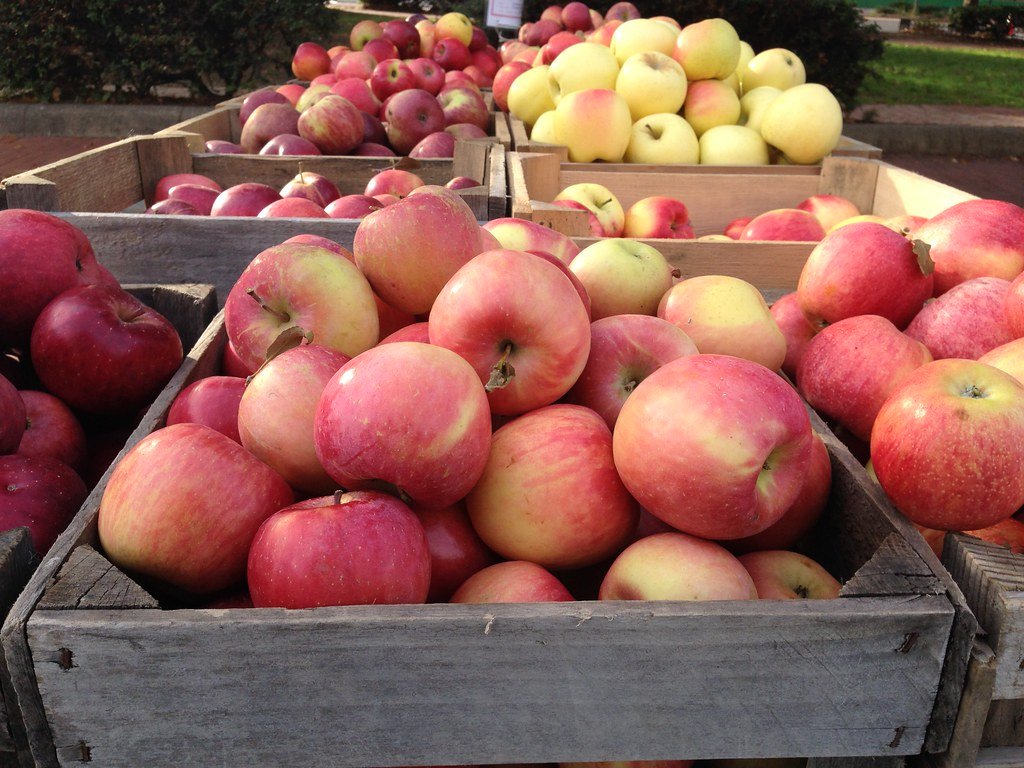
- Featured image: Apples at Washington, D.C.’s Bloomingdale Farmers Market, November 2014. USDA photograph by Lance Cheung, the USDA’s original photograph, U.S. federal government public domain; market accepted SNAP EBT. Contextual archival photograph, not an image of a person affected by the 2026 proposal.