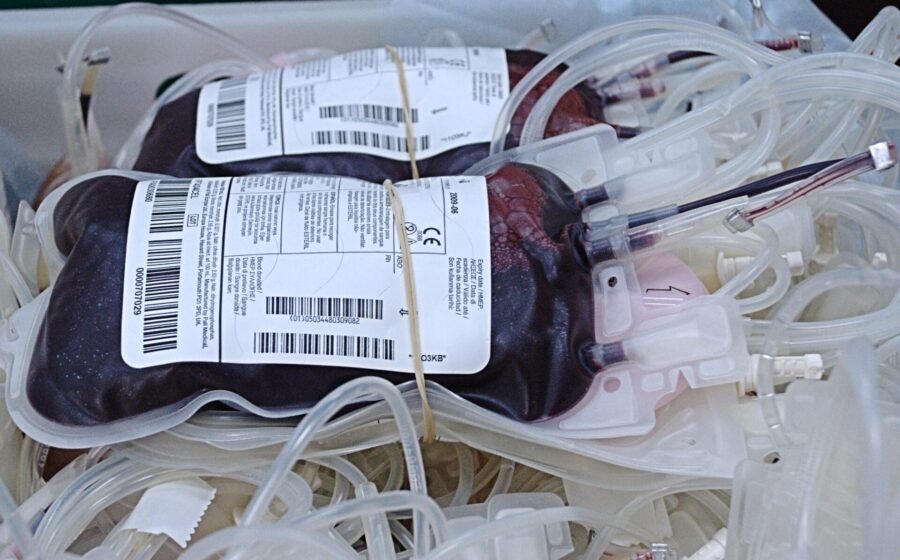
From hormone-disrupting chemicals to microscopic plastic particles, researchers are investigating what happens when food comes into contact with plastic. But how dangerous is your everyday storage bag—and which warnings are actually supported by evidence?
Featured image: Real close-up photograph of food wrapped in plastic by Jael Coon / Unsplash, Unsplash License. Contextual photograph—not testing of Ziploc bags.
You open the refrigerator, reach for last night’s leftovers, and find them in a familiar transparent plastic bag. Perhaps it is spaghetti, salmon, chopped vegetables, or a homemade marinade. Nothing unusual. But while food is stored, processes invisible to the eye may occur: some chemicals can migrate from packaging into food, and certain plastics can shed particles.
Both phenomena are documented. Whether the quantities released during ordinary household use cause disease is another question. The answers are more complicated than either an alarming headline or a reassuring product label.
A consumer article by The Thrifty Apartment, “9 Things You Should Never Store in Ziploc Bags”, prompted this deeper examination. Its complete nine-item list could not be independently retrieved; the nine scenarios below are an original, evidence-based guide, not a reproduction of that list.
Two Different Problems: Chemical Migration and Plastic-Particle Release
Chemical migration occurs when substances move out of food-contact materials and into food. Microplastic shedding occurs when the material releases small plastic fragments or particles. These processes are distinct: a product can release particular substances without visibly deteriorating, or shed particles without demonstrating a toxic chemical dose.
Conventional resealable food-storage bags are usually based primarily on polyethylene, especially low-density polyethylene (LDPE). Their formulations can differ. Processing aids, stabilizers, manufacturing residues, and breakdown products are relevant to chemical testing, but finding a substance does not by itself establish that the dose is harmful. The FDA explains that migration is considered in the evaluation of food-contact substances.
Four factors matter most: temperature, contact time, the food’s composition (including fat and acidity), and the product’s actual condition and intended use. A freezer bag designed for refrigerated sandwiches is not automatically a cooking bag.
What a 2023 Laboratory Study Actually Found
In a 2023 Environmental Science & Technology study, researchers tested several plastic food containers and a reusable food pouch using water and dilute acetic acid as food simulants. Three minutes of microwave heating produced the highest particle release in certain tests: as many as 4.22 million microplastic particles and 2.11 billion nanoplastic particles per square centimeter of tested plastic surface. Some particle release also occurred in prolonged ambient and refrigerated storage experiments.
The polyethylene-based pouch released more particles than the polypropylene containers in some conditions. Investigators also studied effects on cultured human kidney cells, but high-dose laboratory cell exposure is not a diagnosis of human disease.
Critical limit: the researchers did not test every Ziploc product. Their maximum experimental particle counts must not be presented as what every household bag releases, and particle detection does not establish a toxic human dose.
Nine Food-Storage Situations Worth Reconsidering
1. Boiling food in an ordinary polyethylene bag
The manufacturer’s Ziploc FAQ explicitly distinguishes conventional polyethylene storage bags from its heat-rated silicone Endurables. It says conventional bags should not be used for boiling-water sous-vide cooking. A bag need not visibly melt to exceed the circumstances for which its performance was evaluated. Better approach: use pots, pans, or bags specifically rated for the temperature and cooking method.
2. Prolonged microwave cooking or very hot, fatty foods
Some Ziploc bags are labeled for microwave defrosting and reheating, but this is not permission for every kind of cooking. Ziploc instructs users to vent the zipper and exercise caution with fatty and sugary foods, which can become particularly hot. The 2023 study supports avoiding unnecessarily high heat in unsuitable plastics, but it does not show that one proper microwave reheating causes harm. Better approach: transfer food to microwave-safe glass or ceramic dishes when convenient; otherwise follow the exact bag instructions.
3. Piping-hot soup, stew, or sauces
Pouring food straight from a stove into a thin storage bag exposes the material to high heat and creates a spill and burn hazard. Heat can influence migration for some materials and chemicals. However, do not leave perishable food sitting out for hours just to avoid warm plastic. Better approach: divide hot leftovers into clean, shallow, temperature-suitable containers and refrigerate promptly; use freezer-rated bags later, after chilling, if desired.
4. Oils, fatty marinades, and rich sauces
Some food-contact chemicals partition more readily into fat. That makes food composition a factor in packaging testing. But ordinary polyethylene generally does not need the phthalate plasticizers associated with certain flexible PVC products. It would be misleading to claim all oil stored in a polyethylene bag becomes contaminated by phthalates. Better approach: choose glass for long-term oil or oily-sauce storage, especially when convenient; brief refrigerated food-grade bag use is not automatically hazardous.
5. Vinegar, citrus, tomato sauce, and pickling liquids
Researchers often use dilute acetic acid to model acidic foods in migration tests. Acidity can matter, especially alongside heat and prolonged storage. It does not follow that ordinary vinegar dissolves polyethylene: polyethylene is generally chemically resistant to common food acids. Better approach: for extended pickling, acidic sauces, and fermentation, use containers rated for that purpose. Proper food-preservation instructions matter more than choosing glass alone.
6. Infant formula or baby food heated in improvised bags
The CDC advises preparing infant formula with clean, appropriate feeding equipment and warns not to microwave formula because uneven heating creates hot spots. Infancy is also a period of interest in research on endocrine-active exposures, but that does not prove every feeding plastic is dangerous. Better approach: use intended infant-feeding containers and follow public-health preparation and storage guidance.
7. Raw meat, poultry, and fish in bags intended for reuse
Food-grade freezer bags can be appropriate for raw meat. The better-established risk is bacterial cross-contamination from reusing them after raw meat, eggs, or fish. Better approach: keep raw foods separate, prevent leaks, clean food-preparation surfaces, and discard bags that have held these foods rather than reuse them for ready-to-eat food.
8. Bags previously used for detergents, pesticides, or household chemicals
A bag used to hold solvents, cleaners, pesticides, or other nonfood materials should never be repurposed for food. Residues can remain even when the bag looks clean; the material may also have been affected by its former contents. Better approach: reserve food-grade packaging exclusively for appropriate food use.
9. Long-term storage in damaged or non-freezer-rated bags
Sandwich and freezer bags are not identical. Thin bags may puncture more easily, allow dehydration, and contribute to freezer burn. Worn, heat-deformed, or damaged food-contact material should be retired. The claim that every scratched bag sheds a dangerous number of particles is not established. Better approach: use intact freezer-rated materials for freezing, remove excess air, and choose robust storage containers when appropriate.
BPA-Free Is Not the Same as a Full Chemical Inventory
BPA is associated particularly with certain polycarbonate materials and epoxy can coatings. The National Institute of Environmental Health Sciences discusses its endocrine-related properties. But typical polyethylene resealable bags are not polycarbonate, and SC Johnson states Ziploc bags are made without BPA. They are also not generally made flexible using the same phthalate plasticizers common in some PVC products.
A BPA-free label cannot establish that every possible constituent is benign, yet it is equally wrong to assume that a bag contains BPA or phthalates without product-specific analytical evidence. Chemical identity, exposure, and dose remain essential.
The Larger Food-Packaging Chemical Question
A 2024 review published in the Journal of Exposure Science & Environmental Epidemiology examined more than 14,000 known food-contact chemicals. Researchers found evidence in human biomonitoring studies or exposure databases for 3,601; among chemicals observed in biomonitoring programs, 80 had hazard properties of high concern. The authors emphasized large data gaps and the many possible sources of exposure.
Importantly, detection in a human sample is not proof the chemical came from one food wrapper, or that the concentration causes disease. The study nevertheless makes an unsettling point: the food-contact chemical landscape is much wider than the well-known BPA debate.
Plastic Particles in Arterial Plaque: A Warning, Not a Verdict
A 2024 New England Journal of Medicine study examined arterial plaque from 257 patients undergoing carotid surgery. Patients whose plaques contained detectable microplastics or nanoplastics experienced a higher rate of a composite endpoint involving heart attack, stroke, or death during follow-up (adjusted hazard ratio approximately 4.5).
This observational finding does not prove the particles caused their illness. The patients already had significant vascular disease, and the study did not establish the particles’ exposure sources. It certainly cannot show that ordinary Ziploc use causes heart attacks. It does, however, justify deeper research into plausible long-term consequences.
What Regulators Say—and What They Do Not Know
The FDA says current scientific evidence does not demonstrate that the levels of microplastics and nanoplastics detected in foods pose a human health risk. The agency also notes major gaps in identifying and measuring very small particles. This is a statement about the current strength of evidence, not a declaration that all plastic-related exposure is harmless.
| Question | Evidence-based answer |
|---|---|
| Can food packaging chemicals migrate into food? | Yes; migration is a recognized phenomenon considered in food-contact safety assessments. |
| Can some heated plastic containers shed microplastics? | Yes; product-specific laboratory studies have demonstrated particle release. |
| Are all Ziploc storage bags BPA products? | No. The manufacturer says its bags are made without BPA. |
| Does detecting particles in the body prove they caused disease? | No. Observational findings cannot establish causation without stronger evidence. |
| Is proper cold storage in food-grade bags proven to be toxic? | No such general conclusion is established. |
| Should every plastic item be discarded? | No. Targeted precautions and appropriate use are more defensible than panic. |
The Practical Kitchen Guide
| Food or activity | Reasonable approach |
|---|---|
| Dry foods and packed sandwiches | Use appropriate food-grade bags as directed. |
| Frozen fruit, vegetables, or raw meat | Use freezer-rated bags or freezer-safe containers; prevent leaks and cross-contamination. |
| Freshly cooked soup or chili | Portion into shallow heat-suitable containers and chill promptly. |
| Oily dressings, sauces, and long-term marinades | Consider glass, particularly for extended contact. |
| Pickling and fermentation | Use suitable rated jars and established preservation methods. |
| Microwave reheating | Prefer microwave-safe glass or ceramic; follow directions for any microwave-labeled plastic bag. |
| Boiling or sous-vide cooking | Use cookware or purpose-rated cooking bags, not ordinary polyethylene storage bags. |
| Infant formula | Use proper infant-feeding equipment and CDC preparation guidance. |
| Previously used chemical bags | Never repurpose for food. |
The Environmental Bill Comes Later
Plastic food packaging also has an environmental life: production, energy demand, disposal, and fragmentation after waste escapes collection. Durable, reusable containers can reduce repeated disposable purchases, but manufacturing and cleaning also have footprints. Discarding every usable plastic object immediately is not necessarily the most environmentally responsible choice.
For a practical approach that reduces household plastics without a costly purge, see Apep Bar’s earlier investigation: How to Go Plastic-Free Without Throwing Everything Away: 14 Practical Steps and Their Benefits.
The Unanswered Questions
How much exposure comes from storage bags compared with drinking water, air, processing equipment, and other packaging? Which particle sizes are absorbed? What are the effects of chemical mixtures, aging, repeated heating, and chronic low-dose exposure? Can studies trace real-world disease risks to specific products rather than merely detect particles? Better methods, independent product testing, and transparent formulations are all part of the answer.
The Bottom Line: Convenience Has Conditions
Resealable bags reduce food waste and make freezing and food preparation easier. But a useful product is not suitable under unlimited circumstances. Avoid boiling or prolonged cooking in ordinary polyethylene bags; reduce unnecessary high-heat contact; avoid reusing bags that held raw meat or chemicals; and replace damaged products.
The evidence supports sensible exposure reduction without suggesting that every bag or every sandwich poses a proven toxic threat. If packaging is meant to protect our food, what should manufacturers be required to disclose about what that packaging can contribute over its useful life?
Question. Investigate. Reconsider.
Primary Research, Guidance and Further Reading
- The Thrifty Apartment, “9 Things You Should Never Store in Ziploc Bags” (NewsBreak reference; full list not independently retrieved)
- Hussain et al. (2023), microplastics and nanoplastics released from food containers and reusable pouches
- Geueke et al. (2024), evidence for widespread exposure to food-contact chemicals
- Marfella et al. (2024), micro- and nanoplastics in atheromas and cardiovascular outcomes
- U.S. FDA, Microplastics and Nanoplastics in Foods
- U.S. FDA, Food Packaging and Food-Contact Substances
- Ziploc, official bag-use and microwave/sous-vide guidance
- NIEHS, Bisphenol A background
- CDC, Infant Formula Preparation and Storage
- CDC, Preventing Food Poisoning
Editorial note: This is an evidence-based consumer science investigation, not an independent laboratory analysis of Ziploc products. Scientific findings on specific tested products should not be generalized to every brand or use condition. No video is included because a directly relevant, independently verified clip was not established.