APEP BAR | Question. Investigate. Reconsider.
The file that does not need an invented backstory
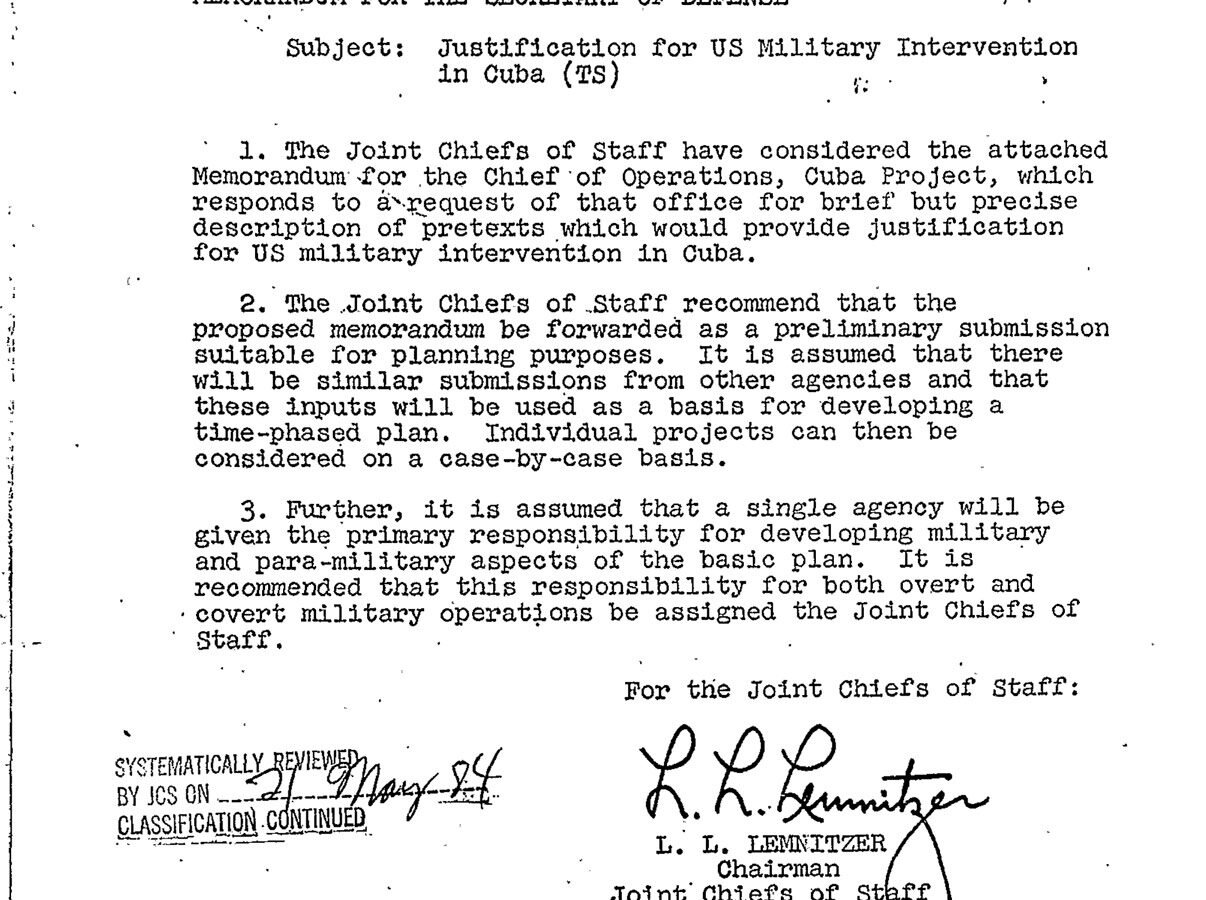
Sometimes the most unsettling material is already in an official archive. On March 13, 1962, the chairman of the Joint Chiefs of Staff forwarded a top-secret memorandum titled ‘Justification for US Military Intervention in Cuba.’ It contained proposals for manufactured incidents that could be blamed on Cuba and used to build public support for American military action.
This was no anonymous Internet document. The National Security Archive at George Washington University hosts the declassified record and explains how it emerged through the Kennedy assassination records review process decades after it was written. The proposals are often grouped under the name Operation Northwoods.
What was proposed
The document contemplated scenarios including a staged attack on an American ship, incidents involving Cuban refugees and a simulated shootdown of a civilian airliner. The objective was to place the United States in the apparent position of reacting to Cuban aggression. The memorandum reveals how far a set of planners was willing to go in discussing political justification for intervention.
The context matters. The Bay of Pigs invasion had failed in 1961, covert action against Fidel Castro’s government was continuing, and U.S.-Soviet tensions were escalating. The proposed pretexts belong to that perilous Cold War decision-making environment.
An authentic plan is not proof of execution
There is a difference between a recommendation, an approved order and an operation actually executed. The Northwoods document is evidence that senior officers proposed such acts; it is not evidence that the simulated airliner or ship incidents were carried out as described. The plan was not implemented. Treating any subsequent tragedy as ‘Northwoods confirmed’ without a separate evidentiary chain takes a legitimate document and asks it to prove what it cannot.
The case provides a useful test for skepticism. Official institutions can generate shocking proposals. Declassification can verify those proposals. But honest investigation must still check whether a proposal passed into action. If an archive can expose an abandoned plan, what other records would be required before alleging an actual attack?
Primary records and further reading
- National Security Archive: Joint Chiefs memorandum, March 13, 1962
- National Security Archive: document and context
Featured photograph: archival-style document folders by Beatriz Pérez Moya / Unsplash; illustrative, not a photograph of the Northwoods memo.
Featured photograph/document: Actual declassified first page of the Joint Chiefs of Staff memorandum ‘Justification for U.S. Military Intervention in Cuba’ dated March 13, 1962. U.S. federal government document, public domain. Source: National Security Archive / Wikimedia Commons. Image source and license.