October 30, 2026 | Apep Bar — Question. Investigate. Reconsider.
For much of the world, ports are where cargo becomes commerce. Today, in a coordinated action stretching across five continents, some dockworkers are asking a different question: what happens when the people who move the world’s goods decline to move the machinery of war?
On Friday, October 30, unions are taking part in an international day of strikes, work stoppages and demonstrations in solidarity with Palestinians and against the transport of arms through civilian ports. Italy’s USB union says more than 25 unions are involved across 113 ports in 22 countries. The International Transport Workers’ Federation, using an earlier tally, reported more than 100 ports in 17 countries. Those figures describe the movement’s reach—not confirmation that all participating ports shut down.
The action is also about wages, workplace safety, job security and resistance to certain automation plans. In short, it brings geopolitics directly onto the loading dock.
What happened at the ports today?
According to Associated Press reporting on October 30, France’s ports and docks federation called a one-day strike at several major ports, including Marseille and Le Havre. Dockworkers demonstrated in Turkey, while Greece’s Piraeus port saw labor action and protests. A separate Greek seafarers’ strike over working conditions also disrupted ferries. In Italy, port protests coincided with a broader general strike, though government intervention limited some transport disruption.
Actions differ sharply by location: some unions announced 24-hour walkouts, others shorter stoppages, pickets or solidarity rallies. Organizers describe one coordinated day; they do not claim that every container terminal worldwide has stopped. Shipping experts quoted by AP expect limited effects on global trade overall, though port-specific delays are possible.
The slogan is blunt: “Dockworkers do not work for war.” In the World Federation of Trade Unions’ August call, the participating unions framed the campaign as an opposition to war and militarization alongside a demand for dignified employment. The International Transport Workers’ Federation, in a statement issued October 28, explicitly linked military cargo, Palestinian rights, wages and automation.
Why a port is more than a port
War depends on physical systems: ships, terminals, containers, cranes, fuel, insurance, manufacturing and workers who connect them. An arms sale on paper is not the same thing as equipment arriving at its destination. Maritime labor can, at particular points, interrupt that passage. But not all weapons travel by sea, not all cargo is military, and a one-day stoppage is not equivalent to halting an entire arms trade.
That distinction is important. A Reuters report on October 29 described organizers’ expectations for the action but emphasized uncertainty about participation and the amount of disruption. The dramatic prospect of a global shutdown remains a claim to test against actual port operations.
American weapons exports provide another way to understand the stakes. The Stockholm International Peace Research Institute’s March 2026 data estimate that the United States supplied 42% of the global volume of international transfers of major arms in 2021–2025. That is a share of SIPRI’s measured major-weapons transfers, not a statement that $238 billion in physical weapons was shipped annually through ports.
There is a history behind this refusal
Today’s dockworkers did not invent political action at the waterfront. Labor historian Peter Cole traces earlier campaigns in which waterfront workers refused to handle cargo associated with fascist regimes, military intervention and racial apartheid. In the late 1930s, San Francisco longshore workers supported Chinese communities protesting Japan’s invasion of China; in 1978, West Coast dockworkers challenged military cargo intended for Augusto Pinochet’s Chile. In 1984, San Francisco dockworkers refused to unload South African cargo in an anti-apartheid action.
Cole’s “Scrap Iron Becomes Bullets” essay and his October 28 analysis in Jacobin place the current mobilization within that longer history. Historical analogies are illuminating, but they do not guarantee that today’s action will achieve the same political consequences.
In Genoa, that past is also the subject of art. Hajra Waheed’s HUM III: From Port to Port, A Sonic Convening, running from September 18 to November 5, explores dockworker solidarity and anti-war organizing through sound and public programs. Its central idea is that ordinary infrastructure can become a contested political space.
Sally Rooney, the Irish shopworkers and the power of refusal
Author Sally Rooney made the connection in a speech at the People’s Congress for the Hague Group in Amsterdam, published by Progressive International in March 2026. She recalled Mary Manning, a Dublin supermarket employee who refused to handle South African grapefruit in 1984 and became part of a lengthy anti-apartheid labor campaign.
Rooney said those workers’ actions helped inform her own decision in 2021 to join the Boycott, Divestment and Sanctions (BDS) movement and decline work with Israeli organizations she regards as complicit in apartheid. This is Rooney’s stated political judgment; BDS is a Palestinian-led boycott movement whose campaigns focus on particular institutions and forms of alleged complicity. Rooney’s argument is that international solidarity can move beyond statements into practical decisions at work.
Her speech is available in full from Progressive International. The clip below is a related excerpt, not an October 30 strike report.
The question critics and organizers disagree on
Organizers see the dockworkers’ action as a direct challenge to war-related logistics and a demonstration of cross-border labor power. Their critics and shipping specialists may question the proportionality, legal risks, economic costs or effectiveness of stopping civilian port work, particularly when cargo is unrelated to military shipments.
The measurable questions are more precise than any slogan: Which terminals stopped? For how long? Were identifiable military shipments delayed or refused? What did workers gain or risk? And will today’s networks still exist when the cameras move on?
Scholar Rafeef Ziadah’s 2026 research on labor internationalism asks how solidarity campaigns can move beyond isolated actions toward sustained organization. That may prove the larger test here—not whether October 30 makes headlines, but what happens after October 30.
Where to look beyond the headlines
- WFTU: Second International Day of Action of Dockworkers — organizers’ statement and demands.
- International Transport Workers’ Federation — participating affiliates and union position.
- Associated Press and Reuters — independent reporting on the actions and uncertainties.
- A 2025 appeal attributed to workers in Gaza — background to the labor solidarity campaign.
- SIPRI 2026 data — international arms transfers.
- Rafeef Ziadah’s scholarly article and Peter Cole’s labor history — context and analysis.
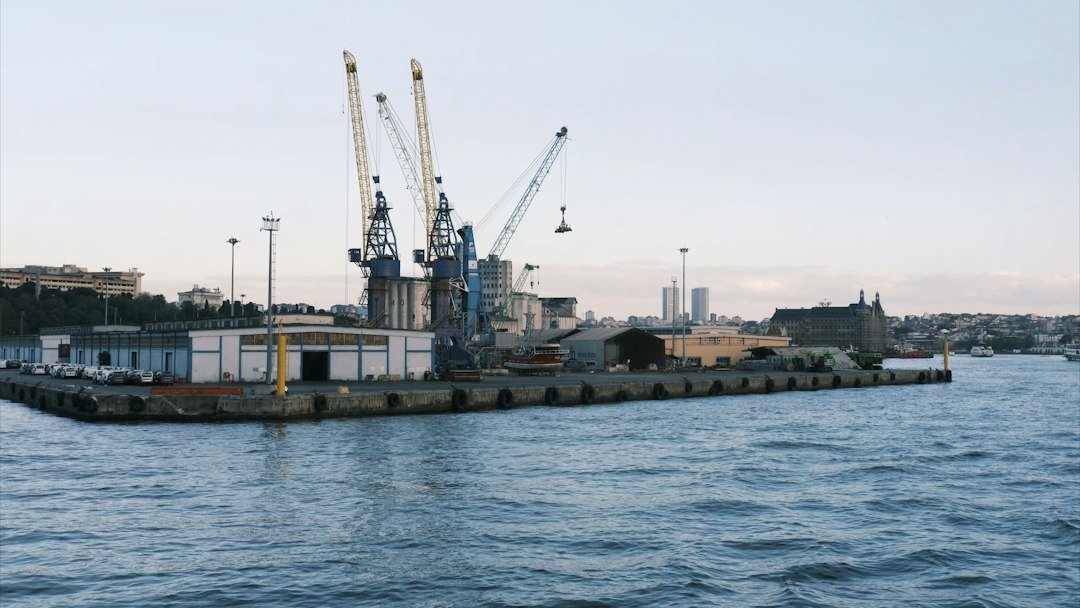
Editor’s note: This report distinguishes confirmed actions from organizers’ projections. Counts of participating ports and countries reflect organizational statements; actual port-level disruptions may vary. Videos were supplied as source material and are presented with their context. Featured image, if shown, is illustrative rather than a photograph of the October 30 strike.
Question. Investigate. Reconsider. If the supply chain makes modern war possible, how much political power should the people operating that chain be able to exercise?