HIDDEN HISTORY / POWER & INFLUENCE — OCTOBER 28, 2026. The reader’s video is titled “All Hail Ma.” After clarification, its subject is Chinese leader Mao Zedong—not the similarly named historical Chinese blade. The phrase invites a wider historical question: why did Mao become an object of political veneration, and how should that legacy be weighed against the documented human costs of his rule?
Who was Mao Zedong?
Mao Zedong (1893–1976) was a founding leader of the Chinese Communist Party and the central political figure in the establishment of the People’s Republic of China in 1949. His leadership followed decades of war, Japanese invasion and conflict between Communists and Nationalists. Mao’s name became attached not only to a government but also to an ideology, an international revolutionary movement, and an immense cult of political personality.
The revolution and founding of the People’s Republic
After the Communist victory in China’s civil war, Mao proclaimed the People’s Republic of China on October 1, 1949. His supporters associate that transition with national reunification, the end of prolonged warfare in much of the country, challenges to old hierarchies and the assertion of Chinese sovereignty. The Communist victory also established a one-party political system and led to repression of opponents, land-confiscation campaigns and extensive state control.
Why “All Hail Mao” is a historically loaded phrase
Mao’s image, quotations and writings became central to a state-supported political culture. Portraits hung in public spaces; loyalty rituals and mass rallies cultivated personal devotion. The title “All Hail Ma,” supplied with the reader’s Short, can be understood as a reference to that phenomenon. But the full dialogue of the Short was not available to verify whether its creator was praising Mao, satirizing his followers, or discussing his legacy. This article makes no unsupported claim about the speaker’s intent.
The Great Leap Forward and famine
Beginning in 1958, Mao’s Great Leap Forward promoted rural people’s communes and dramatic increases in agricultural and industrial production. Unrealistic targets, distorted production reporting, coercive procurement and policy decisions collided with other conditions, producing a catastrophic famine. Historians’ estimates of excess deaths differ substantially, often falling in the tens of millions; an exact universally accepted count does not exist. The scale of suffering is nevertheless widely established by historical scholarship.
The Cultural Revolution, 1966–1976
Mao initiated the Cultural Revolution in 1966 amid struggles over ideology, authority and control of the Communist Party. Mass campaigns mobilized youth, denounced alleged political enemies, disrupted schools and government institutions, and contributed to persecution, imprisonment, deaths and destruction of cultural property. Red Guards and rival groups engaged in violence, while officials and ordinary families experienced upheaval. The movement ended after Mao’s death in 1976 and the defeat of the Gang of Four.
Political repression and the limits of dissent
Campaigns against perceived counterrevolutionaries, the Anti-Rightist Movement following the Hundred Flowers episode and political purges imposed severe consequences on people accused of disloyalty. Debate about Mao’s legacy must consider these policies alongside the revolutionary promises made in his name. A political leader’s popularity or ideological influence cannot determine whether coercion and loss of life are historically significant.
Social transformation and public health
The Mao era also saw major changes in literacy, access to basic education, public health campaigns, infrastructure and women’s legal status. Research on Chinese health trends documents substantial improvements in survival and life expectancy across the mid-twentieth century. Researchers debate how much of that improvement can be attributed specifically to state programs, versus broader demographic changes and factors such as reduced infectious disease. Documenting these developments does not negate the famine or the violence of political campaigns.
Mao’s image in China after his death
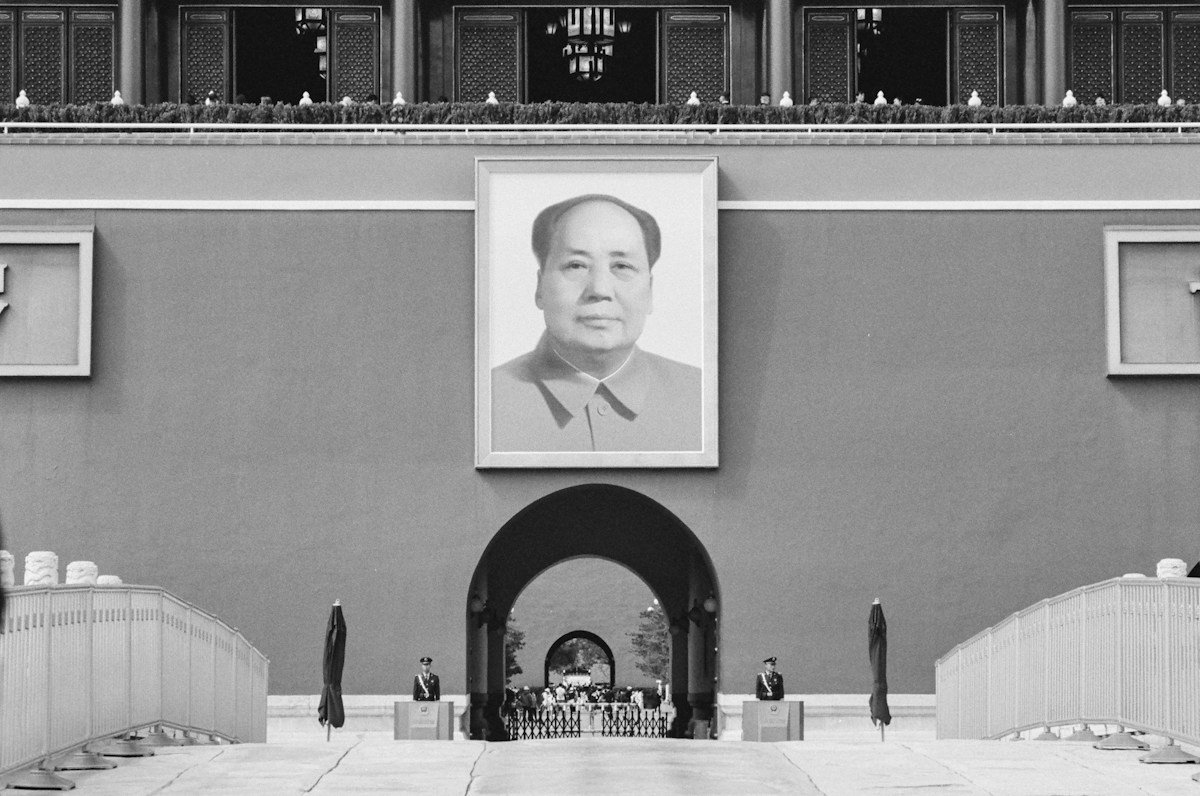
The post-Mao leadership reoriented economic policy while preserving Mao as a foundational figure of the People’s Republic. A 1981 Communist Party historical resolution acknowledged serious mistakes, including the Cultural Revolution, while defending Mao’s overall historical role. His portrait remains displayed at Tiananmen, reflecting his enduring place in the state’s official account of its origins. Public memory also includes personal experiences and interpretations that do not fit neatly into official narratives.
How to evaluate the historical record
The strongest historical assessment uses more than slogans. It compares official documents, local records, memoirs, demographic research and scholarship that recognizes uncertainty. Some questions—particularly precise death tolls and the causal effect of competing policies—remain contested. Others, including the occurrence of mass famine and political persecution, are firmly established. Respect for evidence means keeping those different degrees of certainty visible.
Apep Bar’s question
When a political leader is celebrated as a revolutionary founder and remembered for catastrophic government campaigns, how should a society tell that history without reducing it either to hero worship or to a single slogan?
Original video and research references
Reader-supplied YouTube Short: All Hail Ma · Encyclopaedia Britannica: Mao Zedong · Britannica: Great Leap Forward · Britannica: Cultural Revolution · Asia for Educators, Columbia University: Modern Chinese history.
Editorial transparency: The user’s correction identifies Mao Zedong as the intended subject, but the Short’s spoken transcript could not be independently recovered. This is a researched historical overview, not a claim to reproduce or endorse the creator’s statements. The featured image shows a modern-day portrait of Mao on Tiananmen Gate, photographed by LKHTK / Unsplash, not an original historical photograph of Mao speaking.