People have described sudden glows, balls of light and flashes appearing around earthquakes for generations. The stories can sound supernatural—until scientists start asking what the electrical and geological conditions might allow.
What ‘earthquake lights’ means
The U.S. Geological Survey groups reports of sheet-like lightning, streamers, glowing balls and steady light under the name earthquake lights. But the agency explicitly notes scientific disagreement over whether many particular accounts represent genuine earthquake-linked emissions. Some apparent mysteries have proved to involve ordinary electrical equipment, including power-line arcing when lines move.
Several mechanisms, not one answer
Researchers have proposed processes involving stressed or fractured rock, electrical charge movement and conditions near faults. A scientific model is useful only if it produces observable expectations that can be tested against reliable footage, timing and environmental measurements. A flash captured during a quake is not, by itself, a measurement of charge generated underground.
Could the lights predict disaster?
This is where skepticism is especially important. Earthquake prediction requires consistent information about where, when and how large an event will be. The existence of unusual light reports does not establish a dependable early-warning method, and readers should not rely on a glow in the sky as a personal seismic forecast.
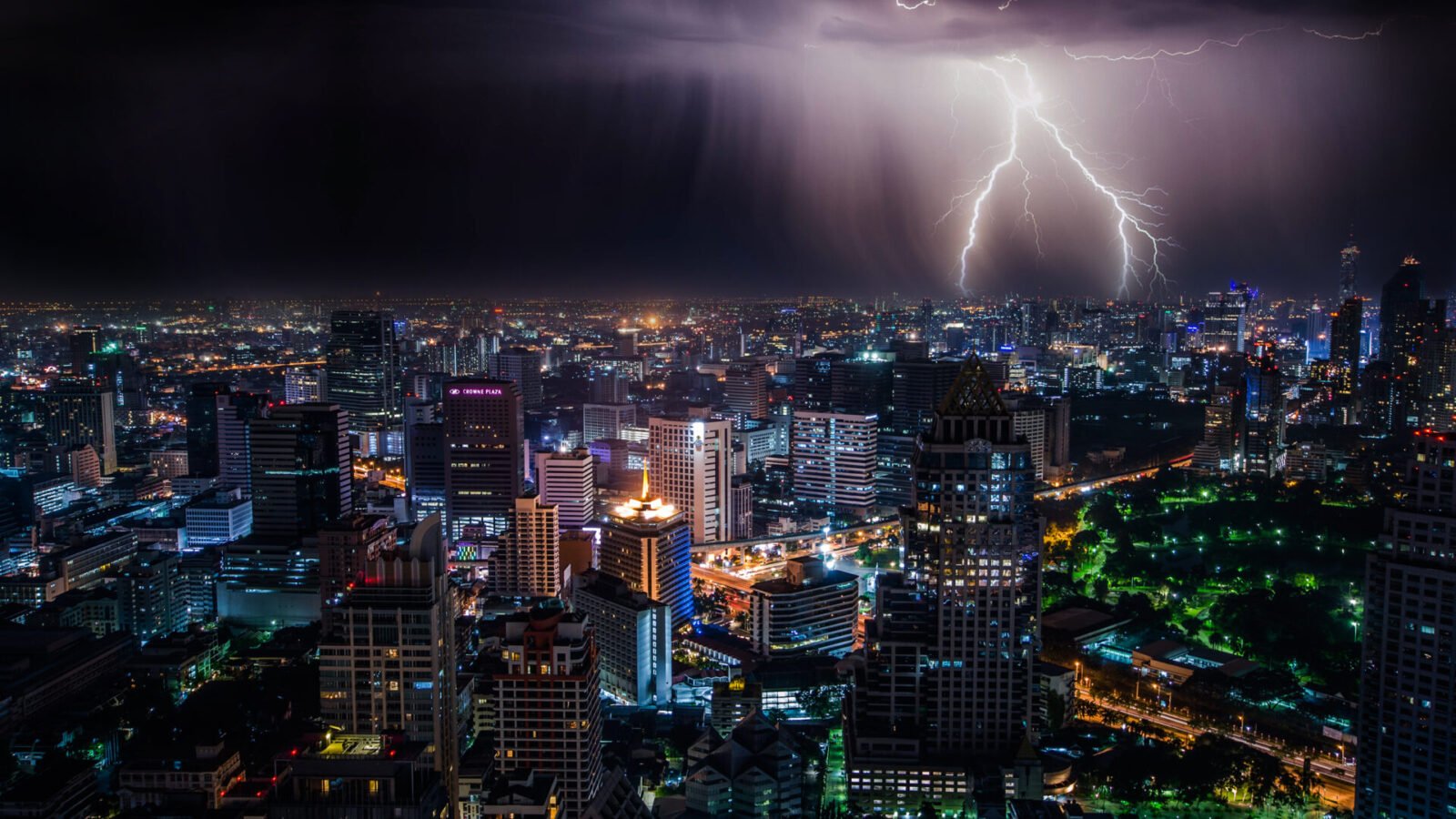
Featured image is an authentic photograph of an ordinary lightning storm above Bangkok, included for visual comparison; it does not show documented earthquake lights.