Apep Bar | Evidence review | November 22, 2026
Diamonds are not just gemstones. Inside certain engineered diamonds, atomic defects can act as exquisitely sensitive magnetic probes. A new experiment reported on November 20, 2026, suggests physicists can make many of those probes move together, even when the individual quantum spins are distributed irregularly.
What the evidence shows
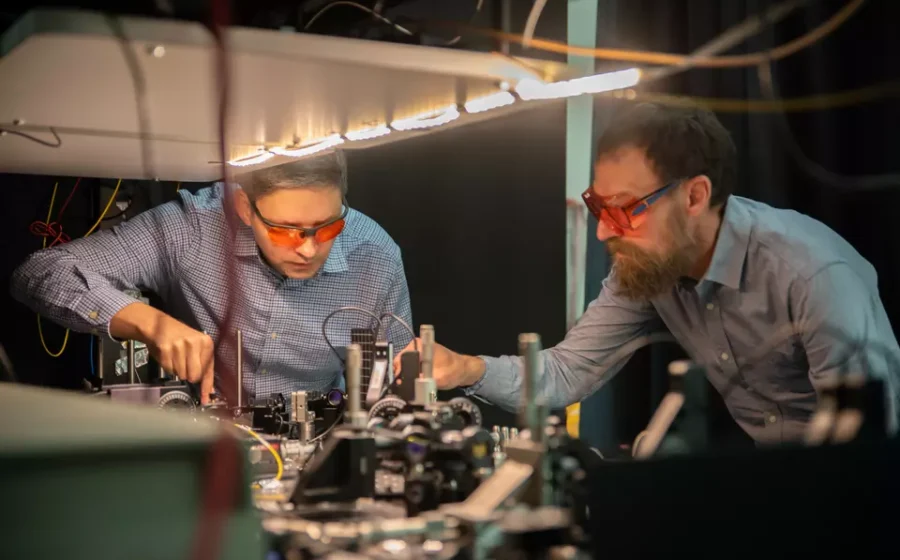
The researchers, led by Piotr Put at Harvard University, used lasers, magnetic-field gradients and carefully timed microwave pulses to organize nitrogen-vacancy center spins into spiral patterns and then unwind them. The trick helped protect coordinated behavior from the disruptive interactions that usually scramble a dense ensemble.
According to the study in Physical Review X, the team mapped patterns below 20 nanometers. That is a laboratory achievement, not a demonstration that a commercial sensor can now read thoughts, see through walls or revolutionize medicine. Proposals for improved nanoscale magnetic imaging and reduced quantum noise require additional experiments.
What remains unresolved
The intrigue is that the disorder was not simply eliminated; it was managed. If engineers learn to use collective interactions rather than fight them, sensing could become more precise. The unresolved question is whether this delicate choreography remains useful outside a carefully controlled laboratory.