NASA has reported separate hardware problems interrupting science on Perseverance and Mars Odyssey.
The announcement is a reminder that exploring another world depends on much more than reaching it. Communication and orientation are part of the scientific infrastructure—and failures in either can interrupt the discoveries that make the headlines.
Perseverance still has a line to Earth
In its November 19 status update, NASA said Perseverance was stable and communicating, with science paused over problems affecting both UHF radios. The primary radio stopped sending expected status pings on October 30; engineers later found the backup transmitting at about half its expected power.
A slower, direct X-band Earth link prioritizes diagnostics. NASA hoped to resume science by November’s end; that was not a confirmed restart date.
Odyssey’s problem is a different one
The same update reports a stalled reaction wheel aboard Mars Odyssey. With another wheel already failed, the orbiter must use hydrazine thrusters to maintain orientation if the new fault cannot be resolved. NASA estimated one to two months of fuel for that mode, while continuing to refine the estimate.
A test made the affected wheel move, but recovery was not yet established. NASA identified late November as a goal for restoring science and relay operations. These are two separate investigations; the announcement establishes no shared cause.
Why an old orbiter still matters
NASA’s Odyssey mission history records an April 2001 launch and arrival at Mars that October. The spacecraft produced the first global map of the chemical elements and minerals making up the Martian surface and completed its primary science mission in 2004.
Its communications system includes X-band equipment for Earth links and UHF equipment for contact with surface missions. That makes an orbiter more than an observer: it can also help move information from the ground across interplanetary distances.
A pause is a status, not an explanation
These are the conditions described in NASA’s November 19 update, the latest substantive status announcement located for this report. Target dates should be read as engineering goals. A successful restart would require a further update, rather than an assumption that the calendar solved the problem.
For readers following Apep Bar’s recent Voyager communications report, the wider question is familiar: how do engineers preserve a scientific mission when the hardware is far beyond physical reach?
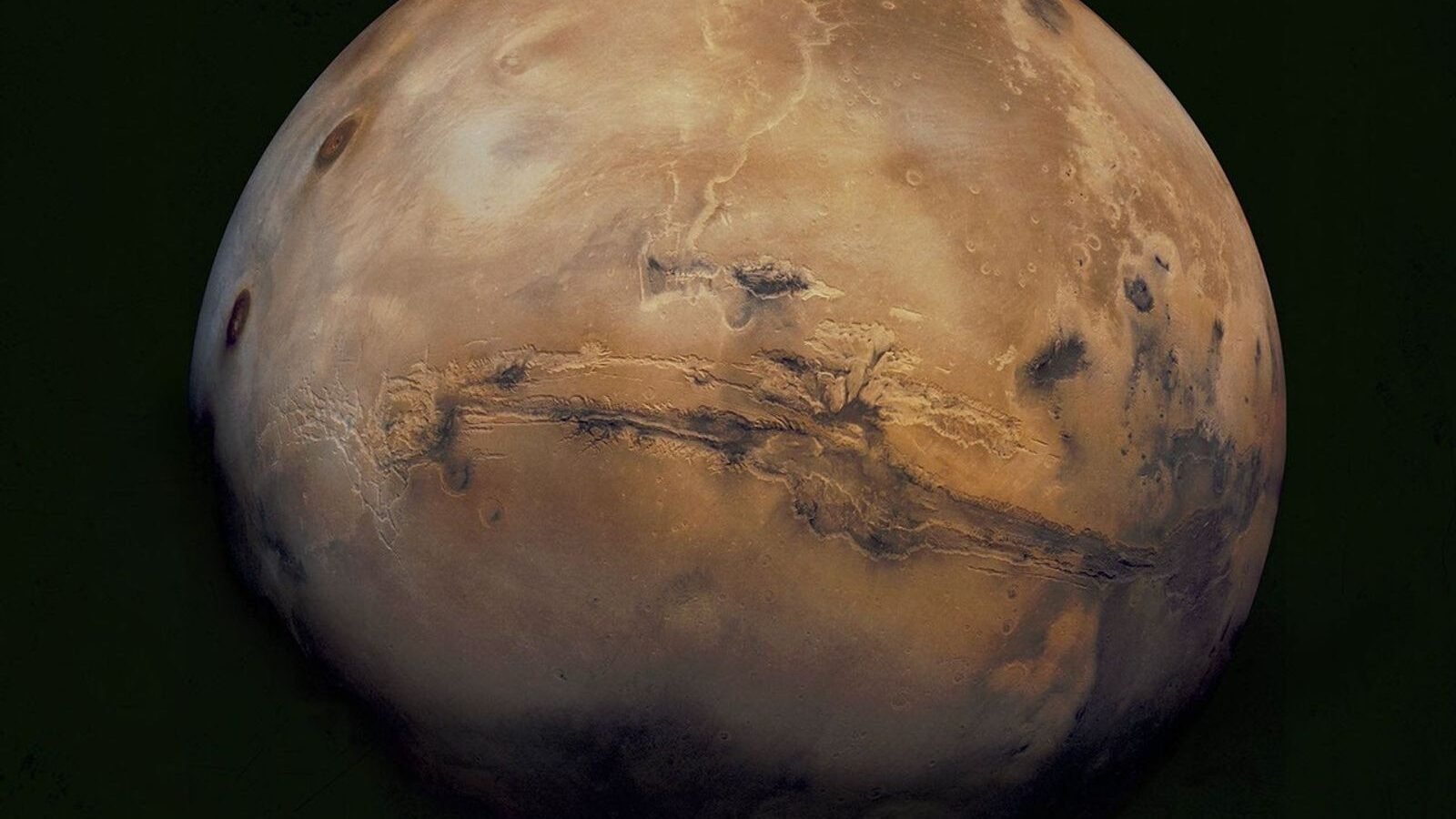
Featured image: archival Viking Orbiter mosaic of Mars, not a new image from either affected mission. Credit: NASA/JPL-Caltech, PIA04304; public-domain U.S. government imagery.
Question. Investigate. Reconsider.