By Seba | Investigations Desk
A 1,600-year-old burial in southern Peru is providing a rare meeting point between archaeology and ancient DNA. Researchers studying an infant recovered at Jauranga, in the Palpa Valley, identified cyclopia—a severe developmental condition marked by a single central eye socket—and found a genetic explanation: an extra copy of chromosome 13, known as trisomy 13. The study appeared online in the Proceedings of the National Academy of Sciences on November 9, 2026.
The evidence beneath the diagnosis
The infant’s skull displayed a single median orbit and other developmental abnormalities. Researchers combined examination of the skeletal remains with ancient DNA analysis and identified trisomy 13 as the likely cause. This matters because cyclopia is not simply a striking feature of an ancient skull; the genetic result links the observed anatomy to a specific chromosomal condition.
Trisomy 13, also called Patau syndrome, occurs when cells carry an extra copy of chromosome 13. It is associated with severe developmental effects. Cyclopia is one possible manifestation, but it is uncommon even among individuals with trisomy 13. The study does not suggest that this condition was common in the ancient population. It documents one unusually informative archaeological case.
Why the shared urn matters
The infant was found in a ceramic vessel with a second infant. The child with cyclopia lay beneath the other infant, and the researchers believe both were interred in a single event. Genetic evidence showed that the two infants had different mothers. The second infant did not show comparable skeletal abnormalities.
The burial dates to the Middle Nasca period, approximately A.D. 325–440, and came from a cemetery at Jauranga where archaeologists documented several dozen burials. Ceramic urns were a known form of burial for young children in the Nasca region. Yet two infants in one vessel was unusual in this context. The grave’s ordinary cemetery setting and lack of special grave goods do not provide clear evidence that the infant with cyclopia was singled out, rejected or given exceptional treatment.
That distinction is important. The researchers cannot determine precisely how long the infant lived; estimates may be compatible with survival for weeks or months, but the team does not claim an exact lifespan. The burial cannot tell us whether the child received particular care while alive, what the relationship between the two infants was, or what individual members of the community believed about congenital difference.
Ancient parallels—and important differences
Infant urn burials are also documented in the ancient Maya world. Research on Maya mortuary practices describes the interment of very young children in ceramic vessels at multiple sites, sometimes in household or ancestral contexts and sometimes in association with architectural platforms and shrines. The Maya evidence is diverse, and archaeologists interpret each burial through its own setting. The parallel is therefore about a shared broad practice—placing the remains of very young children in ceramic containers—not proof of a common ceremony, direct contact or identical beliefs between Maya and Nasca societies.
The comparison is useful because it reminds us that ceramic infant burials were part of wider, varied mortuary traditions in the ancient Americas. It also warns against treating every urn burial as evidence of sacrifice, exclusion or a single universal belief. Context, associated objects, biological evidence and the pattern of other burials all matter.
What this discovery changes
The study adds an exceptionally rare case to the archaeological record: a congenital condition identified through both skeletal traits and ancient genomic evidence. It also shows the limits of what can be inferred from one grave. The DNA can identify a likely chromosomal cause; the vessel and cemetery can describe the burial context. Neither alone can reconstruct the child’s full experience or the community’s complete social response.
For researchers, the significance is methodological as much as historical. Ancient DNA can clarify diagnoses that would otherwise remain uncertain, while archaeology preserves the social setting in which an individual was laid to rest. The most responsible interpretation keeps those two kinds of evidence connected—but does not make them answer questions they cannot resolve.
Primary sources and research
- Tomasto-Cagigao et al., “A Nasca-period perinatal burial reveals cyclopia associated with trisomy 13 in southern Peru,” PNAS (online publication November 9, 2026).
- Live Science: reporting on the excavation and research team (November 9, 2026).
- Flynn-Arajdal, Cano and Miller-Wolf, “Las implicaciones de las urnas funerarias en el Área Maya”.
- Cambridge University Press: Maya childhood and burial practices.
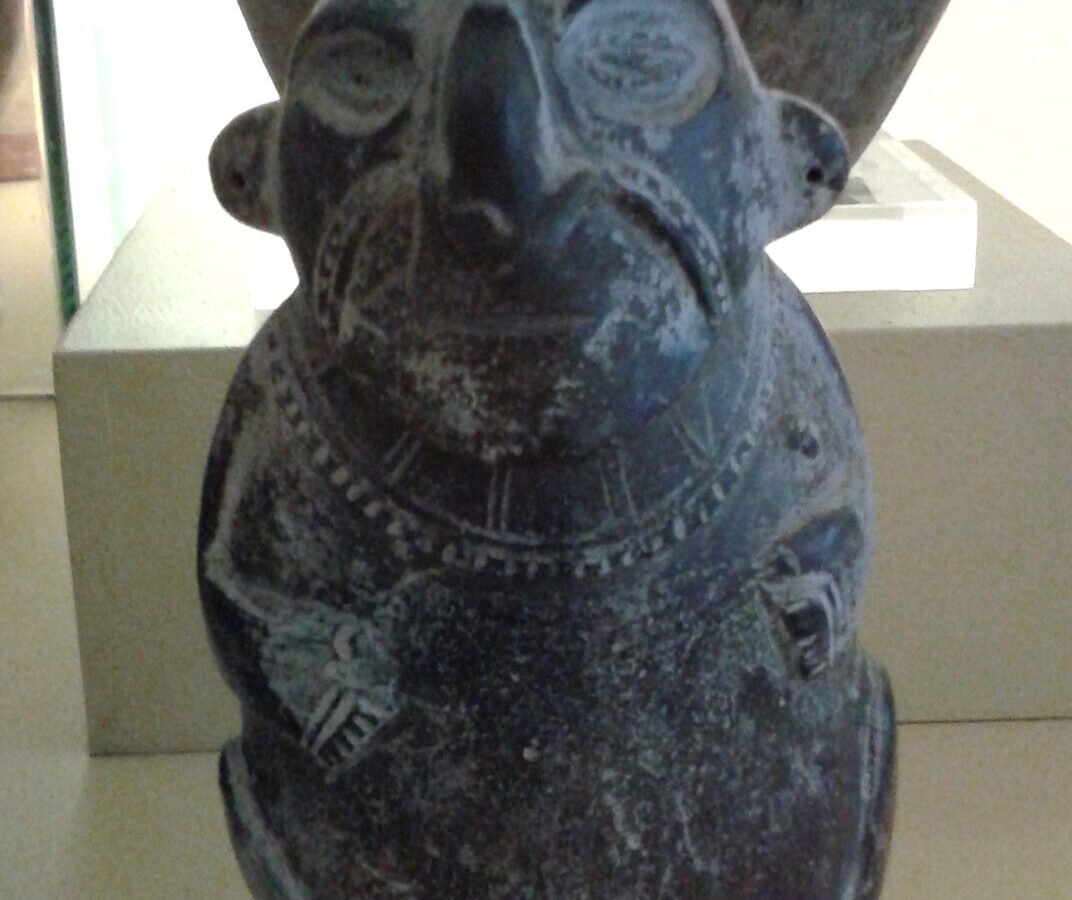
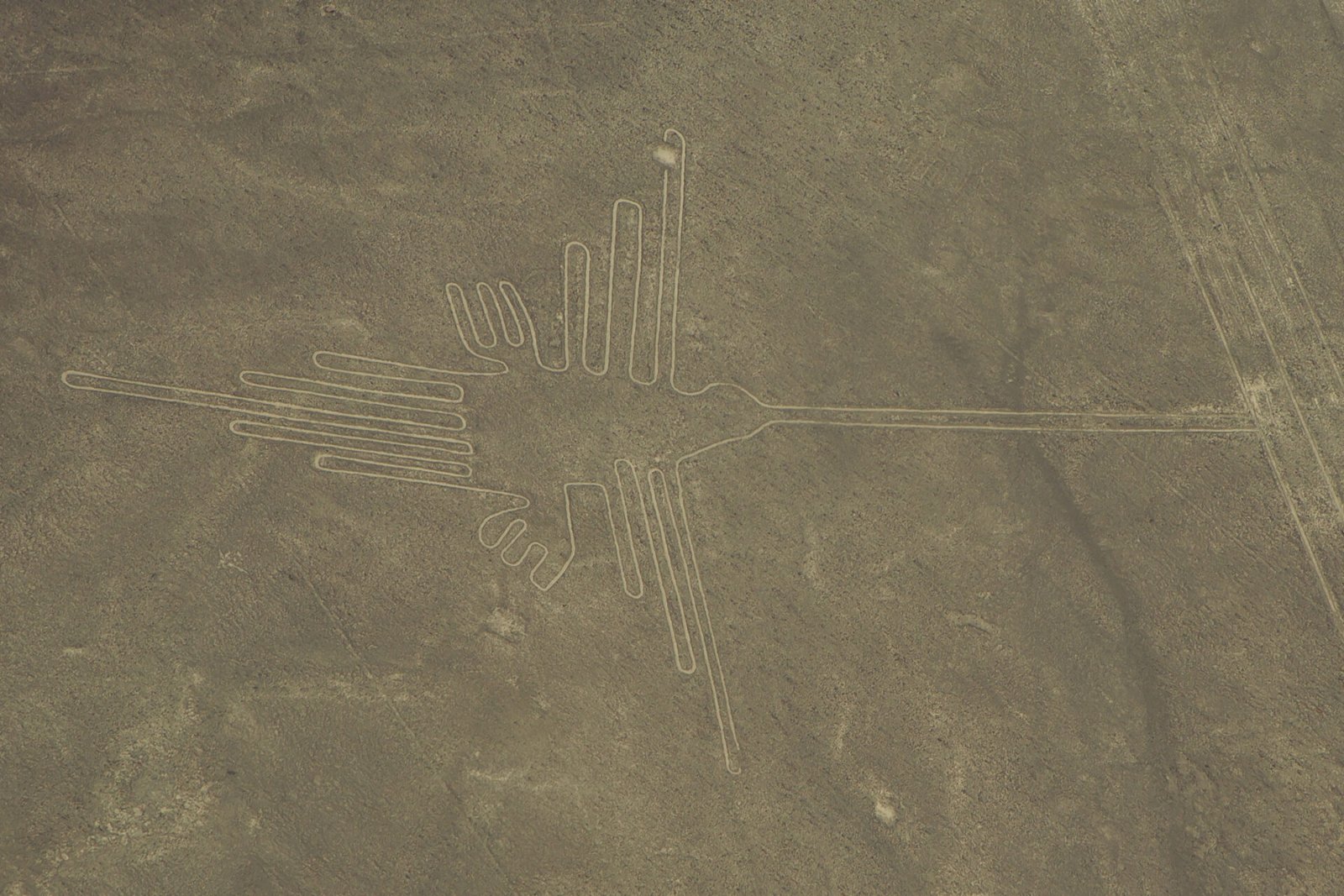
Image note: Both photographs are contextual. The ceramic vessel is not the actual Jauranga burial urn, and the aerial view does not depict the excavation. Ceramic image: Dornicke/Wikimedia Commons, CC BY-SA 4.0. Aerial image: Murray Foubister/Wikimedia Commons, CC BY-SA 2.0.