The universe may be expanding faster because of a mysterious component called dark energy. In 2025, results from the Dark Energy Spectroscopic Instrument helped fuel speculation that its influence changes over time. Then a July 30, 2026 DESI analysis added an awkward but important twist: a sharper measurement from the hydrogen ‘forest’ of distant quasars shifted toward the standard cosmological model.
What actually changed
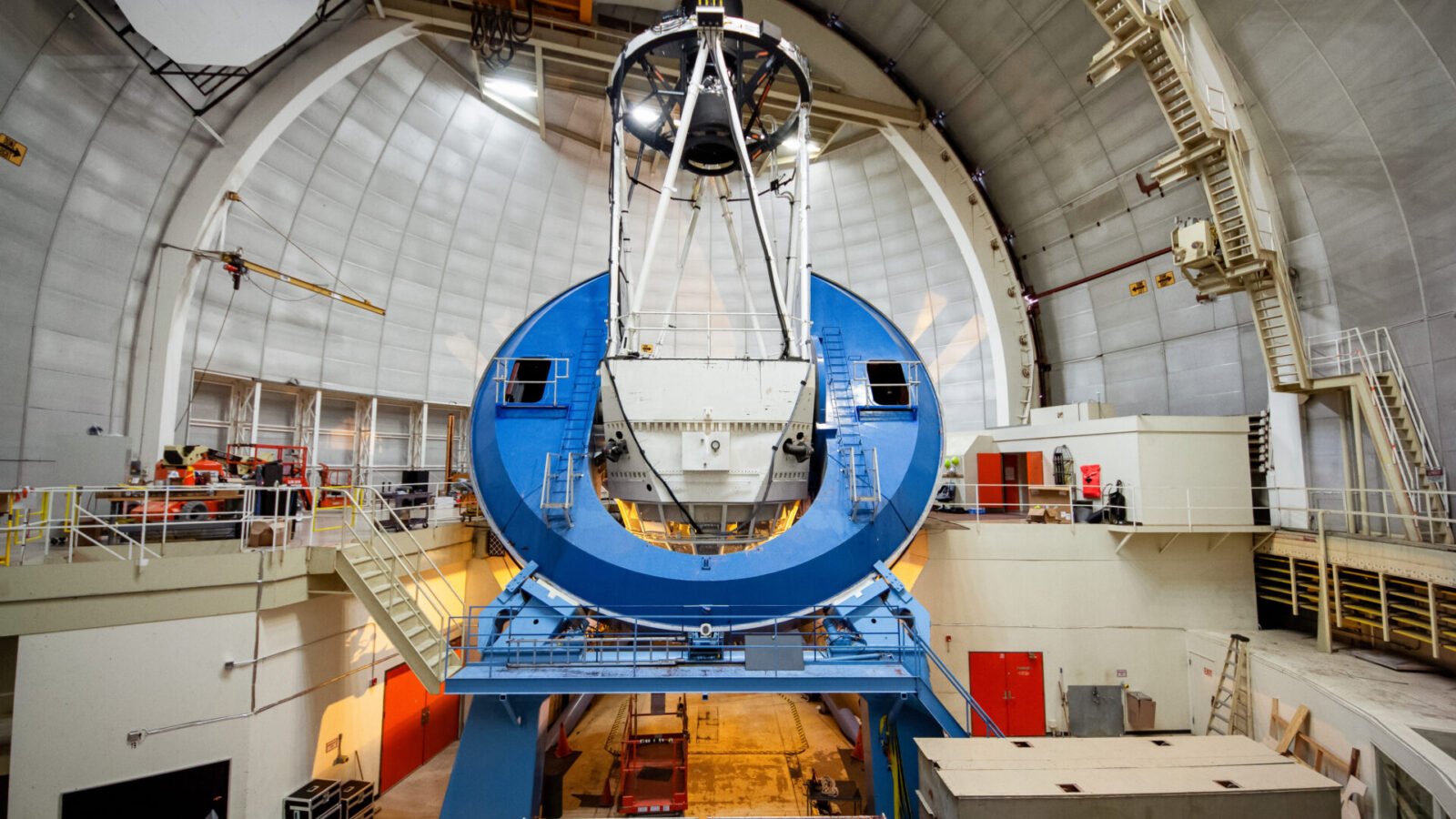
DESI uses patterns in the distribution of matter to study cosmic expansion. The newer analysis extracted more information from hydrogen absorption along lines of sight toward quasars, using the full distribution instead of only a narrower acoustic-oscillation signature. DESI scientists said the improved measurement’s central value moved toward the conventional model in which dark energy is a cosmological constant.
Two interpretations remain on the table
The research does not prove that earlier hints were wrong. The collaboration said the evolving-dark-energy signal might fade as measurements improve—or that more complicated physics could be necessary to reconcile all observations. Data combinations, uncertainty estimates and methodological differences are central to the argument, not footnotes.
A proper scientific cliffhanger
The compelling news is that a new and more precise result complicated the story instead of confirming a popular theory. That is what live science looks like. Theories should earn their place by predicting new measurements, even when those measurements refuse to follow the script.
Sources and documents
Question. Investigate. Reconsider.