The ocean has been keeping an archive. Its filing system leaves something to be desired.
October 14, 2026: Flinders University announced new research into stone artefacts beneath the sea at Murujuga in north-western Australia. The university says the finds extend evidence for a submerged Aboriginal cultural landscape. This is today’s research announcement, not a claim that the artefacts were discovered today.
A shoreline is not the edge of history
Researchers documented sites near an ancient freshwater spring and a rocky hill overlooking a former river channel. These places were flooded at least 9,000 years ago; the objects may be older. Analysis links some stone to the Rosemary Island area, roughly 23 kilometres away, suggesting people transported raw materials.
A spring, a hill, a river: the intriguing part is their relationship. Viewed together, the findings invite us to picture people making choices across terrain that modern maps colour blue.
Who helps read the seabed?
Murujuga Aboriginal Corporation Rangers Malik Churnside and Richard Variakojis participated in scientific diving surveys, made discoveries and are study co-authors. University researchers worked alongside the corporation. This is living cultural heritage for Traditional Owners, as well as archaeological evidence.
What the evidence leaves open
The material-source interpretation suggests movement; it does not reconstruct every journey or establish exactly why each object travelled. Nor does the flooding date provide an exact manufacturing date for every artefact. A dramatic setting should not turn reasonable inferences into certainty.
The research appears in Quaternary Science Reviews. The university’s account is the accessible primary institutional source used here; Apep Bar could not access the full journal text during verification.
Protecting underwater heritage raises a practical question: if our picture of the past stops at today’s waterline, what are we leaving out?
Sources: Flinders University, October 14, 2026; Benjamin and colleagues, research paper DOI; institutional release and publication metadata.
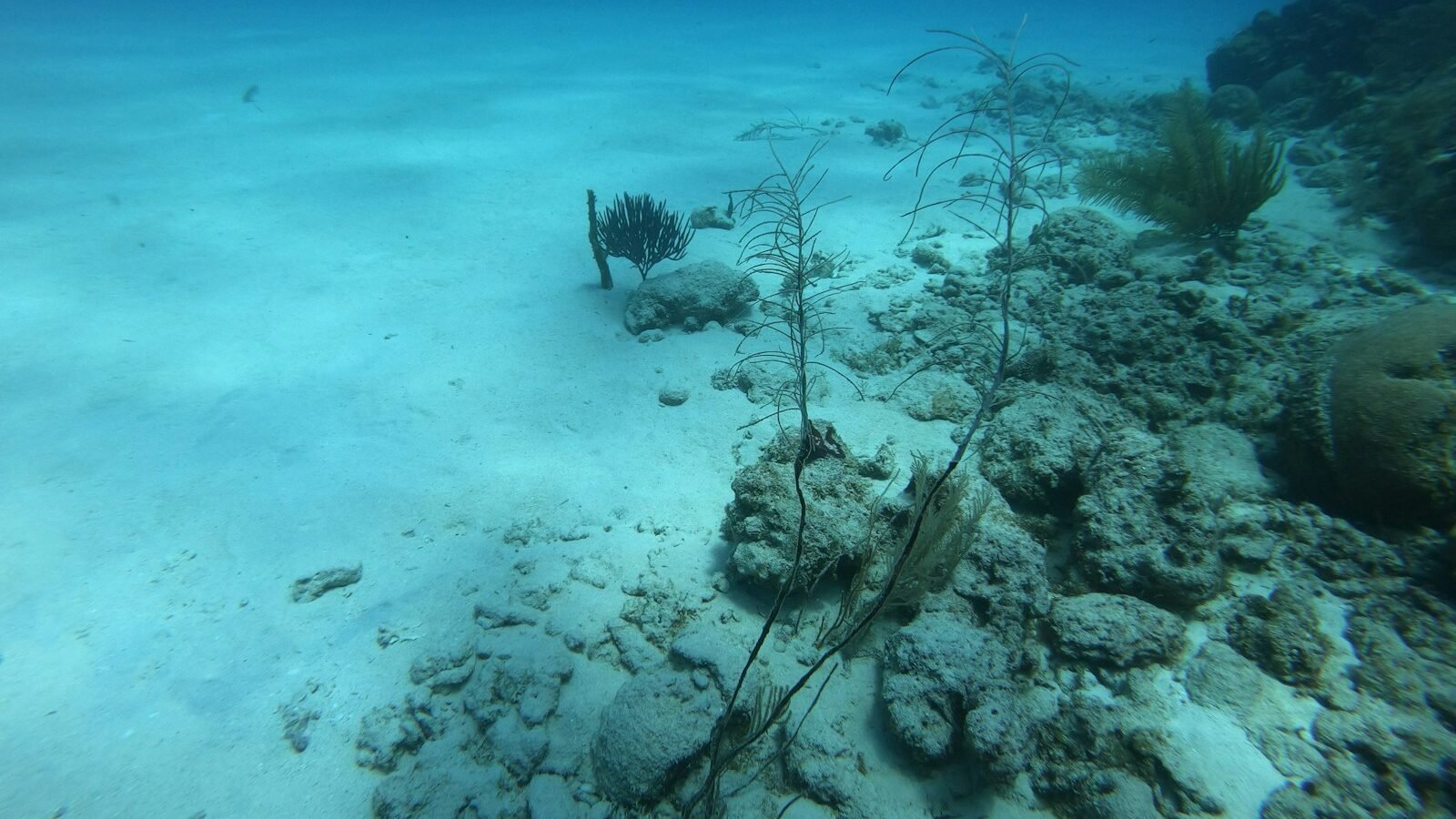
Featured image: illustrative photography by Andrés Dallimonti / Unsplash. It depicts an ocean floor, not the Murujuga sites or recovered artefacts.
Question. Investigate. Reconsider.