Some secret-society stories end with a blurry photograph and a theory. Italy’s Propaganda Due scandal ended with legislation, parliamentary hearings and thousands of pages of official inquiry records. The clandestine Masonic lodge known as P2 was a real organization, and its exposure shook the Italian political establishment in 1981.
A lodge hiding inside public life
Propaganda Due, commonly abbreviated P2, was associated with Licio Gelli. Investigators uncovered a list linked to the lodge during their 1981 inquiries; the public revelation of names reportedly associated with senior officials, military figures, intelligence personnel, journalists and business leaders intensified an already volatile scandal. Prime Minister Arnaldo Forlani’s government resigned that year amid the fallout.
That is a documented political crisis. But a careful account must distinguish a name appearing on a recovered list from a court finding that the named person took part in a particular illegal act. Lists can be evidence of networks; they are not, by themselves, proof of every accusation made about an individual.
The state responded with a law
Italy’s Law No. 17 of January 25, 1982 addresses secret associations and explicitly provides for the dissolution of the association called Loggia P2. Its legal definition focuses on organizations that conceal key aspects of themselves while interfering with public institutions or essential services.
This is an important correction to the sensational version of the story. The law did not declare that all private clubs were illegal. It targeted a specific kind of concealed organization and interference with public functions.
Tina Anselmi’s inquiry and the documentary trail
Parliament created a commission of inquiry under Law No. 527 of September 23, 1981. Led by Tina Anselmi, it investigated the lodge’s origins, organization, objectives, links and potential influence on the state. The parliamentary archive records the commission’s majority report, approved in July 1984, and separate minority reports. The surviving record is not a single secret memo: it includes extensive testimony and documentary volumes.
The commission’s work, and contemporary reporting about it, described extensive concerns about P2’s reach into public and economic institutions. Those findings deserve serious attention. They also need to be read in context: parliamentary assessments, criminal allegations and judicially established guilt are related but not interchangeable categories of evidence.
Why P2 still matters
The most interesting lesson is not that a hidden lodge can magically direct an entire nation. It is that secrecy, privileged access and powerful professional connections can create a legitimate public-accountability problem—one that can be investigated by following records rather than relying on anonymous internet diagrams.
Readers can examine the 1982 law and the parliamentary commission’s public archive themselves. That is what makes P2 a particularly useful case study for the line between a genuine covert network and conspiracy lore.
When an influential association stays out of view, what kind of evidence is sufficient to prove influence—and what kind merely suggests it?
Sources and further reading
- Italian Chamber of Deputies, P2 commission archive
- Italy’s Law No. 17 of 1982, official text
- Law No. 527 of 1981 establishing the inquiry
- Contemporaneous reporting, The Washington Post, July 7, 1984
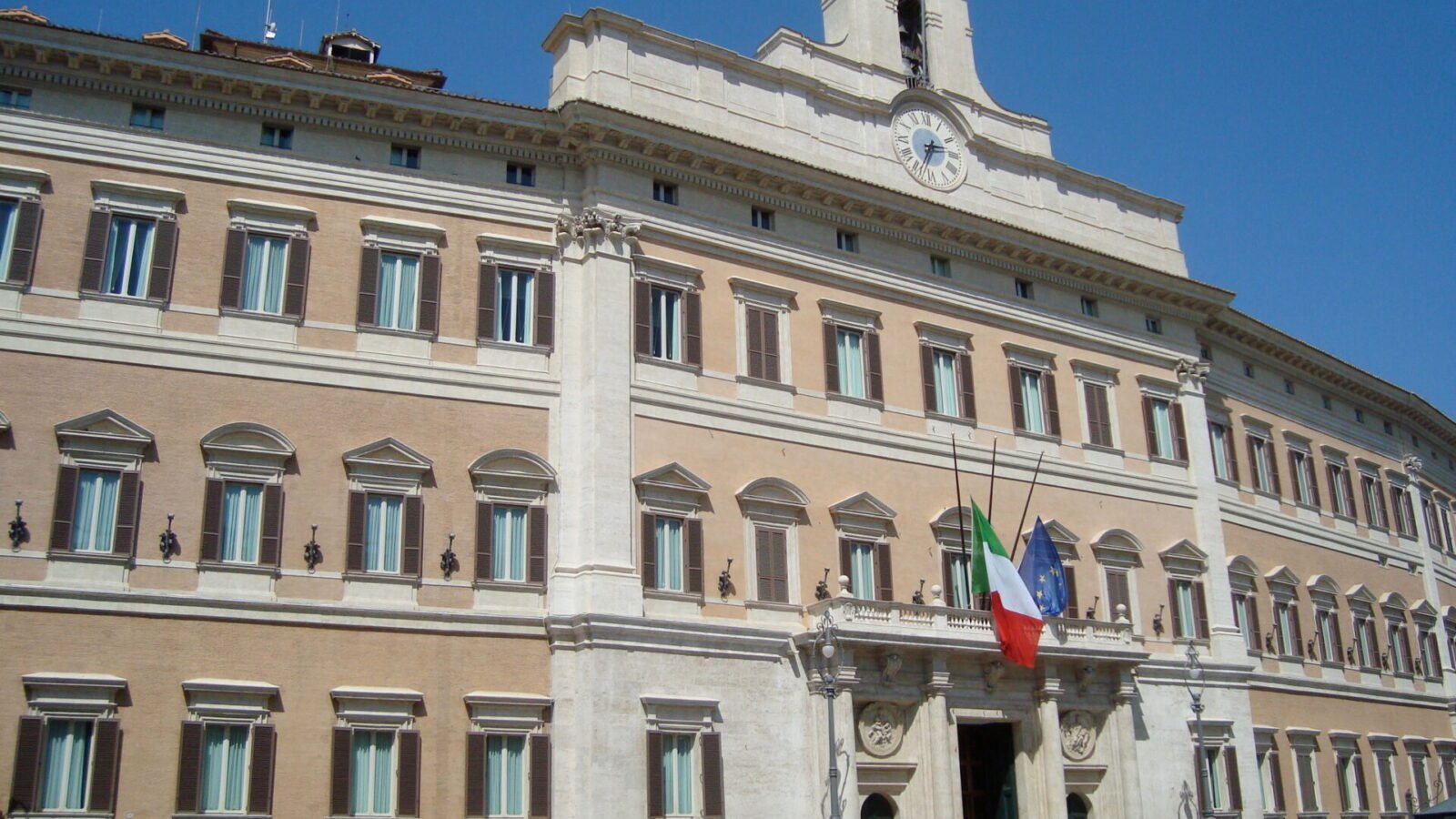
Featured photograph: Real photograph of the Italian Chamber of Deputies’ Palazzo Montecitorio, shot by LPLT in 2010. It illustrates the institution that investigated P2; it is not a photograph of the lodge or 1981 search. Wikimedia Commons, CC BY-SA 3.0.