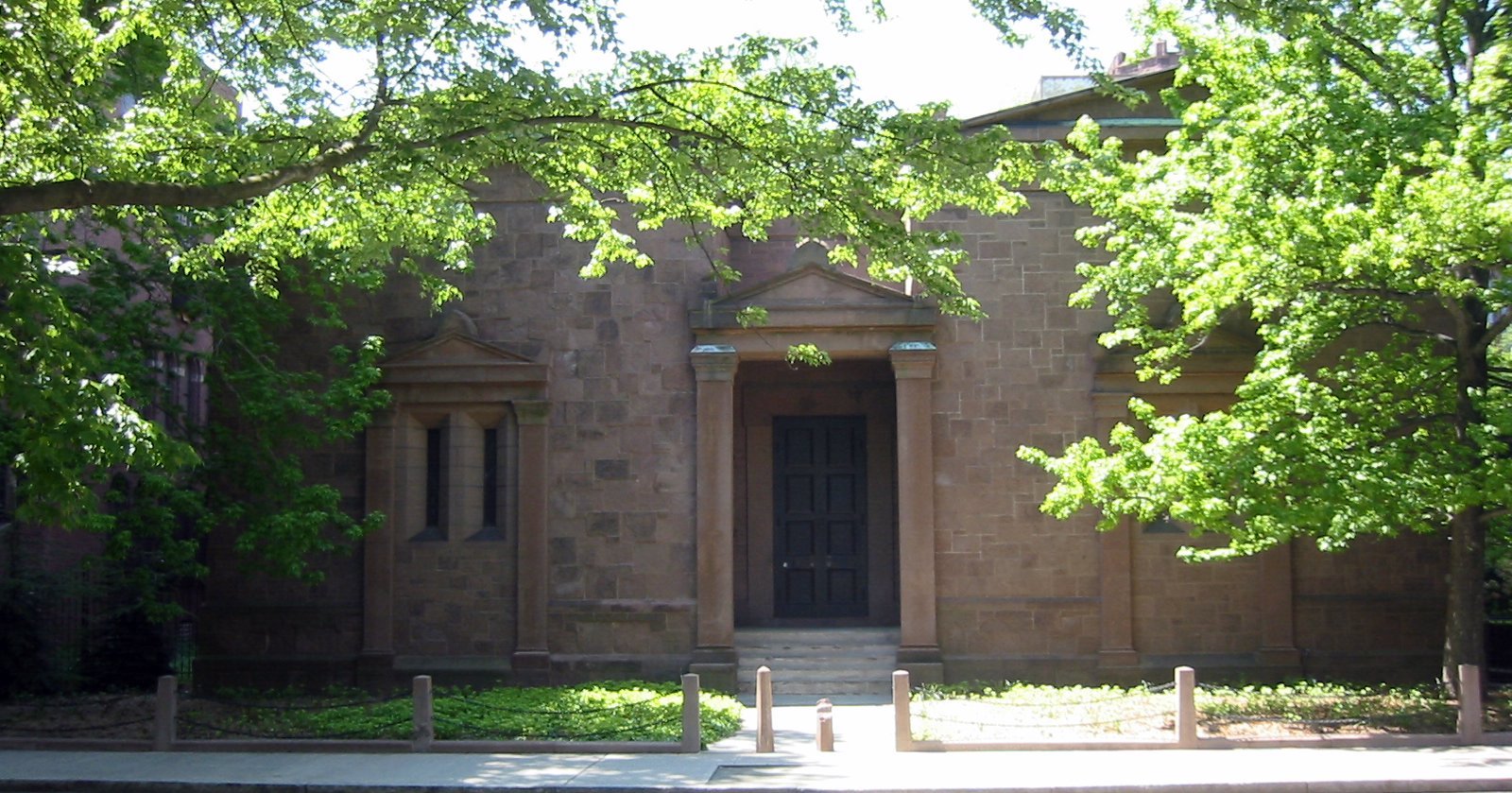
There is a stone building in New Haven known as the Tomb. It has long belonged to Skull and Bones, a secretive Yale senior society whose name, symbols and famous alumni have inspired an industrial quantity of speculation. The building exists. The organization exists. The question is what, exactly, those facts prove.

The society began in 1832
Historical work published by Yale Alumni Magazine traces the society to William Huntington Russell and Alphonso Taft, who established it in 1832. In its early years, Skull and Bones was one of several collegiate organizations that mixed fellowship, symbolism and private ritual. It was also a club that could attract influential students, a fact that inevitably attracted curiosity about its longer-term connections.
The building often called the Tomb dates to 1856, with later additions. Its monumental, windowless design helped turn it into a campus legend. But unlike a hidden underground headquarters imagined in popular stories, its physical presence has been publicly visible for generations.
The number 322 and the problem of symbols
The skull-and-crossbones emblem and the number 322 are genuine parts of the society’s iconography. Historians have discussed competing interpretations, including references to events of 322 BCE. The existence of a meaningful symbol does not, by itself, settle its precise origin or prove a larger political program. A number can be both fascinating and insufficient evidence of a conspiracy.

Powerful alumni: fact versus inference
Membership has included prominent Americans; Yale’s own alumni historical coverage identifies both George W. Bush and John Kerry as members. That overlap understandably stimulates questions about elite education, access and influence. But a network of former students and a claim that the same society secretly directs governments are not the same proposition.
To establish coordinated institutional control, investigators would need credible evidence of instructions, decisions, money flows or actions—not merely a membership roster. That is why records, contemporary correspondence and documentary histories matter more than atmospheric montages of candles and stone walls.
What remains behind the doors?
Privacy can feed suspicion, especially when the people exercising it later become powerful. Skepticism toward elite networks is reasonable; automatically assigning every major political event to a college society is not evidence-based reporting. The fascinating historical question is how an undergraduate social institution became so enduring—and how much influence social ties can have even without a formal conspiracy.
Is the more revealing secret an elaborate ritual, or the ordinary power of exclusive networks?
Sources and further reading
- Yale Alumni Magazine: The Origins of the Tomb
- Yale Alumni Magazine: How the Secret Societies Got That Way
Editorial note: The sources distinguish documented evidence from hypotheses. Stock photographs are illustrative and are not presented as pictures of the reported phenomena or historical events.