What if the planet’s thermostat were parked in space? Researchers are studying a vast sunshade between Earth and the Sun—an idea that sounds like science fiction but is now the subject of engineering roadmaps and serious debate.
A little less sunlight, a potentially cooler planet
In an October 28, 2026 report, Nature described work by the Planetary Sunshade Institute and collaborating specialists on space-based solar geoengineering. One hypothetical goal would be to intercept around 1% of incoming sunlight, a change the institute estimates could cool Earth by approximately 1°C. These are model-based projections, not a working climate-control system.
The general concept is to place enormous shade structures or distributed devices toward the Sun near the Sun–Earth L1 region, where spacecraft can remain approximately aligned with Earth and the Sun. The institute describes designs potentially requiring millions of square kilometers of effective shading area and ongoing station-keeping.
A technology proposal, not an orbiting solution
Supporters argue that lower launch costs and improved materials make further study worthwhile. A recent roadmap proposes precursor missions followed by possible deployment phases over coming decades. But such plans require immense manufacturing, launch and operations capabilities; there is no functioning planetary sunshade cooling Earth today.
Some experts remain skeptical about the timeframe and scalability. Risks include a huge launch footprint, hardware failures, governance disputes, potential changes to precipitation and ecological systems, and political conflict over who controls planetary sunlight.
The danger of confusing shade with a cure
Most importantly, sunlight reduction would not remove excess carbon dioxide from the atmosphere, and it would not directly solve ocean acidification. It could also distract from reducing emissions. Even if physically possible, deciding whether—and who—should adjust global sunlight would be an extraordinary political and ethical decision.
So is a space sunshade the boldest climate backup plan ever seriously proposed, or an enticing engineering detour from the work already needed on Earth?
Sources: Nature investigation, October 28, 2026; Planetary Sunshade Institute climate-science background; Planetary Sunshade roadmap study (2026).
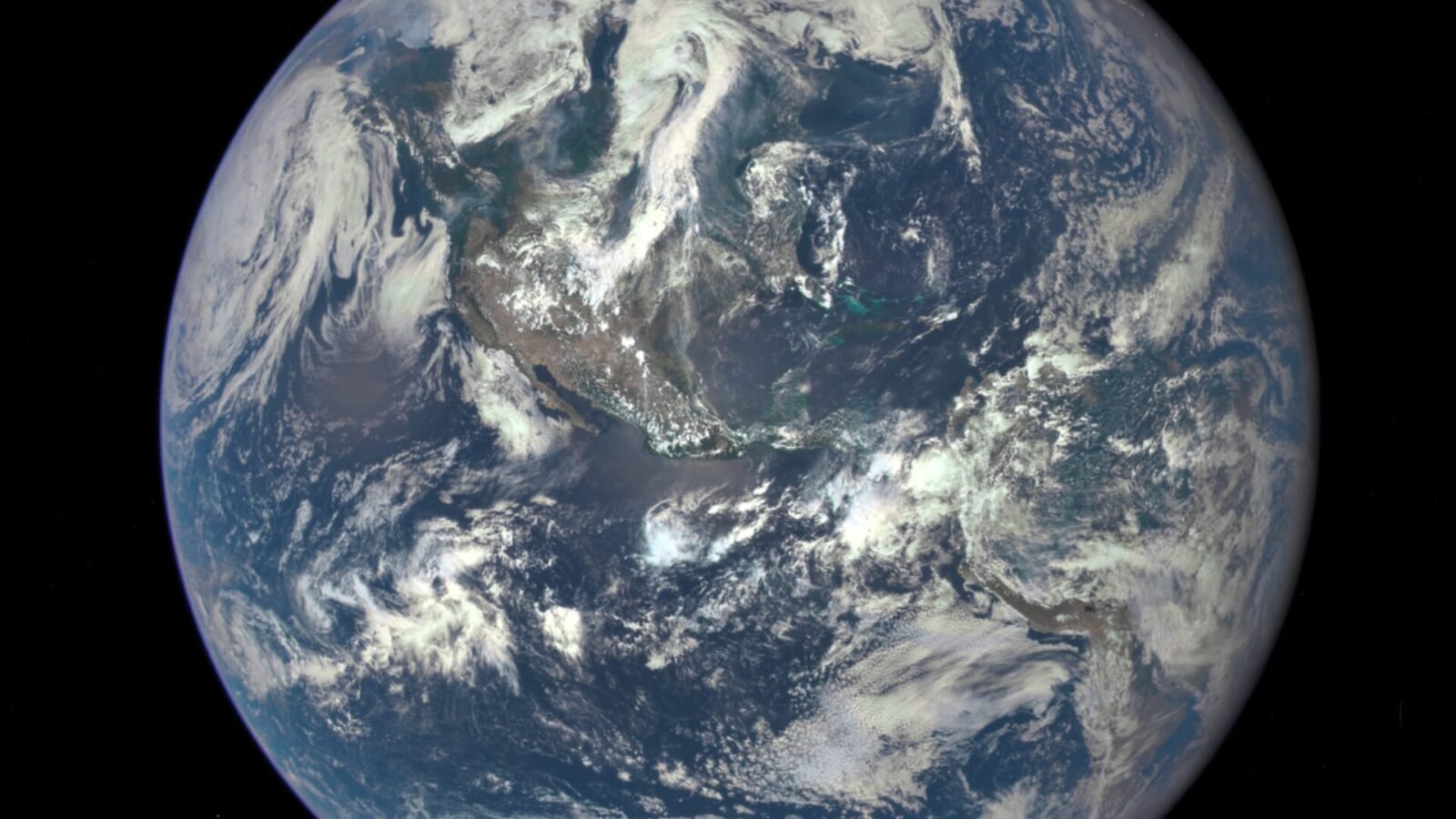
Featured image: NASA DSCOVR photograph of Earth’s sunlit hemisphere from near Sun–Earth L1. This is not an actual sunshade.
Question. Investigate. Reconsider.